

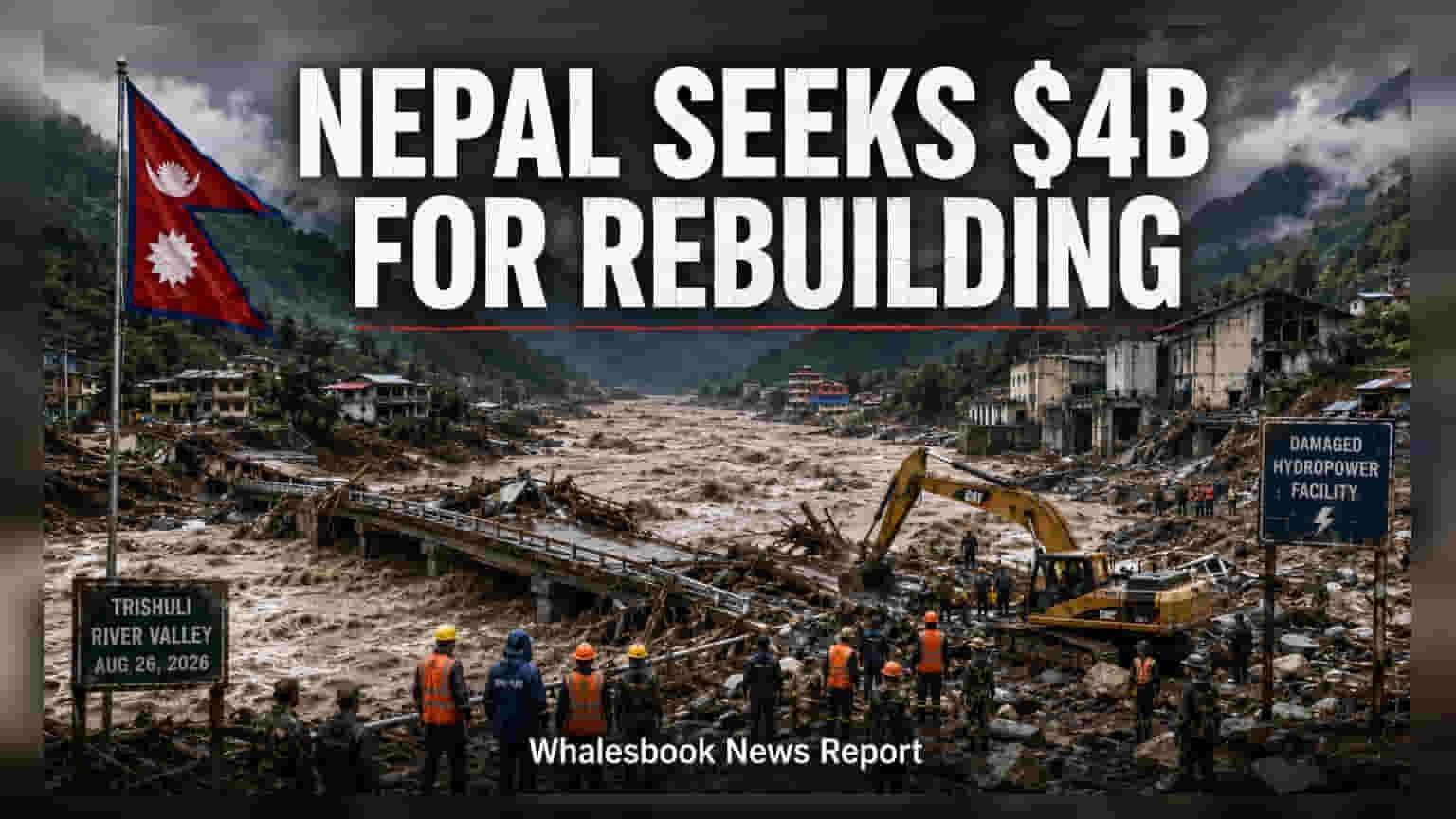
Following a major glacier collapse on August 26, 2026, that triggered widespread floods in the Bhote Koshi and Trishuli river valleys, Nepal requires $4–$5 billion for infrastructure repairs. The scale of the damage poses a significant fiscal challenge, with direct implications for regional trade connectivity and long-term economic stability.
Nepal is currently facing a major economic challenge following the catastrophic glacier collapse on August 26, 2026, which triggered flash floods across key regions. Finance Minister Swarnim Wagle has confirmed that the country needs an estimated $4 billion to $5 billion for emergency relief and long-term reconstruction of damaged infrastructure. The disaster, which severely impacted the Bhote Koshi and Trishuli river valleys, has caused widespread destruction to roads, bridges, and critical hydropower facilities.
Fiscal Impact on the Economy
For an economy with a total size of approximately $45 billion, a reconstruction bill of up to $5 billion represents a significant fiscal burden. This scale of expenditure creates immediate pressure on the national budget and raises concerns about debt sustainability. The government must balance these emergency capital requirements with existing developmental goals. While international organizations like the Asian Development Bank have already moved to support initial relief efforts with a $5 million emergency grant, bridging the multi-billion-dollar gap will require substantial international aid, long-term credit lines, or potential fiscal adjustments in the coming quarters.
Impact on Regional Connectivity and Trade
Investors tracking the South Asian region are monitoring the situation due to the importance of the affected corridors. The Bhote Koshi and Trishuli valleys are vital for both domestic logistics and cross-border trade, including trade routes connected to India. The destruction of transport networks and power infrastructure threatens short-term economic output and could cause supply chain disruptions. The pace at which the government can restore these lifelines is critical for maintaining trade flows.
Furthermore, the energy sector, which is a key component of Nepal’s cross-border trade, faces setbacks. The damage to hydropower projects could lead to localized power instability and impact electricity exports. The reconstruction process will involve large-scale procurement for civil engineering, road development, and energy infrastructure, which may open opportunities for engineering and construction firms capable of operating in challenging Himalayan terrains.
Risks and Investor Monitorables
There are several risks that could influence the timeline and cost of recovery. The primary concern is ongoing geological instability, as the region remains susceptible to secondary floods and landslides, which could complicate and delay repair work. Additionally, execution risk remains high; reconstruction timelines are often extended by procurement delays and the difficulty of mobilizing resources in mountainous areas. Investors should track the pace of international funding, the government's ability to manage its fiscal deficit while funding these repairs, and any announcements regarding large-scale infrastructure tenders. The stability of regional trade routes will depend on how quickly essential transport and energy connectivity can be restored.