

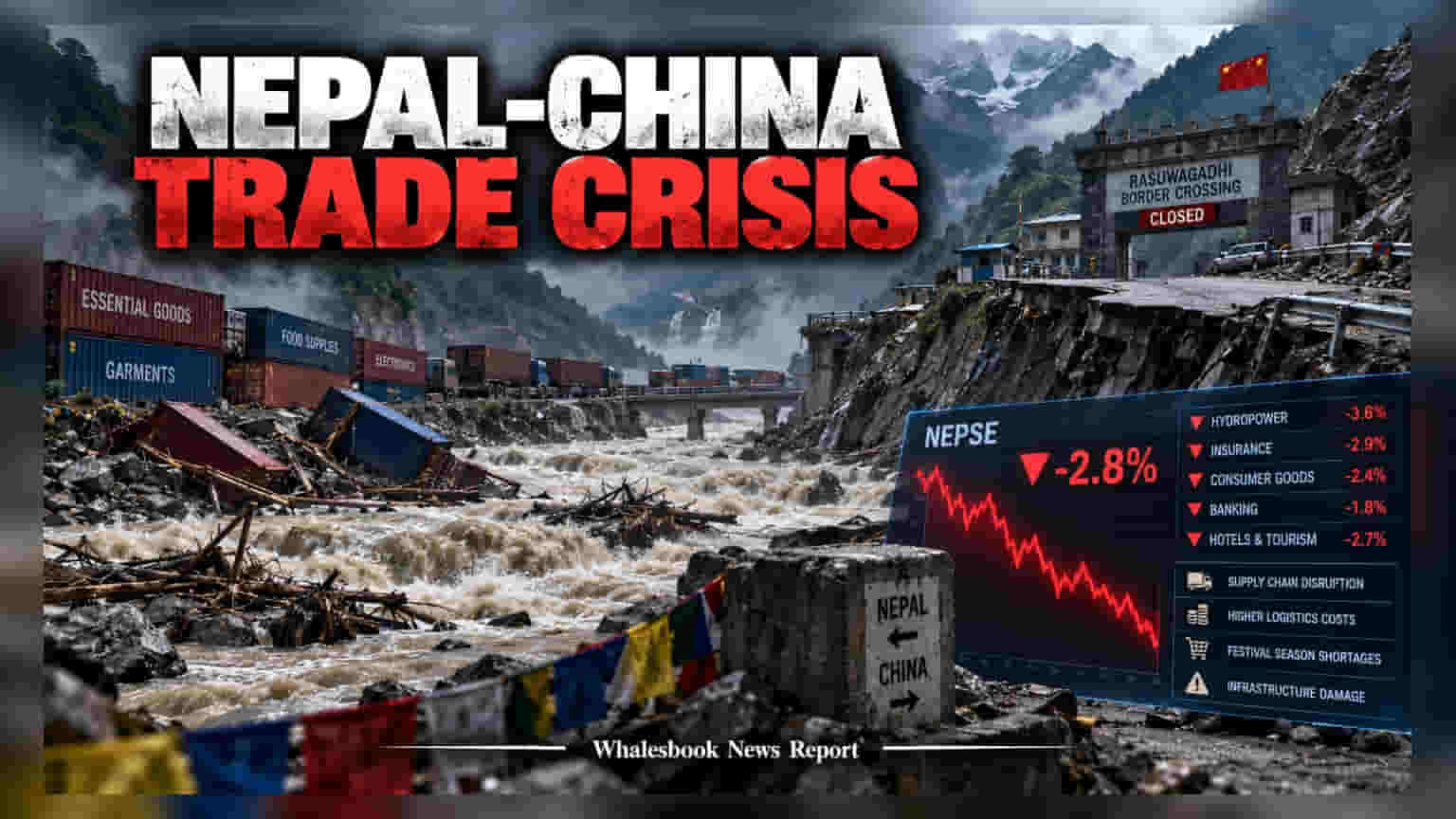
Severe flooding following an August 2026 glacial collapse has shut key Nepal-China trade routes, leaving hundreds of cargo containers stranded ahead of the festival season. The disruption has triggered volatility in the Nepal Stock Exchange (NEPSE), with investors assessing the financial impact on hydropower and non-life insurance sectors.
The disruption of trade routes between Nepal and China has created significant economic pressure as the country approaches its peak festival season. Following a catastrophic glacial collapse in late August 2026, severe flooding has rendered the Rasuwagadhi-Kerung border crossing non-operational. The destruction of over 40 kilometers of highways and multiple bridges has halted the supply of essential consumer goods, leaving an estimated 500 to 600 cargo containers stranded in transit.
Businesses are now attempting to reroute goods through the Korala border, but this alternative is proving both inefficient and costly. The high-altitude route adds substantial time to delivery schedules, with logistics costs rising sharply. This strain on the supply chain is expected to create shortages of garments, electronics, and household goods, while potentially driving up prices for consumers during the important Dashain, Tihar, and Chhath festivals.
Financial markets in Nepal have reacted to the scale of the damage. The Nepal Stock Exchange (NEPSE) has experienced increased volatility as investors weigh the broader economic costs. The impact is particularly visible in specific sectors. Hydropower companies are facing operational setbacks, with more than 13 projects reportedly suffering damage. Simultaneously, non-life insurance companies are under scrutiny as potential claims related to infrastructure and property damage begin to mount. These sectors often form a large portion of the market, and their performance is critical to investor sentiment during this period.
The scale of the disaster is vast, with total infrastructure damage estimated to exceed NPR 400 billion. Beyond the immediate logistics challenges, this puts a heavy burden on national fiscal resources for reconstruction. Investors are watching how the government manages the allocation of funds for these repairs, as it may influence broader market liquidity and economic stability.
For investors and market observers, the key focus will remain on the speed of infrastructure restoration and the clarity of insurance liabilities. Monitoring the quarterly performance of insurance firms and the operational status of power projects will be essential to understanding the long-term impact of this event. The ability of the government to restore connectivity at key border points will also be a major factor in easing the current inflationary pressure on imported goods.