

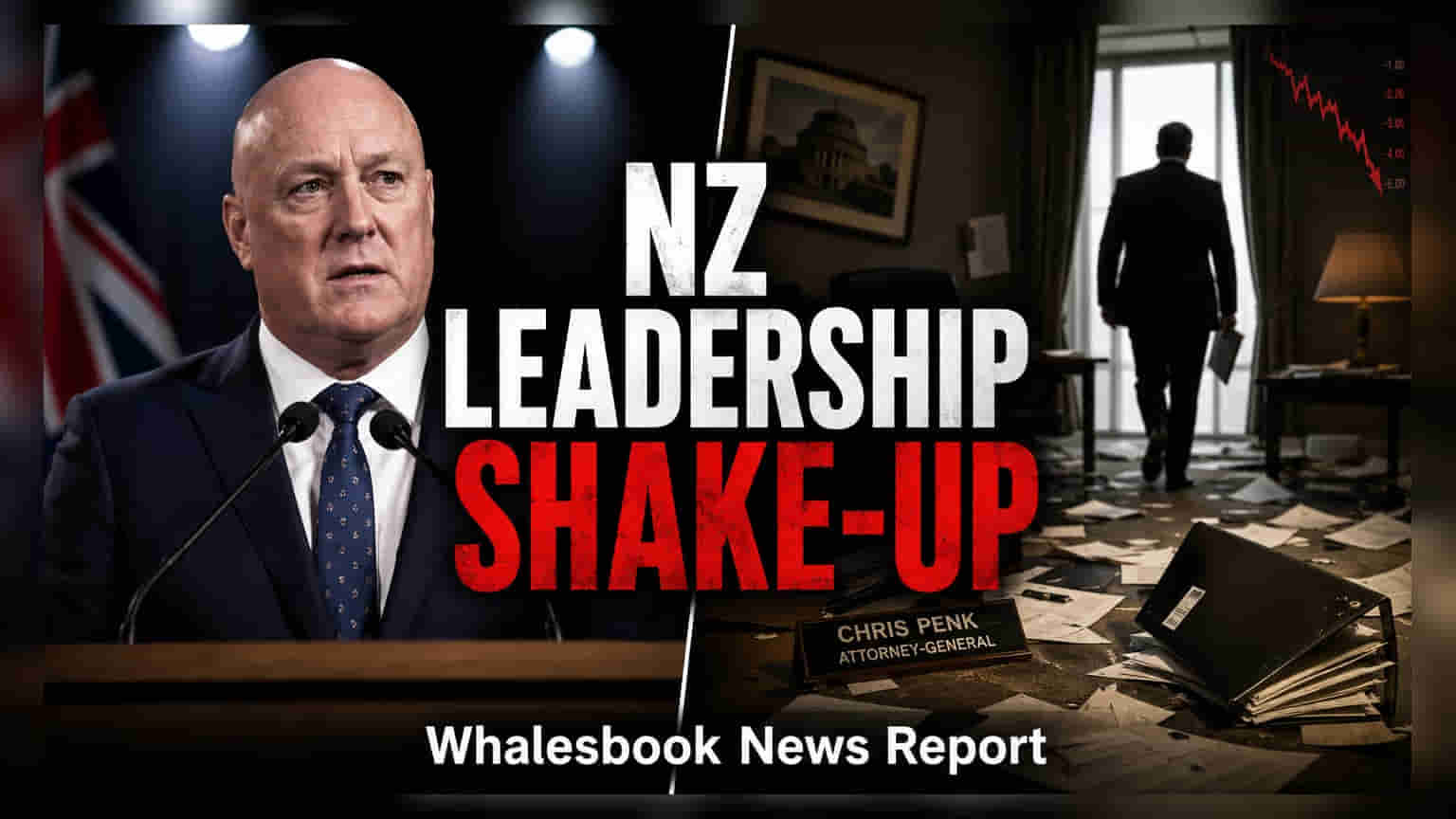
New Zealand Prime Minister Christopher Luxon has survived a leadership challenge within his National Party, less than three months before the November 7 general election. Following the vote, Luxon dismissed Defence Minister Chris Penk. The internal friction highlights growing political instability, which can impact business confidence and currency volatility as the election approaches.
New Zealand Prime Minister Christopher Luxon secured his leadership on Wednesday, August 12, 2026, after surviving a confidence vote within the National Party. The vote took place during a closed-door caucus meeting in Wellington. Shortly after confirming his position, Luxon announced the removal of Defence Minister Chris Penk from his cabinet, identifying him as the person who spearheaded the challenge.
This event marks the second leadership challenge Luxon has faced in 2026, following a similar move in April. With the general election scheduled for November 7, 2026, the ongoing internal disagreements present significant political friction for the ruling party. Following the removal of Penk, Luxon quickly restructured his cabinet. Justice Minister Paul Goldsmith has been appointed to take over the Defence, Veterans, Space, GCSB, and NZSIS portfolios, while Simon Watts has been named the new Minister for Building and Construction.
Economic and Political Impact
For investors and global market watchers, political instability in a developed economy like New Zealand is a key monitorable. Internal party conflict and the dismissal of cabinet ministers can lead to policy uncertainty, which often impacts business sentiment and currency stability. When a government faces repeated leadership challenges, it can create a wait-and-see environment for both domestic and foreign investors. Such volatility sometimes leads to increased fluctuations in the New Zealand Dollar (NZD), as traders assess whether the administration can maintain its economic agenda and focus on the upcoming election campaign.
Recent controversies, including public remarks by the Prime Minister that were perceived as out of touch with the current economic climate, have contributed to the unease within the party. These incidents, combined with the latest leadership attempt, have been criticized by the opposition Labour Party, led by Chris Hipkins, as a source of distraction that may hinder effective governance.
What Investors Should Monitor
The immediate focus for observers will be how effectively the reshuffled cabinet manages its responsibilities in the lead-up to the November election. Political stability is essential for maintaining investor confidence in national economic policies. Market participants will likely watch for any shifts in government economic strategy or fiscal policy as the election date approaches. Additionally, public opinion polling and party unity will remain critical, as these factors will determine the government's ability to implement its platform through to the end of the year.