

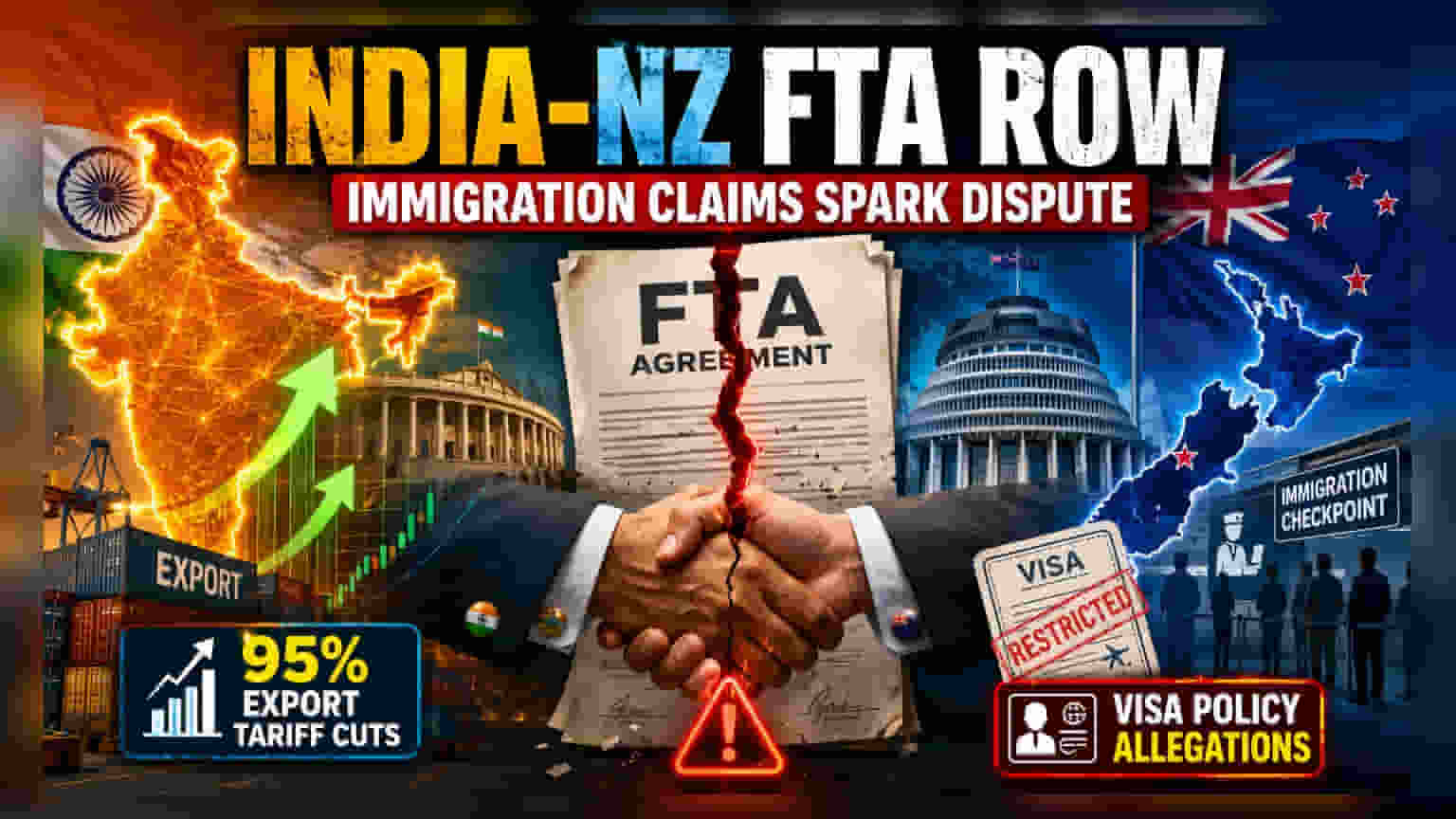
New Zealand Foreign Minister Winston Peters has accused the government of covertly imposing discriminatory visa rules on Indian citizens under the new Free Trade Agreement. Trade Minister Todd McClay denied the allegations, labeling them misinformation, and maintained that the FTA is a major economic benefit. The trade deal recently passed its first legislative reading in parliament.
What Happened
Winston Peters, New Zealand's Foreign Minister and leader of New Zealand First, has raised serious allegations against the government regarding the recently ratified India-New Zealand Free Trade Agreement (FTA). Peters claims that the government has covertly implemented discriminatory immigration policies that specifically target Indian citizens. This dispute has emerged as a significant point of contention following the advancement of the trade legislation through the New Zealand parliament.
The Specific Immigration Allegations
Peters has alleged that the government introduced new immigration settings that uniquely affect Indian nationals. According to his claims, these measures include an exclusive labor market and economic needs test for Indian citizens—a requirement not applied to nationals of other countries with similar FTA agreements.
Furthermore, Peters argued that the changes restrict Indian citizens from applying for temporary employment entry visas from within New Zealand and bar them from counting work experience gained on these visas toward residency. He contended that these restrictions are not applied uniformly to other FTA partners, such as China, Thailand, or South Korea, and suggested that the government attempted to avoid public scrutiny of these measures.
Government Rebuttal and FTA Status
Trade Minister Todd McClay has firmly rejected the allegations, describing them as "misinformation." During the first reading of the India FTA legislation, which passed with a vote of 93 to 29, McClay characterized the trade pact as a "once in a generation" economic opportunity.
He argued that the agreement is vital for strengthening economic ties and noted that it is expected to reduce tariffs on 95% of New Zealand's exports to India. The government maintains that the accusations are politically motivated and inconsistent with the actual framework of the FTA.
Why The Diplomatic Context Matters
Trade agreements are designed to deepen economic cooperation, investment, and movement of skilled workers between nations. While the government emphasizes the economic benefits of the deal, public allegations of discriminatory practices can introduce uncertainty regarding the bilateral relationship. The outcome of this disagreement will be closely watched, as it could influence the implementation phase and the public perception of the trade partnership in both countries.
What To Watch Next
For stakeholders following this development, the key monitorables include further government clarifications regarding visa policies and the formal implementation timeline for the FTA. Observers will also track whether these political disagreements impact the long-term economic cooperation, investment pledges, or the projected trade volumes between India and New Zealand as the agreement progresses.