

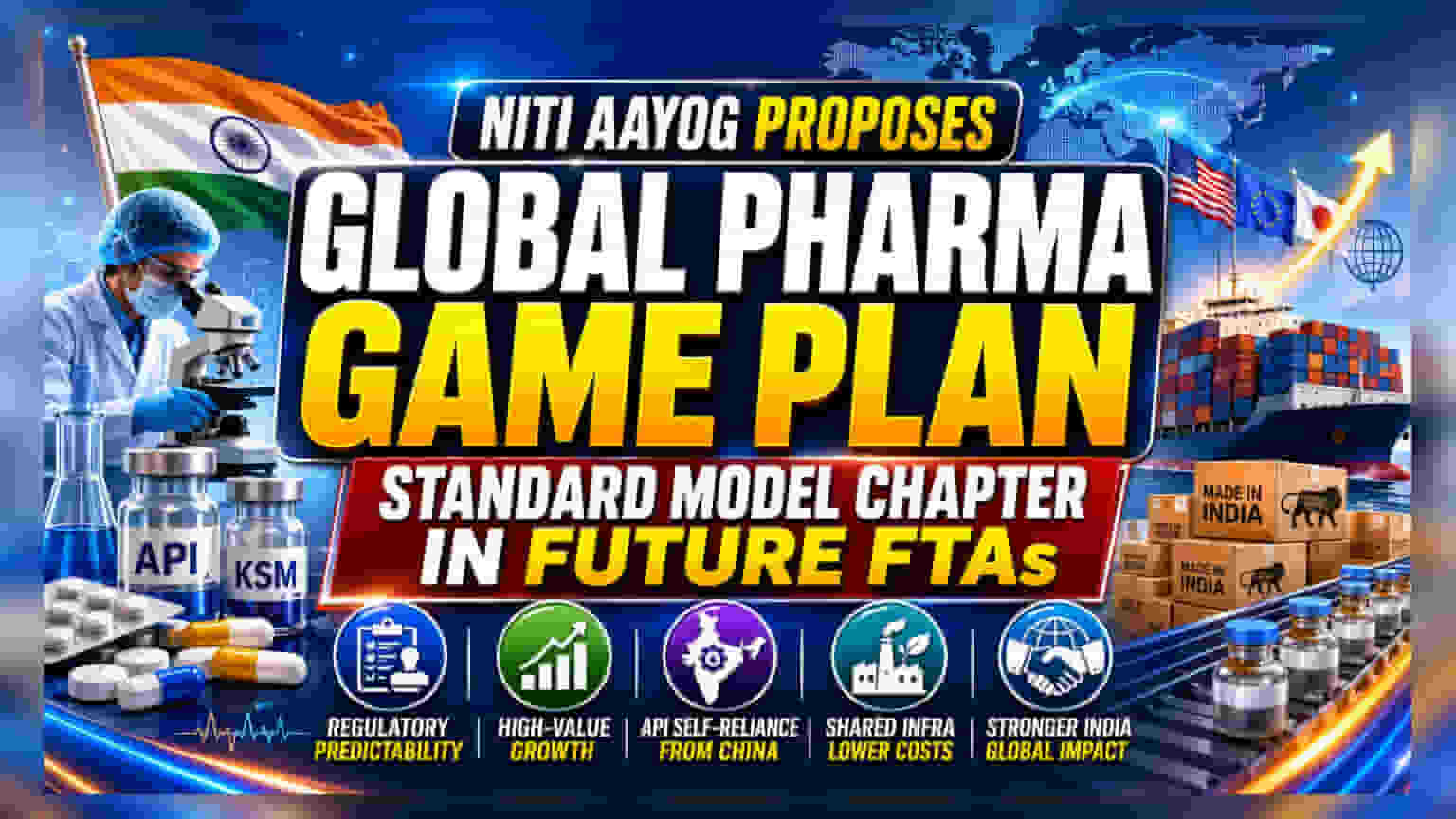
NITI Aayog has proposed a "model pharmaceutical chapter" for future Free Trade Agreements to simplify trade and reduce administrative hurdles. The report highlights India’s need to cut its 65% dependence on Chinese raw materials and shift focus from generic volume to high-value drug innovation to capture a larger share of the $1.3 trillion global market.
What Happened
NITI Aayog, India’s government think tank, has proposed a standardized “model pharmaceutical chapter” to be included in all future Free Trade Agreements (FTAs). Released on June 23, 2026, in its eighth Trade Watch Quarterly report, the proposal aims to improve regulatory predictability for Indian drug makers. Instead of focusing only on reducing import taxes (tariffs), the Aayog argues that the government must systematically address non-tariff barriers—such as complex product registrations, lengthy inspections, and varying documentation standards—that currently slow down Indian exports in major markets like the US, EU, and Japan.
The Shift from Volume to Value
While India is widely recognized as the "pharmacy of the world" for its massive production of generic medicines, the report suggests this status is no longer enough to drive long-term growth. India currently supplies about 20% of the world’s generic medicines by volume but accounts for a much smaller share of the global pharmaceutical market's total value. The Aayog emphasized that Indian firms must transition toward high-value, innovation-led products like biologics and advanced therapeutics. The report noted that R&D investment by Indian firms remains low, at approximately 7% of net sales, compared to 15–20% globally, creating a gap that limits the country's ability to compete in high-margin segments.
The China Dependency Risk
A major highlight of the report is the persistent vulnerability in the pharmaceutical supply chain. India remains heavily reliant on China for 65% of its requirements for critical Active Pharmaceutical Ingredients (APIs) and Key Starting Materials (KSMs). This concentration risk is especially high in fermentation-based products. The report warns that this dependence exposes Indian companies to supply chain disruptions and geopolitical risks, making it difficult for domestic manufacturers to fully secure their production lines against external shocks.
Lowering Costs via Shared Infrastructure
To help domestic companies better manage costs, the Aayog proposed a change in how environmental compliance is handled. Currently, individual manufacturing firms bear the full cost and responsibility for environmental standards. The report suggests shifting this to shared infrastructure models, where common facilities manage waste treatment and compliance. This approach is intended to lower the high capital and operational costs that smaller pharmaceutical players face when trying to meet strict global environmental regulations.
What Investors Should Monitor
Investors may want to track several factors following this proposal. First, keep an eye on upcoming Free Trade Agreement negotiations to see if this "model pharma chapter" is adopted, as this could directly simplify market access for top exporters. Second, monitor company-level R&D spending and efforts toward backward integration—specifically, how much companies are investing in domestic API manufacturing to reduce dependence on Chinese imports. Finally, watch for government-backed initiatives or policy updates related to pharmaceutical clusters and shared environmental infrastructure, as these could influence operating margins for smaller and mid-sized drug manufacturers.