

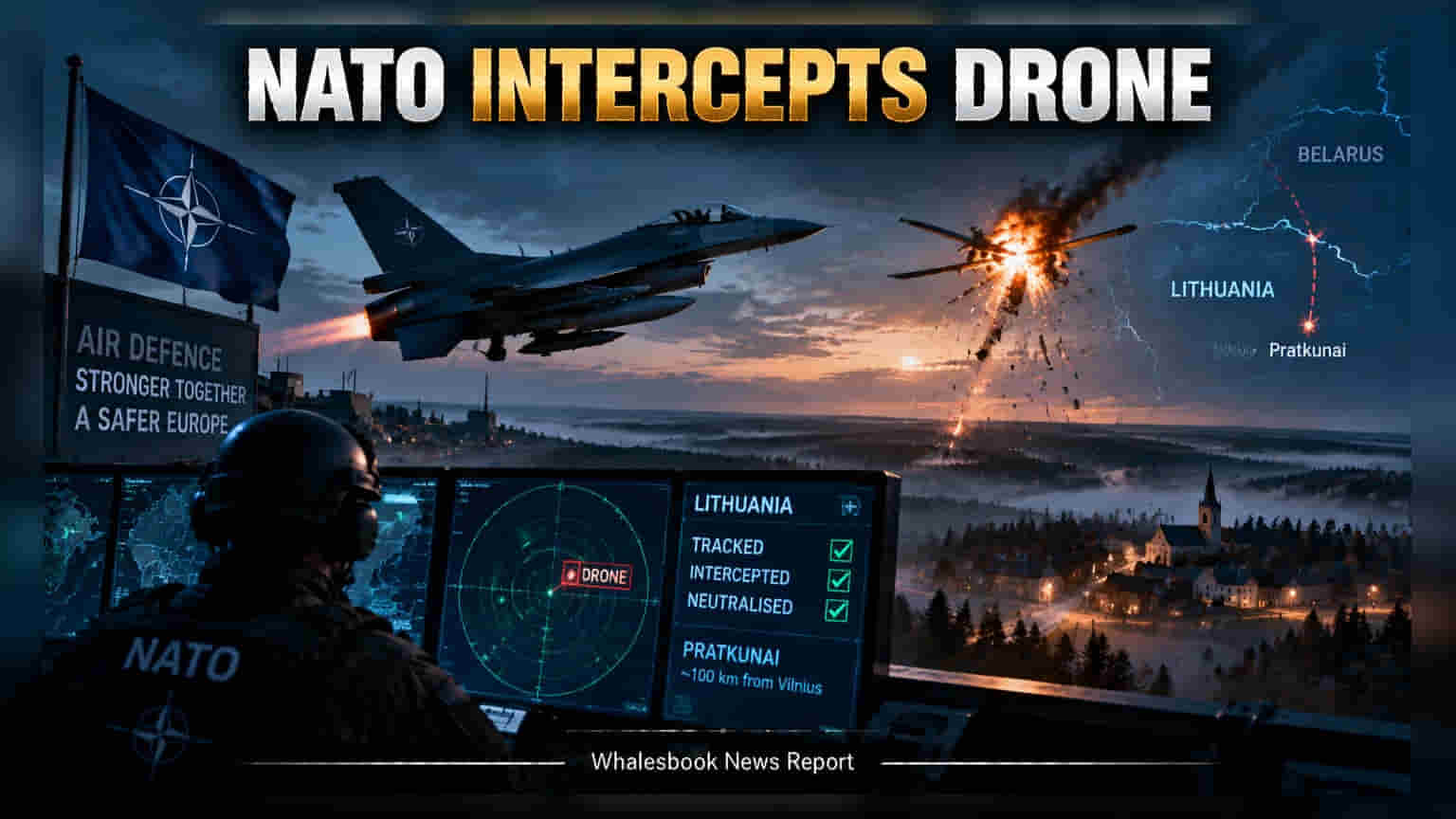
NATO fighter jets intercepted an explosive-carrying drone in Lithuanian airspace on Tuesday, marking a serious escalation on the alliance's eastern flank. This incident coincides with maritime friction near Denmark and operational disruptions at logistics sites in Russia. Global investors are monitoring these events for potential impacts on supply chain stability and regional energy security.
NATO fighter jets successfully intercepted and destroyed an unidentified drone in Lithuanian airspace on Tuesday. The intercept took place near the village of Pratkunai, approximately 100 kilometers from the capital, Vilnius. Officials from the Lithuanian Air Force confirmed that recovered wreckage from the device showed signs of explosive materials. The drone reportedly crossed from Belarus and remained in the airspace for about 30 minutes before being neutralized by NATO defense assets.
The incident highlights the growing security pressure along NATO's eastern border. In a parallel development, the Danish government reported that a Russian frigate fired flares at a Danish military helicopter performing routine monitoring near Gedser. These events have prompted increased diplomatic activity, with Denmark summoning the Russian ambassador to address what the government characterized as an unacceptable provocation.
For global markets, these developments underscore the ongoing instability in the European theater. Alongside these border tensions, recent drone strikes have impacted industrial and logistics facilities within Russia, including a warehouse operated by the logistics firm Ozon in the city of Taganrog. The facility suffered significant fire damage, forcing the company to suspend operations at that location. These disruptions serve as a reminder of the operational risks that companies with infrastructure in or near the conflict zone currently face.
Investors often monitor such geopolitical escalations due to their potential impact on global supply chains, commodity prices, and overall risk sentiment. Increased military activity in the Baltic region and ongoing infrastructure attacks in the area can create volatility in the logistics and energy sectors. The next important steps for market observers will be diplomatic statements from NATO member states and any potential shifts in the operational status of logistics networks across the region.