

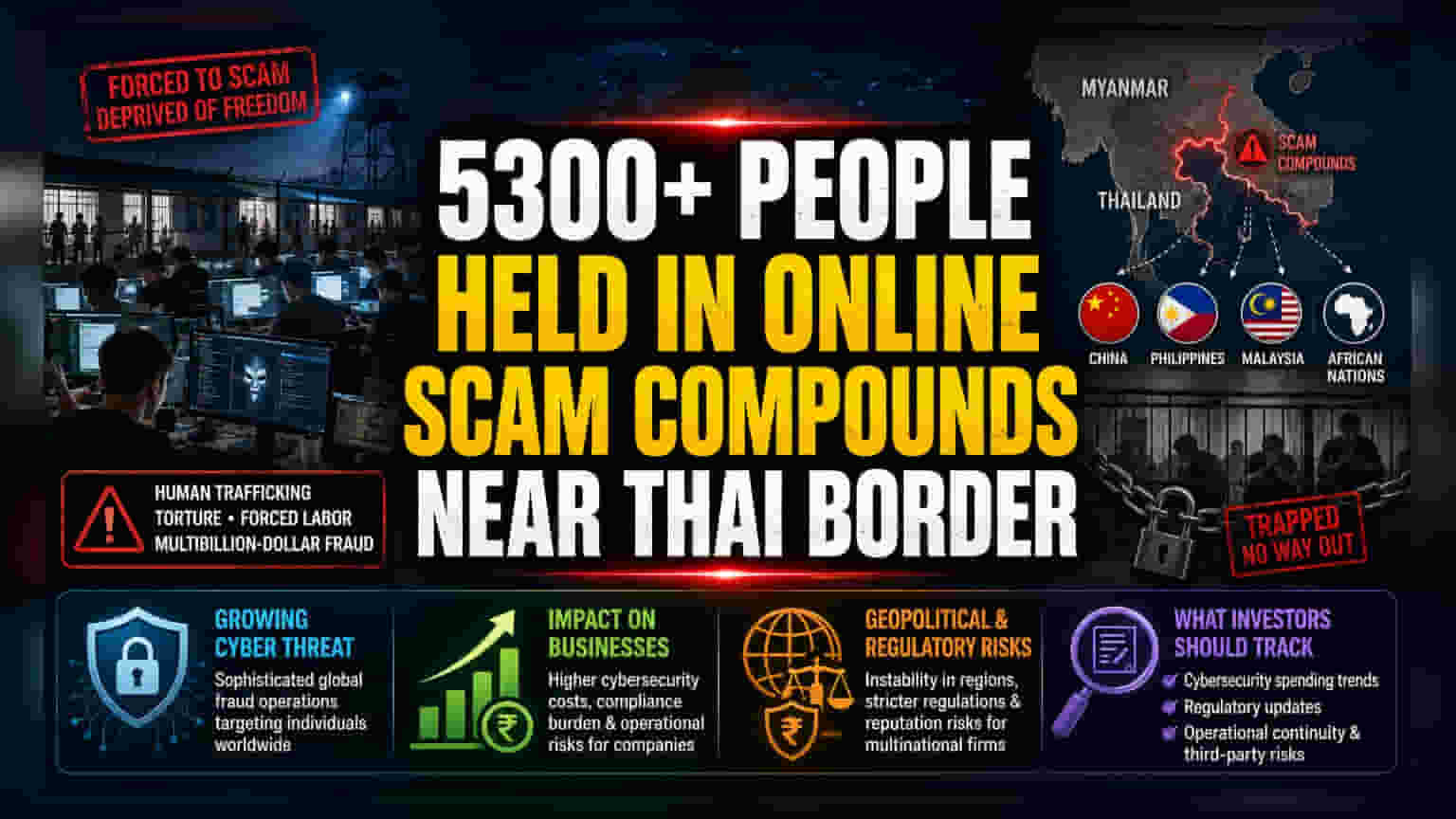
Over 5,300 individuals remain trapped in online scam compounds in Myanmar, operating a multibillion-dollar fraud network. For global businesses and investors, these centers represent a growing systemic cybersecurity threat, necessitating increased focus on digital security and compliance measures across the financial and technology sectors.
What Happened
Recent reports indicate that more than 5,300 people remain held against their will in online scam compounds located near the Thai border in Myanmar. According to the Civil Society Network for Human Trafficking Victim Assistance (CSNHTV), these victims—hailing from countries including China, the Philippines, Malaysia, and several African nations—are being forced to operate large-scale, fraudulent online schemes. This situation persists despite international efforts, including a multinational crackdown last year, to dismantle these criminal networks.
The Scale of the Fraud Industry
These operations, largely concentrated in locations controlled by militia groups, have evolved into a sophisticated, multibillion-dollar global industry. According to United Nations reports, these facilities expanded significantly during the COVID-19 pandemic. Initially, these centers were linked to loosely regulated gambling operations, but they have since pivoted toward complex online fraud, targeting individuals across the globe, including in the United States and Europe. The UN has documented severe human rights abuses within these compounds, ranging from forced labor to torture.
Why This Matters for Investors
For investors and corporate stakeholders, the proliferation of these high-tech scam centers highlights the deteriorating global cybersecurity environment. These criminal syndicates are not merely local issues; they are professionalized organizations that leverage digital tools to facilitate financial crime.
This trend serves as a stark reminder of the escalating cybersecurity risks that corporations, especially those in the financial services, banking, and digital commerce sectors, must manage. As online fraud becomes more frequent and complex, companies are required to increase their spending on cybersecurity, data protection, and fraud detection technologies. While this drives demand for IT security services, it also elevates the operational costs and compliance burdens for listed entities that operate internationally.
Geopolitical and Operational Risks
These centers operate in areas with limited government control, creating significant geopolitical and regulatory risks. For multinational corporations with supply chains or service centers in Southeast Asia, the region faces increased scrutiny. Regulators are likely to impose stricter compliance requirements on companies regarding their digital partnerships and financial transactions.
Furthermore, the reputational risk associated with being indirectly linked to these regions or failing to detect fraudulent activity originating from such hubs can be severe. Investors should monitor how companies strengthen their internal controls, enhance their "know-your-customer" (KYC) protocols, and invest in cybersecurity infrastructure to mitigate the impact of such widespread and sophisticated criminal networks.
What Investors Should Track
Investors may monitor the following to understand the broader impact:
Cybersecurity Spending: Trends in IT budget allocation toward security and threat intelligence in the banking and technology sectors.
Regulatory Updates: Any new, stricter international regulations regarding online financial transactions and cross-border digital compliance.
Operational Continuity: How companies manage risks when operating or outsourcing in jurisdictions that may be prone to instability or lack of regulatory oversight.