

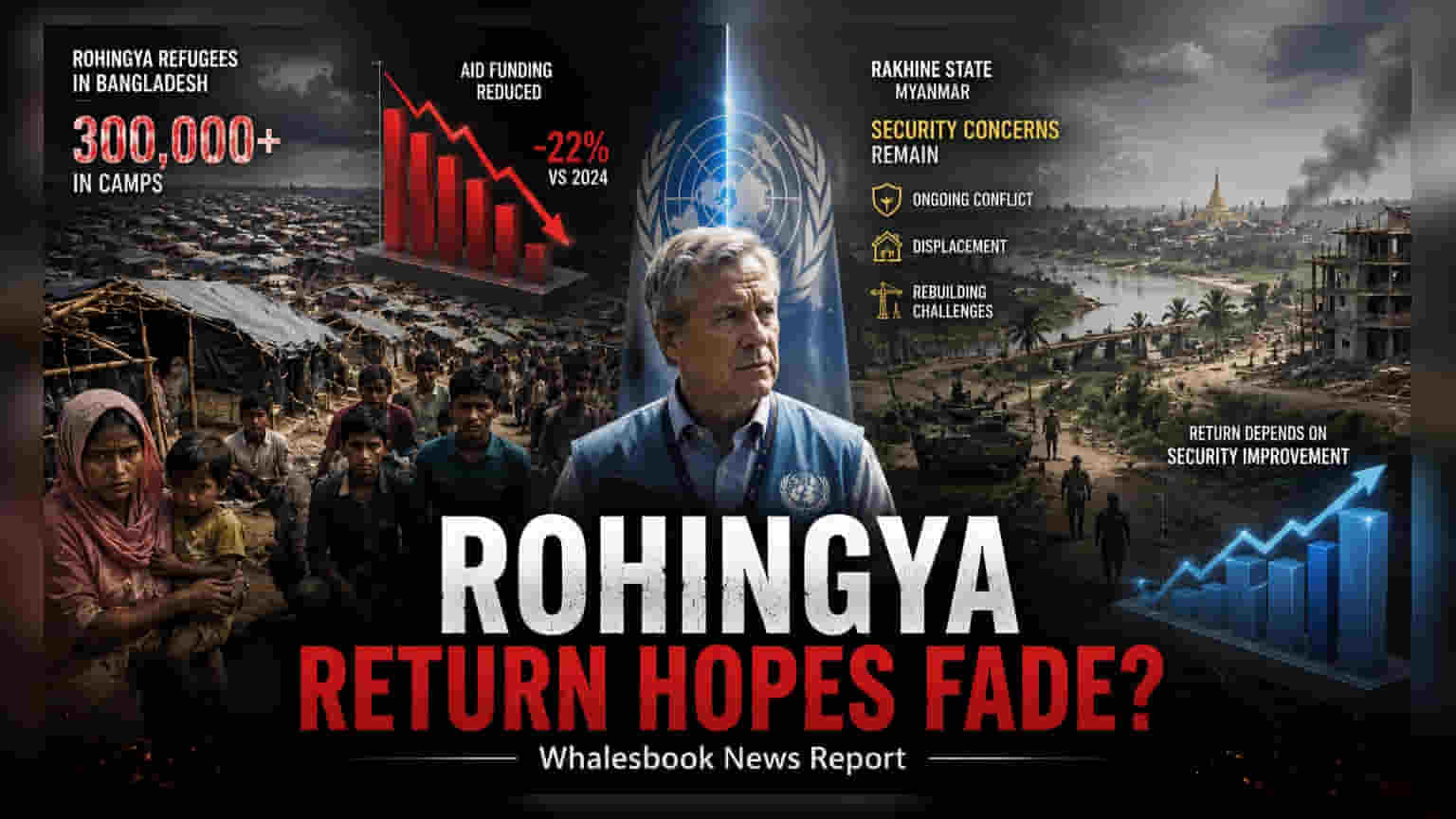
Myanmar’s government has declared that over 300,000 Rohingya refugees currently in Bangladesh are eligible for return once security in Rakhine state improves. This development follows the verification of more than 400,000 individuals, though the process remains stalled by ongoing regional conflict and a lack of a fixed timeline.
Myanmar’s military-backed government has announced that it is prepared to accept the return of over 300,000 Rohingya refugees currently residing in Bangladesh. The move comes as an attempt to address the long-standing displacement crisis that has persisted since 2017. According to government data, officials have screened 426,545 individuals from a list provided by Bangladesh, confirming 308,797 as former residents of Rakhine state.
Conditions for Repatriation
While the announcement outlines a potential pathway for return, the government has explicitly stated that the process is contingent upon the improvement of security conditions within Rakhine state. There is currently no fixed timeline for these returns, and the proposal faces significant practical challenges. The region remains a site of active conflict, with ongoing clashes between the military and the Arakan Army complicating any efforts to establish the stability required for safe resettlement.
Regional and Geopolitical Context
This announcement is a notable geopolitical update for the South Asian region, which monitors the situation for its impact on cross-border stability, humanitarian aid, and regional relations. The repatriation issue has been a point of contention for years. While a formal agreement was signed in 2018, progress has remained minimal, particularly following the political turmoil that began in 2021. Previous attempts at repatriation have struggled due to the absence of safe, voluntary, and dignified conditions for the refugees.
Risks and Market Impact
It is important for observers to note that this is a geopolitical event rather than a stock market or corporate update. There are no listed companies directly involved in the repatriation process. The primary risks remain the deep-seated instability in Rakhine and the conflicting reports regarding the existence of formal bilateral agreements between nations involved in the crisis. For those tracking the region, the key monitorables are the progress of diplomatic discussions between Myanmar and Bangladesh, the ability of aid agencies to operate in the region, and whether the security situation in Rakhine stabilizes sufficiently to allow for any movement.
Investors and analysts typically track such regional developments because persistent instability can influence cross-border trade, infrastructure investment sentiment in bordering states, and the allocation of international humanitarian aid, which affects broader economic conditions in South and Southeast Asia.