 Whalesbook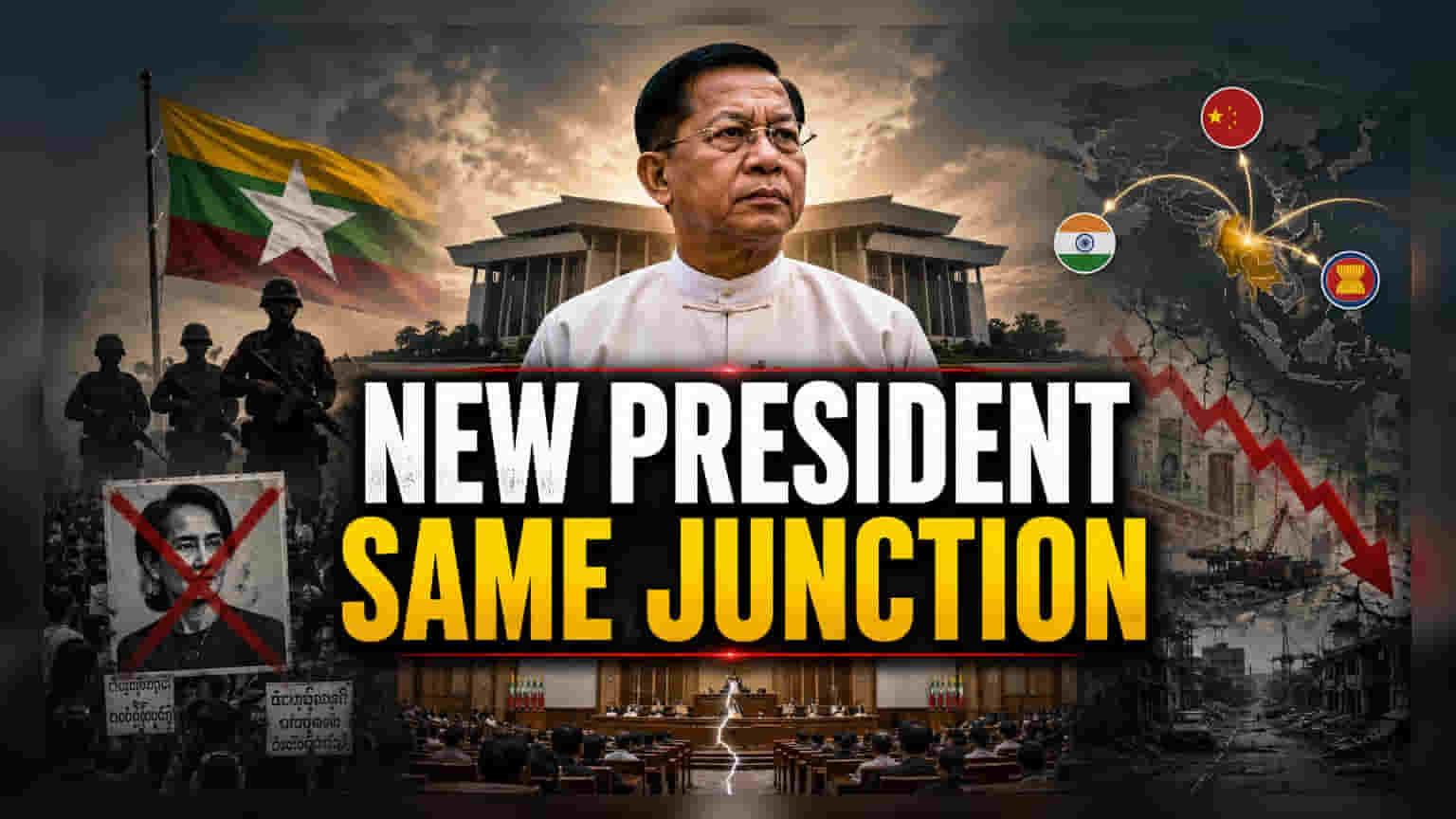


The Facade of Civilian Governance
The transition of Min Aung Hlaing from commander-in-chief to president represents a strategic attempt to rebrand the military junta as a civilian-led administration. By discarding military regalia for traditional attire, the regime seeks to cultivate the optics of democratic normalization following five years of direct rule initiated by the 2021 coup. This political restructuring relies heavily on the Union Solidarity and Development Party, which secured a dominant parliamentary majority under conditions that excluded major opposition voices, including Aung San Suu Kyi's National League for Democracy.
Internal Power Dynamics and Fragility
The survival of this new political arrangement hinges on the precarious power-sharing agreement between Min Aung Hlaing and Khin Yi, the newly appointed Speaker of the lower House. While the appointment of Khin Yi is intended to provide a veneer of civilian administrative competence, deep-seated friction between the military leadership and party loyalists threatens to destabilize the government from within. Historical precedents from the Thein Sein era suggest that such dual-power structures often result in executive gridlock. Observers note that the military’s heavy-handed influence on candidate selection has already alienated key political factions, leaving the USDP's internal cohesion fragile at best.
The Geopolitical Pivot and Economic Risks
To circumvent the impact of persistent Western sanctions, the new administration is prioritizing an aggressive diplomatic outreach toward Beijing, New Delhi, and ASEAN partners. The appointment of former Ambassador to Beijing, Tin Maung Swe, as foreign minister underscores a strategic pivot toward China as a primary economic and diplomatic lifeline. Despite these efforts, the regime remains isolated within key international forums, including the United Nations, where the Credentials Committee has resisted efforts to recognize the junta’s appointees. The economic outlook remains stagnant, as the ongoing civil war disrupts supply chains and deters foreign direct investment, creating a cycle of domestic hardship that the new administration is currently ill-equipped to resolve.
The Structural Bear Case
Beyond political theater, the regime faces existential risks tied to its lack of broad-based domestic support and fiscal insolvency. The legitimacy crisis prevents the normalization of trade relations with major global markets, ensuring that capital flight continues to plague the economy. Furthermore, the military’s inability to quell armed resistance across multiple regions forces a perpetual reallocation of state resources toward defense rather than economic development. Analysts contend that without substantive concessions to democratic stakeholders, the regime’s reliance on coercive control will likely trigger further civil unrest, leaving the newly installed civilian facade vulnerable to collapse.