 Whalesbook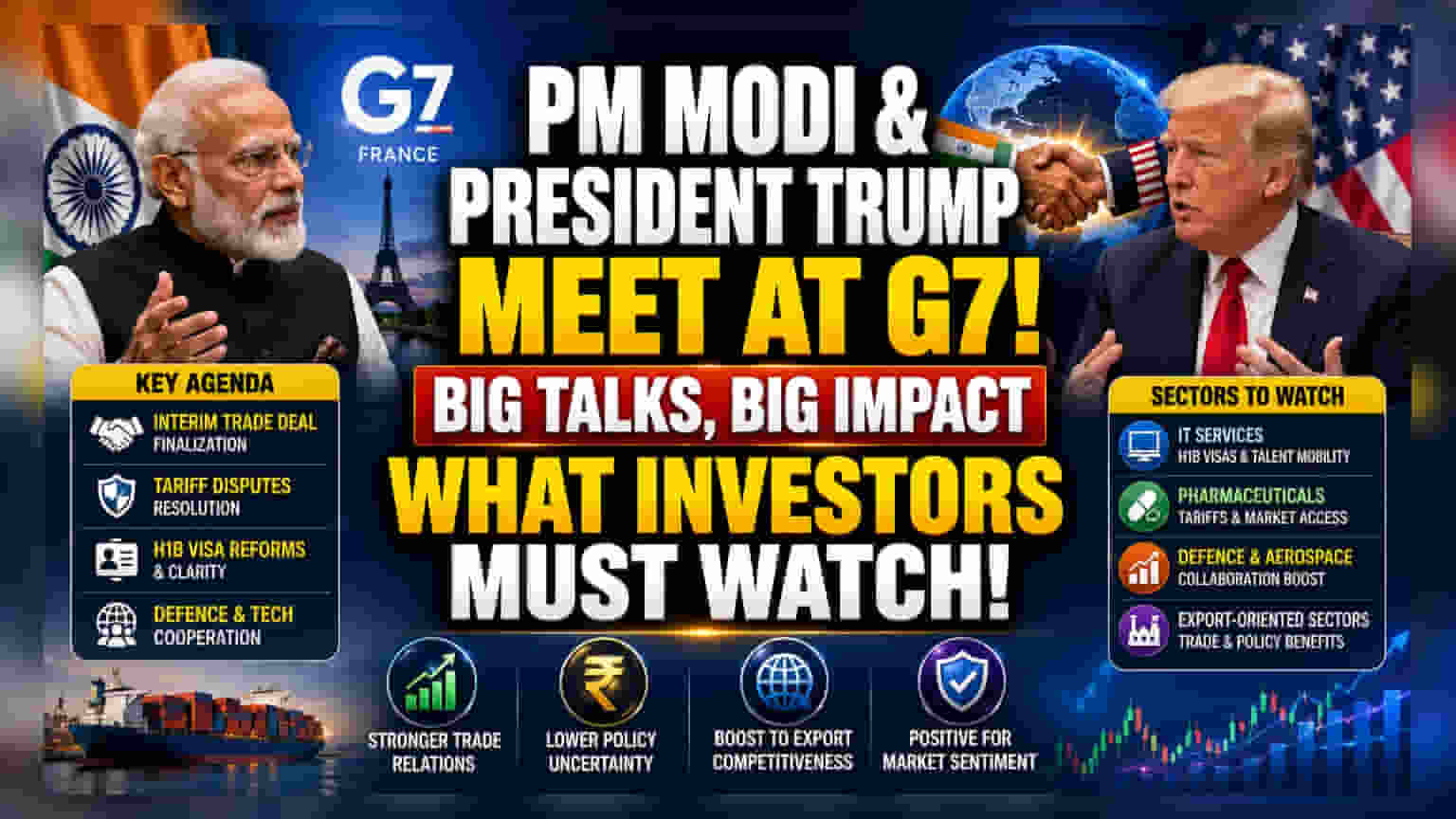


Prime Minister Narendra Modi and US President Donald Trump are set to meet at the G7 summit to discuss trade deals, visa reforms, and defense cooperation. This meeting is significant for Indian investors, particularly in sectors like IT, pharma, and manufacturing, as potential policy shifts could influence export conditions and regulatory hurdles. Markets will be closely watching for progress on a potential interim trade agreement and resolution of ongoing tariff disputes.
What Happened
Prime Minister Narendra Modi and US President Donald Trump are scheduled to hold a meeting on the sidelines of the G7 summit in France. This discussion comes at a time when both nations are looking to strengthen economic ties. The agenda is expected to cover a wide range of issues, including the potential finalization of an interim bilateral trade deal, resolution of tariff-related disputes, and reforms concerning H1B visas. The meeting is viewed as a high-level push to provide political momentum to ongoing negotiations, which have seen active engagement from senior officials from both countries in recent months.
Why This Matters For Investors
For Indian equity markets, the US-India relationship is a major factor influencing sentiment, especially for sectors that depend heavily on exports to the American market. A formal trade agreement or a reduction in trade friction can provide a more predictable environment for Indian companies operating in the US. When political leadership signals progress, it often reduces uncertainty for large-cap firms that have significant exposure to US revenue streams. Conversely, unresolved trade disputes have historically led to concerns about market access and regulatory challenges for Indian exporters.
Sector Impacts
The IT services sector is one of the most closely watched areas regarding this meeting. The H1B visa process directly affects the cost and operational ability of Indian IT firms to deploy talent in the US. Any framework that simplifies visa norms or provides clarity can be seen as a positive development for service continuity. Similarly, the pharmaceutical sector, a major Indian exporter, is sensitive to trade agreements. Changes in tariff structures or compliance requirements negotiated at this level can directly affect the profit margins of generic drug manufacturers who rely on the US market.
The Trade and Policy Risk
While the market looks for positive news, it is important to consider existing challenges. A key point of contention remains the Section 301 investigation by the Office of the United States Trade Representative. This investigation has previously flagged concerns about certain trade practices in India, leading to discussions about potential tariff adjustments. Investors should remain aware that trade negotiations are complex and often involve difficult compromises. Any perception that the trade gap is widening or that regulatory demands are becoming stricter could create headwinds for specific export-oriented industries.
What Investors Should Track
The market’s reaction will depend heavily on the specific outcomes announced after the meeting. Investors may watch for official statements regarding the timeline for the interim trade deal and whether there is any concrete easing of visa-related restrictions. Beyond the headline news, it will be important to observe the management commentary from large IT and pharma companies in the coming weeks, as they will likely interpret how any policy changes could influence their operational costs and growth plans. The progress on the defense and technology transfer front may also be relevant for domestic manufacturing and defense-linked stocks, provided specific collaborations are announced.