

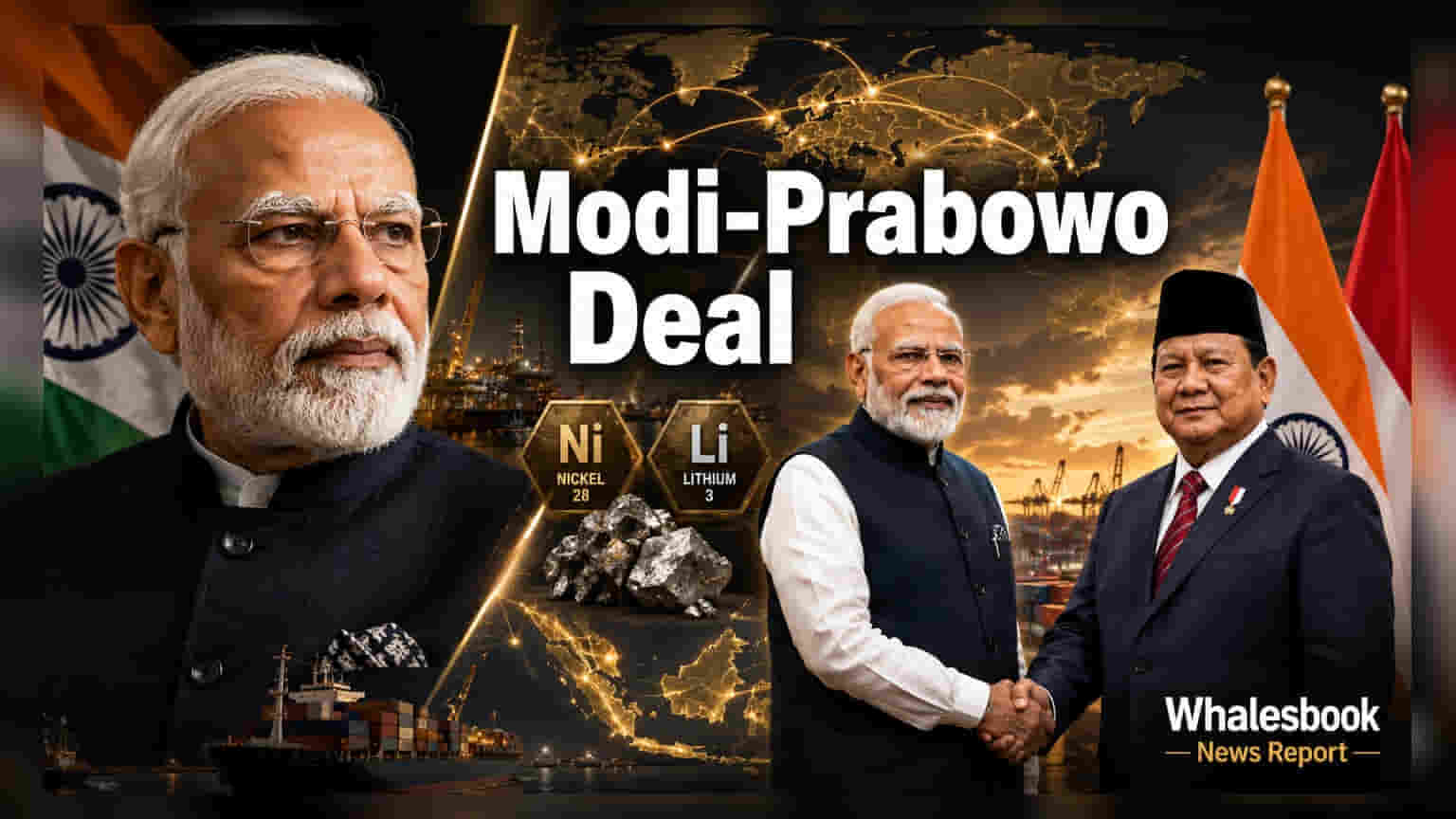
Prime Minister Narendra Modi and Indonesian President Prabowo Subianto are discussing trade and critical mineral supplies in Jakarta. For Indian investors, the focus is on securing nickel imports, which are essential for India's growing electric vehicle and battery manufacturing sectors.
Prime Minister Narendra Modi began his official visit to Indonesia on Tuesday, holding high-level discussions with President Prabowo Subianto aimed at deepening cooperation in defence, maritime security, and economic trade. The meetings in Jakarta are viewed as a key step in securing long-term supply chains for critical minerals that are necessary for India's industrial growth.
Access to Nickel for India’s Battery Sector
A central focus of the dialogue is securing reliable access to critical minerals, specifically nickel. Indonesia holds approximately 21% of the world’s total nickel reserves, making it a globally significant supplier. This partnership is highly relevant for India, as the country pushes to expand its domestic electric vehicle (EV) technology and lithium-ion battery manufacturing capabilities. Ensuring a stable supply of nickel can help Indian manufacturers reduce import dependency and manage raw material costs for green energy products.
Strengthening the Economic Corridor
Trade relations between the two nations have been on an upward trend, with bilateral trade reaching nearly $24.8 billion in the 2025-26 fiscal year. Currently, more than 130 Indian companies have active investments in Indonesia, ranging across infrastructure, manufacturing, and consumer goods. The current discussions are expected to encourage further inter-industry cooperation, which may benefit Indian firms already operating in the region or those looking to expand their manufacturing footprint in Southeast Asia.
Strategic and Regional Context
Beyond economic ties, the visit underscores India’s 'Act East' policy and its strategic interest in maintaining a free and open Indo-Pacific. Enhanced maritime and defence cooperation, including military exercises and industry-level collaboration, serves to strengthen the geopolitical alignment between the two nations. This stability is often monitored by international investors for its potential to ensure trade security along critical maritime routes.
The next important developments to watch include specific policy announcements or bilateral agreements regarding mineral extraction rights, mining joint ventures, or any incentives provided for Indian firms setting up battery-grade material plants in Indonesia. Investors will also look for updates on trade facilitations that may influence the cost of raw materials for India’s automotive and renewable energy sectors in the coming quarters.