 Whalesbook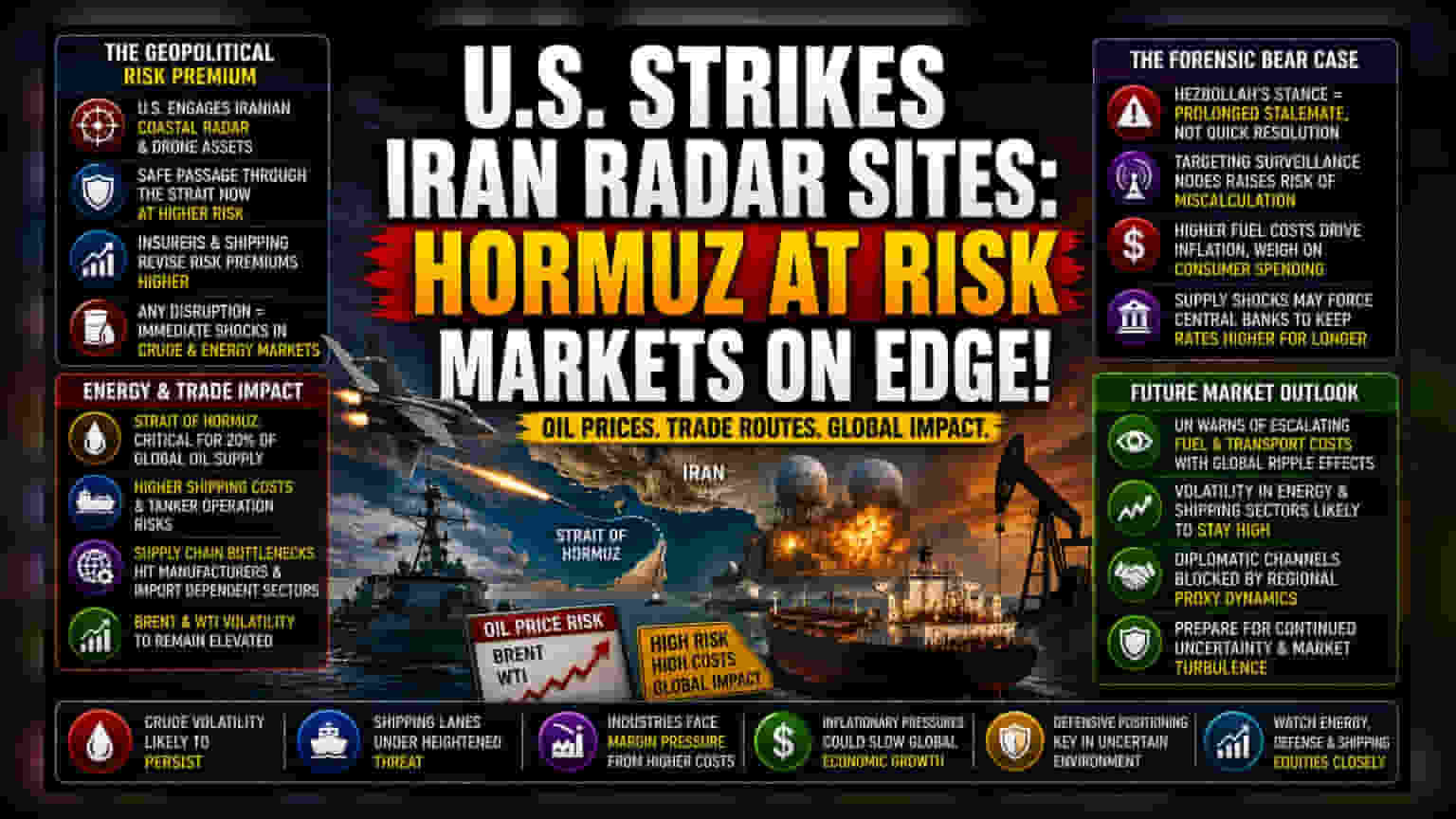


The Geopolitical Risk Premium
The direct engagement between U.S. forces and Iranian coastal radar infrastructure represents a significant breach of recent operational norms in the Persian Gulf. By neutralizing drone assets directed toward the Strait of Hormuz, the U.S. has effectively raised the threshold for maritime safe passage, forcing insurers and shipping conglomerates to re-evaluate risk premiums. Markets remain hypersensitive to these developments, as any prolonged disruption to the Strait—a critical artery for global oil supply—inevitably triggers immediate price shocks in crude futures and related energy equities.
Impact on Energy and Trade Logistics
The activation of air defense systems across Kuwait and Bahrain underscores the broadening geographic reach of this four-month conflict. Beyond the immediate military implications, the strike against radar sites on Qeshm Island suggests an intent to degrade Iran's A2/AD (Anti-Access/Area Denial) capabilities, which complicates the logistical flow for major global trade entities. Investors should monitor Brent and WTI volatility, as well as the operational status of tanker fleets moving through the region. Previous historical friction points in this waterway have historically resulted in multi-week spikes in logistics costs, creating margin compression for downstream manufacturers dependent on imported raw materials.
The Forensic Bear Case: Structural Instability
While the market often prices these events as temporary, the integration of Hezbollah’s stance as a precondition for regional peace suggests a prolonged stalemate rather than a brief diplomatic friction. The fundamental risk here is not just the kinetic exchange, but the potential for a systematic failure in regional energy infrastructure. Unlike past skirmishes, this environment involves active targeting of surveillance nodes, which increases the probability of miscalculation. Furthermore, the inflationary pressure resulting from elevated fuel costs acts as a drag on global consumer discretionary spending. There is a tangible danger that if the Strait remains compromised, the resulting supply chain bottlenecks will force central banks to maintain higher-for-longer interest rate stances to combat supply-side inflation, putting further pressure on equity valuations.
Future Market Outlook
Market participants are currently shifting focus toward the UN's warnings regarding escalating fuel and transport costs, which threaten to ripple through the broader global economy. Brokerage sentiment remains cautious, with analysts emphasizing that until a credible de-escalation framework is established, volatility indices in the energy and shipping sectors will likely remain elevated. Investors should prepare for continued uncertainty as diplomatic channels between Washington and Tehran remain obstructed by regional proxy dynamics.