 Whalesbook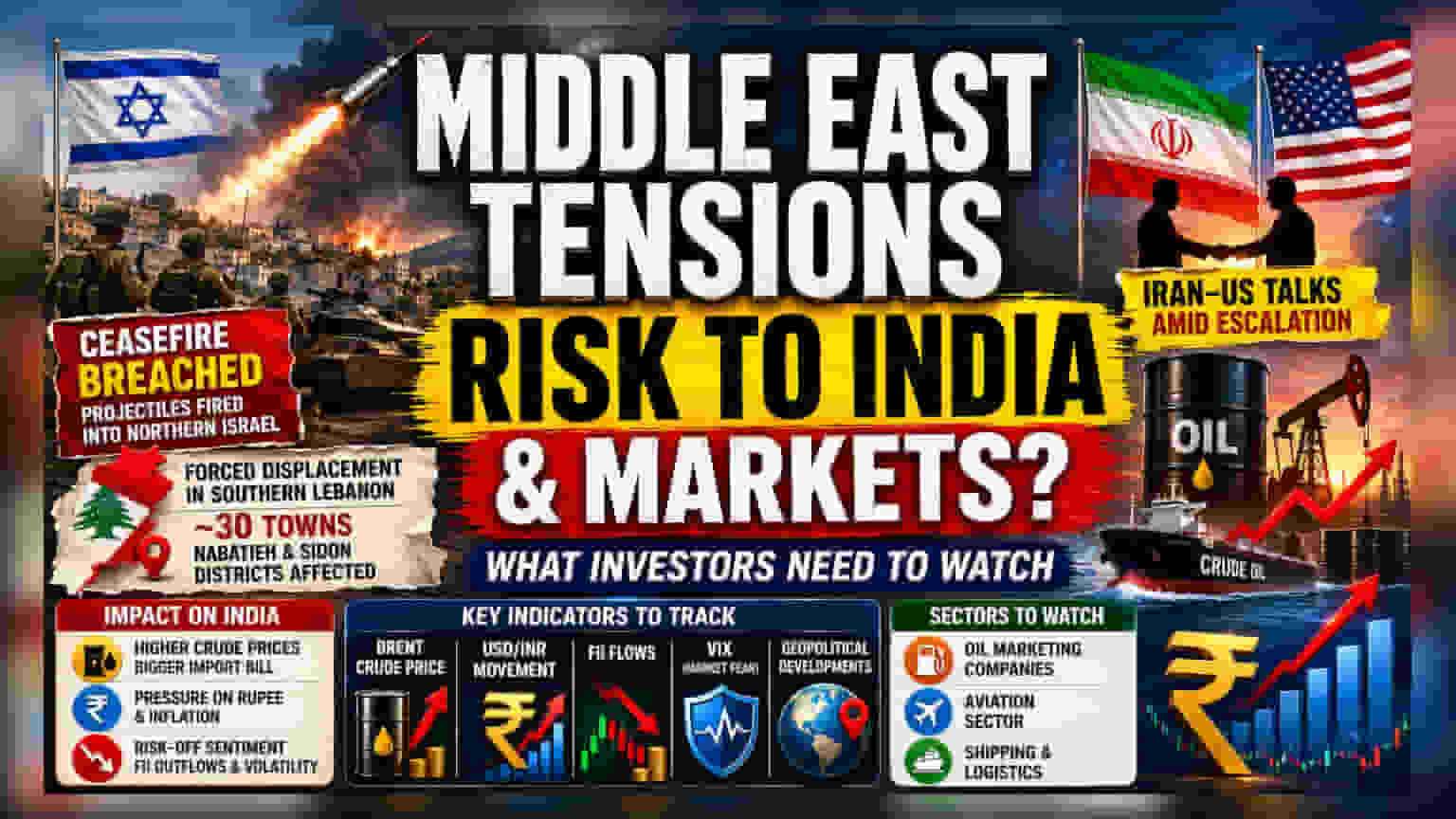


Rising hostilities between Israel and Hezbollah and new evacuation orders have increased regional uncertainty. For Indian investors, the key area to watch is the potential impact on crude oil prices, currency stability, and market sentiment, as geopolitical conflicts in the Middle East often influence global risk appetite.
What Happened
The Israeli military has reported a breach of the ceasefire agreement, citing the firing of projectiles into northern Israel. In response to these events, authorities have issued forced displacement orders for residents in nearly 30 towns across southern Lebanon, specifically within the Nabatieh and Sidon districts. This escalation occurs alongside ongoing diplomatic discussions between Iran and the United States aimed at regional de-escalation, creating a complex and uncertain environment for global markets.
Why This Matters For Indian Investors
Geopolitical instability in the Middle East is frequently a concern for the Indian economy. As India is a major importer of crude oil, any threat to supply lines or a general increase in regional tension can lead to volatility in oil prices. When oil prices spike, it can increase the import bill for India, which often puts pressure on the Indian Rupee and can influence inflation levels. While not every regional conflict causes a major economic disruption, the uncertainty usually leads to a 'risk-off' sentiment in global markets, where investors shift capital from emerging markets toward safer assets like the US Dollar or gold.
Understanding The Oil Link
Crude oil remains the primary channel through which Middle East conflicts affect the Indian stock market. If hostilities intensify, global oil benchmarks often react to fears of supply disruption or increased insurance and shipping costs in the region. For Indian investors, companies in sectors like Oil Marketing (OMCs) and Airlines are particularly sensitive to these moves. Rising crude prices can pressure the profit margins of Oil Marketing Companies if they are unable to pass on the costs to consumers, and higher Aviation Turbine Fuel (ATF) costs can weigh on airline profitability.
Market Sentiment And Foreign Flows
Apart from direct economic costs, rising geopolitical tension often impacts the sentiment of Foreign Institutional Investors (FIIs). When global instability increases, FIIs may reduce their exposure to emerging markets like India, preferring to hold cash or invest in less risky assets. This selling pressure can lead to increased volatility in the indices, regardless of the domestic company's actual performance. Investors typically watch the volatility index, known as the VIX, during such times to gauge how much fear is entering the market.
What Investors Should Track
Investors may want to monitor several key indicators in the coming days to understand how this situation is affecting the broader economy. First, the movement in Brent Crude oil prices is essential, as it directly impacts India's import costs. Second, the performance of the Indian Rupee against the US Dollar can signal how much pressure the currency is facing due to global risk. Third, keeping an eye on FII flow data can help investors see if international money is moving out of Indian equities. Finally, management commentary from companies with significant exposure to Middle Eastern trade or logistics can provide insights into potential supply chain risks. Maintaining a long-term view remains important, as short-term market reactions to geopolitical news can be sudden and sharp.