 Whalesbook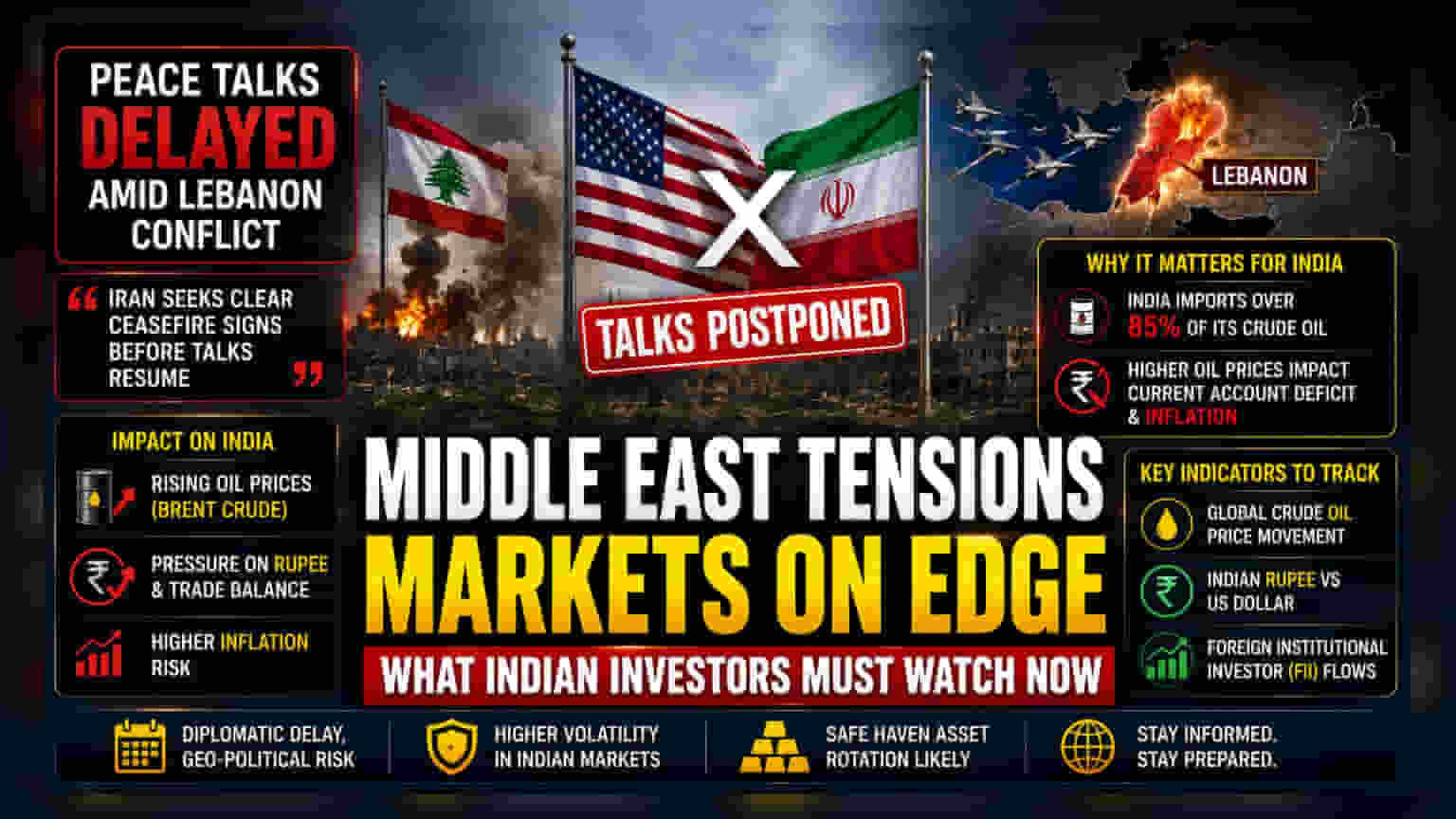
The postponement of US-Iran peace talks due to rising conflict in Lebanon has sparked concerns about global instability. For Indian investors, the key area to monitor is the potential impact on crude oil prices and general market sentiment.
What Happened
High-level discussions aimed at finalizing a peace agreement between the United States and Iran, which were scheduled to take place in Switzerland, have been postponed. The delay follows intense military activity in southern Lebanon. Iran has communicated that it expects clear signs of a ceasefire being implemented before returning to the negotiating table. The postponement highlights the fragility of the diplomatic efforts, as the region experiences renewed volatility.
Why This Matters for Indian Investors
For Indian markets, the Middle East is a critical region because of its influence on global energy supplies. When conflict intensifies in this part of the world, it often creates uncertainty about oil production and transportation. India is a large importer of crude oil, and any sustained disruption or fear of supply shortages typically leads to a rise in global oil prices, often measured by Brent Crude.
If oil prices rise sharply, it generally impacts the Indian economy in two main ways. First, higher import costs can put pressure on the country's Current Account Deficit, which is the difference between what the country earns from exports and what it spends on imports. Second, higher oil prices can lead to higher inflation within the domestic economy, as transport and fuel costs increase for businesses and consumers. Investors often watch these trends closely because they influence the overall health of the economy and corporate profit margins.
Impact on Market Sentiment
Global geopolitical tensions often cause investors to move money toward safer assets, such as government bonds or gold, and away from emerging market equities. While it is too early to predict the long-term impact of this specific diplomatic delay, increased tension in the Middle East typically leads to higher market volatility in India. Investors may observe fluctuations in stock indices like the Nifty and Sensex as global sentiment shifts. Additionally, the Indian Rupee can sometimes face pressure when global risk appetite declines, as the currency is sensitive to trade balance changes and capital flows.
What Investors Should Track
As the situation develops, there are several key indicators that market participants typically monitor. First, the movement of global crude oil prices remains the most direct link to this conflict. A sustained spike in oil prices can affect sectors ranging from paints and tires to airlines and logistics, which rely heavily on fuel costs. Second, investors may watch the strength of the Indian Rupee against the US Dollar, as currency depreciation can affect companies that rely on imports or have large dollar-denominated debt. Finally, Foreign Institutional Investor (FII) flows are an important metric to observe, as these investors often adjust their positions in Indian equities based on their view of global risk and geopolitical stability. The next few updates on the status of these peace talks and any changes in the regional security situation will be important for understanding the potential duration of this uncertainty.

