 Whalesbook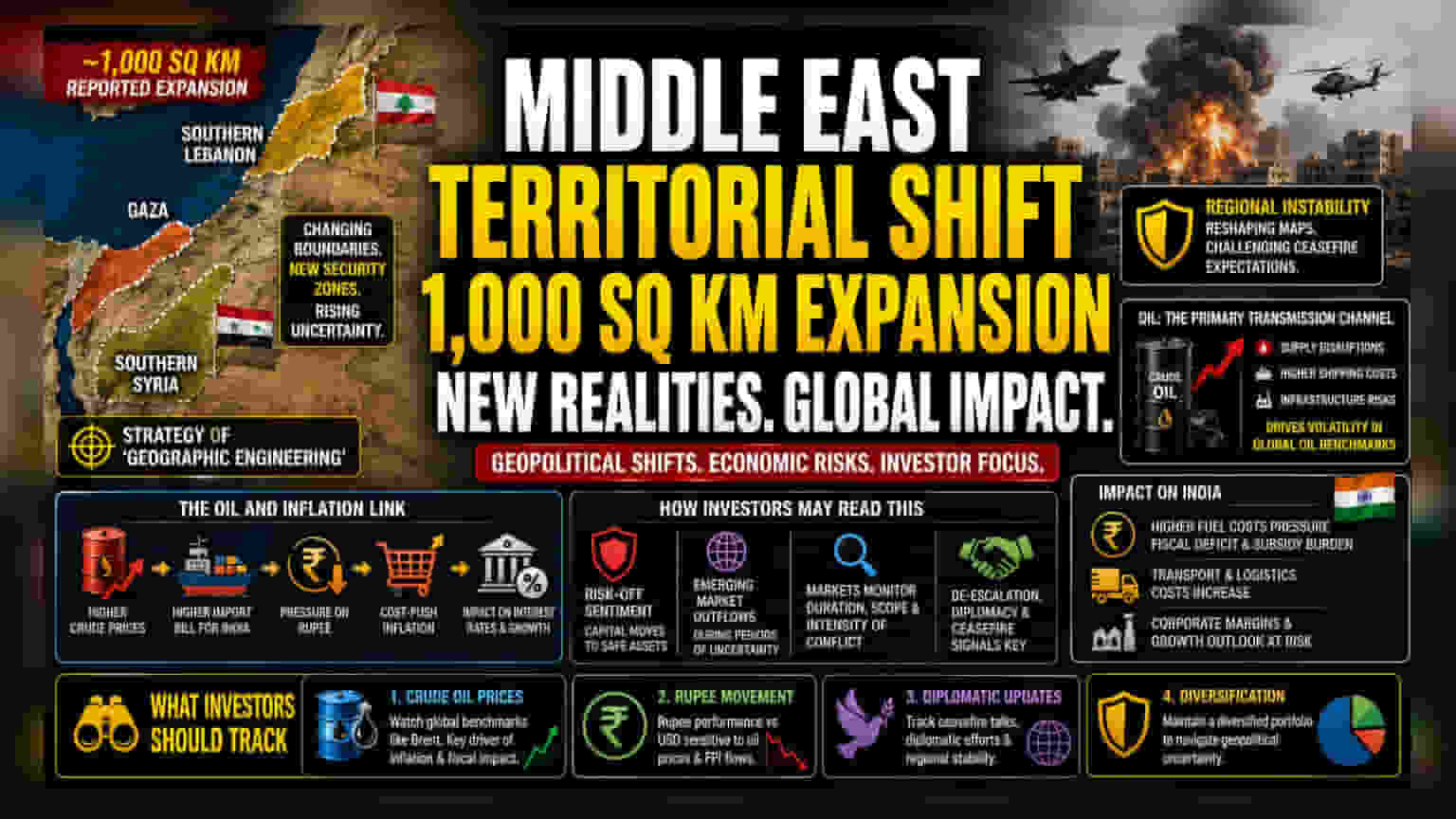


Reports of shifting territorial boundaries in the Middle East have highlighted ongoing regional volatility. For Indian investors, the focus remains on the potential impact of this uncertainty on global crude oil prices, inflationary trends, and currency stability, which typically dictate market sentiment.
What Happened
Recent reports have pointed to significant shifts in territorial control across Gaza, southern Lebanon, and southern Syria, involving a reported expansion of approximately 1,000 square kilometers. These developments, described by analysts as a strategy of 'geographic engineering,' have created new complexities in the region. The reported changes in boundaries and the establishment of new security zones, which diverge from previously established maps and ceasefire expectations, have drawn attention to the evolving nature of the current regional instability.
Why This Matters For Investors
Geopolitical instability in the Middle East is a significant factor for the Indian economy, primarily due to its role as a major energy importer. When conflicts intensify or uncertainty rises in this region, the immediate concern for global markets is often the stability of energy supply chains. Crude oil acts as the primary transmission channel between Middle Eastern geopolitical events and the Indian stock market. Any fear of supply disruptions, increased shipping costs, or infrastructure damage can cause volatility in global crude oil benchmarks.
The Oil And Inflation Link
For the Indian economy, higher crude oil prices can trigger a domino effect. India imports a significant portion of its crude oil requirements, and rising costs can increase the national import bill. This often places pressure on the Indian Rupee, as demand for foreign currency rises. Furthermore, higher oil prices can lead to cost-push inflation, impacting everything from transportation expenses to manufacturing inputs. Investors typically monitor these developments because persistent inflation or a depreciating rupee can influence corporate profit margins and the central bank's interest rate trajectory.
How Investors May Read This
Market participants often view such geopolitical events through the lens of 'risk-off' sentiment. In times of extreme uncertainty, global capital frequently shifts toward perceived safer assets, which can sometimes lead to temporary outflows from emerging markets. While not every geopolitical development leads to a prolonged market downturn, the uncertainty surrounding the duration and scope of such conflicts is what the market reacts to most. Investors often look for signs of de-escalation, stability in energy shipping routes, and clarity on diplomatic or ceasefire arrangements to gauge the future path of volatility.
What Investors Should Track
Given the fluid nature of these developments, market observers typically focus on a few key indicators. First, the movement in global crude oil benchmarks, such as Brent, remains critical, as this dictates the immediate impact on domestic inflation and fiscal planning. Second, currency trends are essential, as the Rupee's performance against the US Dollar is sensitive to both oil prices and foreign portfolio investment flows. Finally, keeping an eye on official updates regarding diplomatic efforts or ceasefire agreements can provide clarity on whether the regional situation is stabilizing or further deteriorating. Maintaining a diversified portfolio remains a common approach for investors looking to navigate periods of elevated geopolitical uncertainty.