

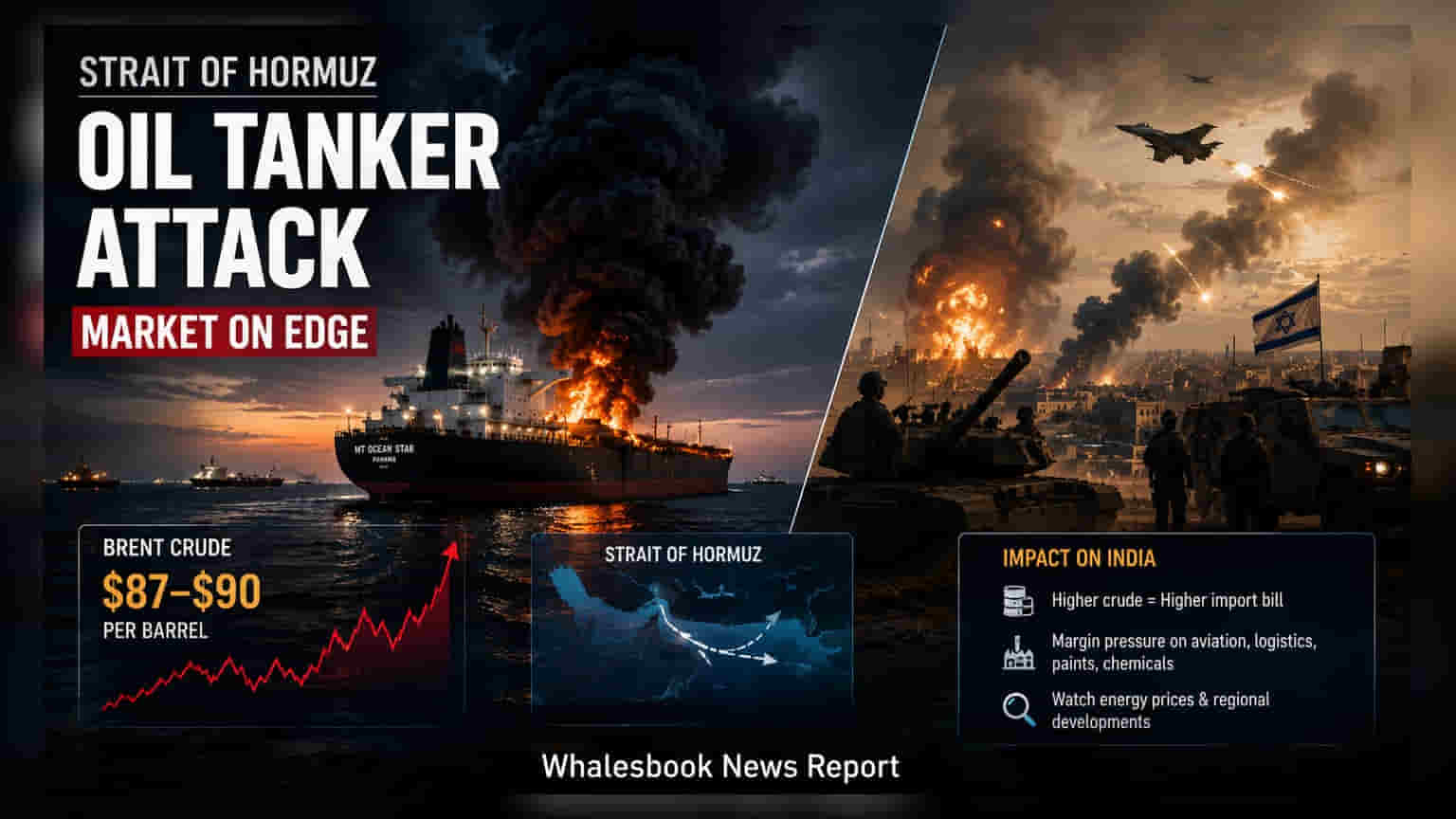
Global oil markets are facing renewed uncertainty after a tanker incident in the Strait of Hormuz. With Brent crude trading between $87 and $90, Indian investors should track potential impacts on energy costs and local inflation. Meanwhile, diplomatic friction between Israel and the Netherlands is adding to regional instability ahead of a key trade policy change.
Energy markets are reacting to fresh security concerns in the Middle East following an attack on an oil tanker in the Strait of Hormuz on August 25. The incident, while resulting in no injuries, has drawn attention to one of the world's most critical energy transit routes. As of August 27, 2026, Brent crude oil is trading in the $87 to $90 per barrel range, reflecting the market's sensitivity to any potential disruption in oil supply chains.
For Indian stock market investors, the primary concern is the impact of oil prices on the domestic economy. India is a major importer of crude oil, and the country's import bill is directly tied to global energy prices. When prices rise or remain elevated due to regional instability, it can create a ripple effect. Higher crude costs often lead to profit margin pressure for companies in sectors that rely heavily on oil, such as aviation, paint manufacturing, logistics, and chemicals. If these companies cannot pass the higher costs on to customers, their profitability may decline.
Beyond energy prices, the diplomatic situation in the Middle East remains complex. Relations between Israel and the Netherlands have soured following a decision by Israel to remove Dutch diplomats from ceasefire coordination efforts. This move was in response to a Dutch legislative ban on goods from Israeli settlements, which is scheduled to take effect on September 22, 2026. While this is a separate trade issue, it contributes to the broader environment of political uncertainty in the region.
While global equity markets, particularly those with strong technology and AI-driven growth sectors, have shown resilience to these geopolitical events, the energy sector remains vulnerable. Investors should distinguish between companies that are price-setters and those that are price-takers. Businesses with the ability to adjust their pricing effectively are often better equipped to handle energy-related cost increases than those that have less flexibility.
The most important monitorable for investors in the coming days will be energy price movements and any further developments regarding security in the Strait of Hormuz. Stable energy prices are crucial for managing domestic inflation and protecting the margins of consumption-linked industries. Market observers will also watch for any official diplomatic statements that could either ease or further complicate the regional situation, as these developments often influence short-term market sentiment.