 Whalesbook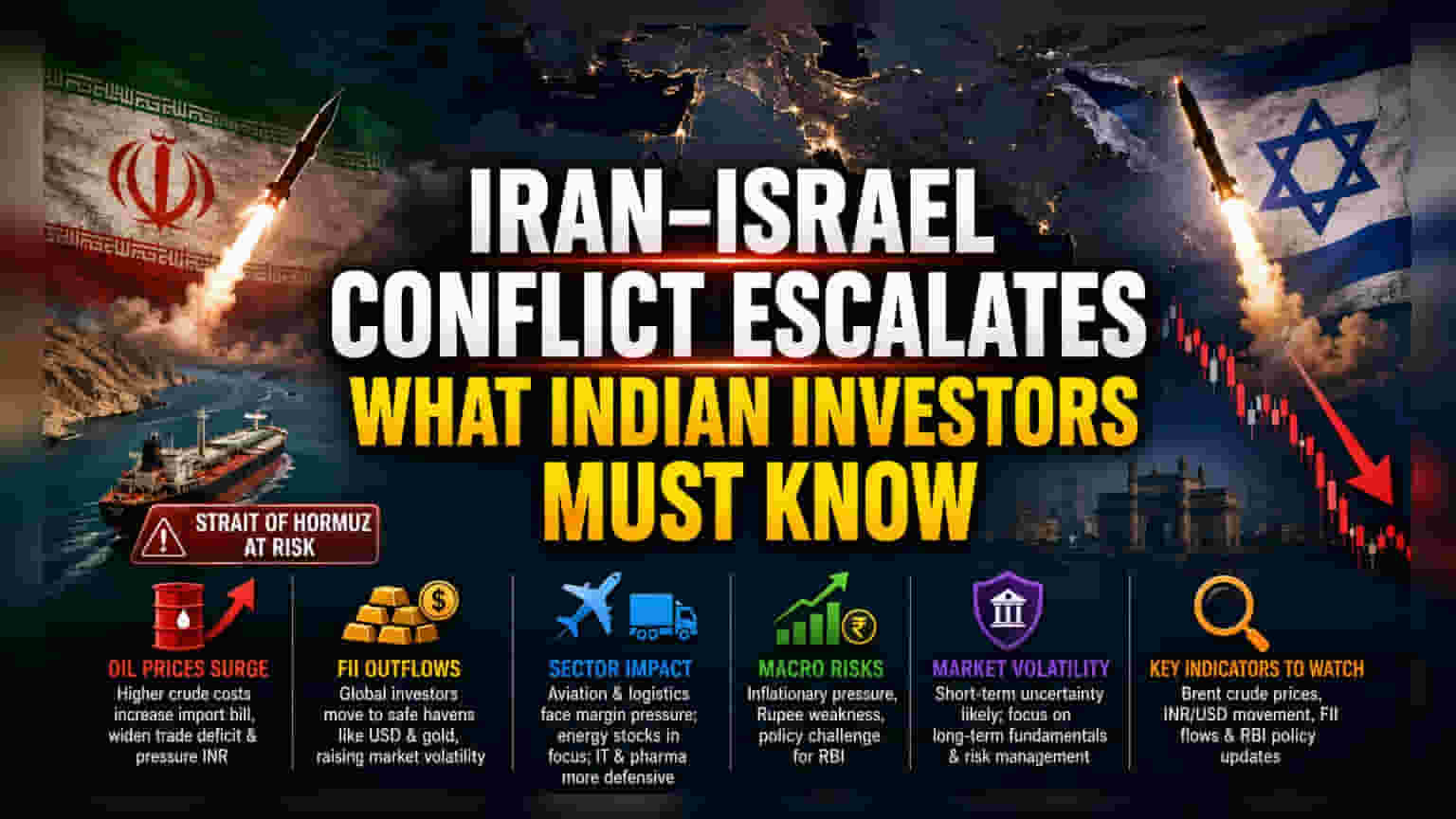


What Happened
Recent reports indicate a significant escalation in the conflict between Iran and Israel. Following earlier exchanges, new missile strikes have been reported involving both nations. The situation has intensified despite ongoing international efforts to manage the crisis. A key area of concern is the Strait of Hormuz, a critical shipping lane for global oil supplies, which faces potential disruption. Major global powers have urged for restraint, but the situation remains fragile, creating uncertainty across international financial markets.
Why This Matters For Indian Investors
Geopolitical conflict in this region directly impacts India’s economy because India imports more than 80% of its crude oil requirements. When tensions rise in the Middle East, global crude oil prices often jump because of fears regarding supply disruptions. For India, higher oil prices are a significant headwind. They can increase the country's import bill, widen the trade deficit, and put downward pressure on the Indian Rupee.
Additionally, during times of global geopolitical stress, foreign institutional investors (FIIs) often reduce their exposure to emerging markets like India. They tend to shift their capital toward safer assets such as the US dollar or gold, leading to market volatility. This shift can impact the Nifty 50 and other domestic indices, as seen in previous periods of regional conflict where markets experienced initial bouts of selling.
Sector-Specific Impact
Different sectors of the Indian stock market feel the effects of this conflict in various ways. Companies in the energy and oil marketing sector are closely watched, as higher crude prices can impact their profit margins unless they can pass the costs to consumers.
Sectors like aviation and logistics often face immediate pressure because fuel accounts for a large part of their operating costs. When fuel prices rise, companies in these industries may see their profit margins shrink, which can influence their stock performance. Conversely, defensive sectors like IT and pharma are sometimes viewed as relative havens, though they are not immune to broad market sell-offs driven by global liquidity shifts.
Understanding the Macro Risk
For the Indian economy, the primary risk is inflationary. If crude oil prices remain elevated for an extended period, it flows through to the cost of goods and services, potentially keeping inflation higher than desired. This puts the Reserve Bank of India (RBI) in a difficult position, as it must balance the need to support growth with the need to manage inflation and currency stability.
History suggests that while markets react to the uncertainty of war with short-term volatility, they tend to recover once the economic impact becomes clearer or the geopolitical situation stabilizes. The key for investors is not to panic based on daily headlines but to focus on long-term economic fundamentals.
What Investors Should Track
Investors may want to monitor several indicators as this situation develops. First, the movement in global Brent crude oil prices is the most important signal for India’s energy import costs. Second, the performance of the Indian Rupee against the US dollar provides insight into how the market is pricing the current stress. Third, watching FII flow data can help investors gauge the level of global risk appetite. Finally, any official communication from the RBI regarding inflation or policy can offer clarity on how the domestic economy is being shielded from external shocks.