

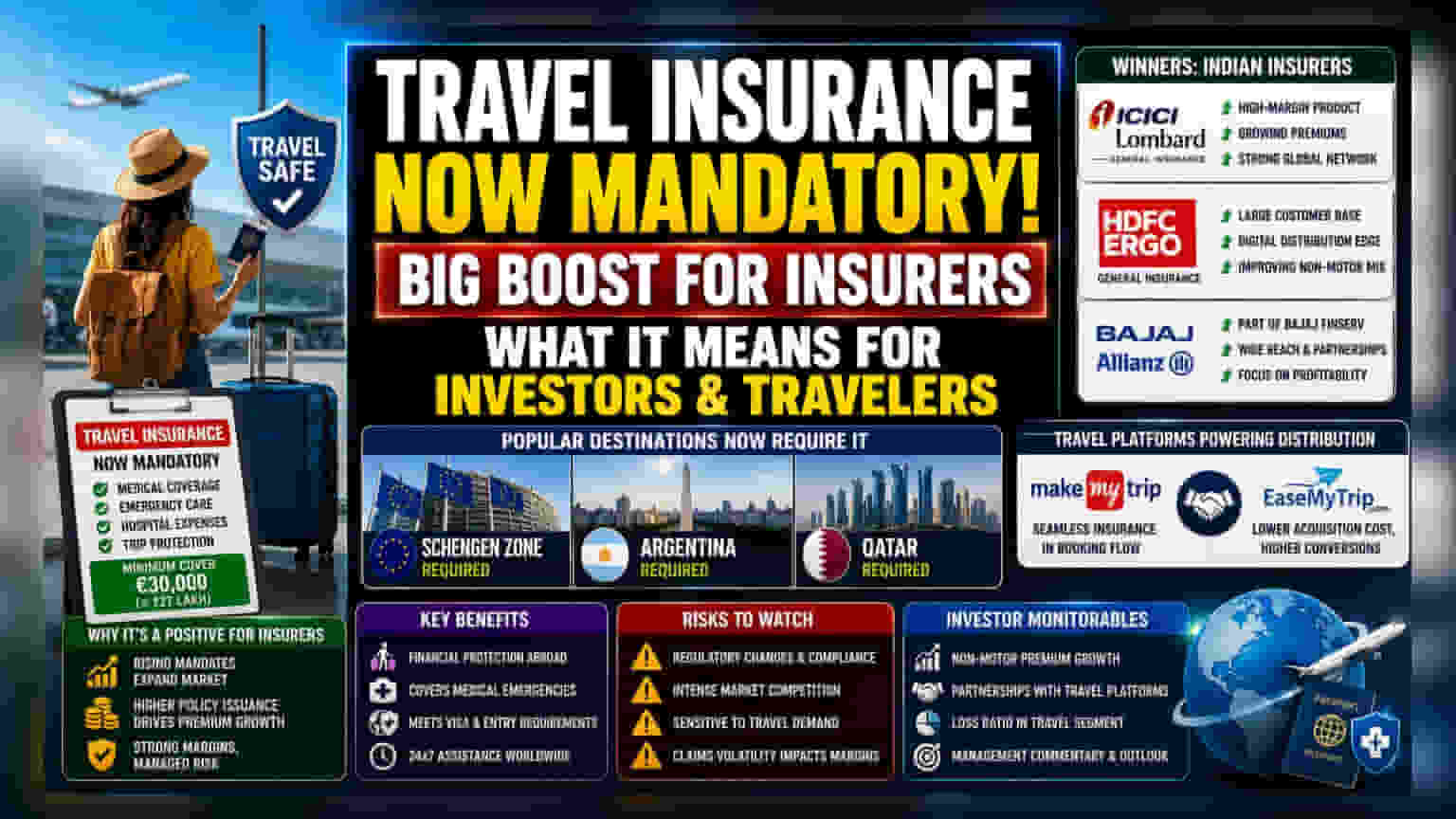
With more countries now requiring travel insurance for visa entry, Indian general insurance companies may see higher demand for their international travel plans. This global trend creates a potential revenue stream for insurers, while travel booking platforms are also adapting to bundle these mandatory products for Indian tourists.
What Happened
Global travel rules are shifting, with a growing number of countries making travel insurance a mandatory requirement for entry. Popular destinations such as the Schengen zone in Europe, Argentina, and Qatar now require proof of medical coverage, often with a minimum limit of €30,000 (roughly ₹27 lakh) to cover emergency medical expenses and hospital costs. This move is designed to reduce the financial burden on local healthcare systems if a visitor falls ill. For Indian travelers, what was previously considered an optional safety measure has now become a standard part of the visa application process.
The Financial Impact for Insurers
For Indian general insurance companies, this trend serves as a tailwind for the travel insurance segment. Travel insurance is typically a high-margin product for insurers because the claims frequency, while unpredictable, is often managed by established global networks. As more countries enforce these mandates, the addressable market for travel policies grows directly in line with international travel volumes.
Major players in the Indian general insurance sector, such as ICICI Lombard General Insurance, HDFC Ergo (a subsidiary of HDFC Bank), and Bajaj Allianz (part of Bajaj Finserv), often capture a significant portion of this market. Increased mandatory compliance forces travelers to purchase policies, which helps these companies grow their 'Other Than Motor' (non-motor) insurance portfolios. For these firms, higher policy issuance leads to better premium collection, although profitability remains tied to the actual claims settled during the policy period.
Connecting Travel Tech and Insurance
It is not just the insurance companies that are affected. Large travel technology platforms, such as MakeMyTrip and EaseMyTrip, play a crucial role in distributing these products. Many of these portals have integrated insurance options directly into their booking flows. When travel insurance becomes mandatory, it lowers the 'customer acquisition cost' for the insurance product, as travelers are actively seeking it out during their booking journey. This allows insurers to partner more effectively with travel portals to capture premiums at the point of sale.
Regulatory and Competitive Risks
While the demand is rising, the sector faces specific risks. The primary risk is regulatory change; if countries alter their minimum coverage requirements or stop accepting certain providers, it creates operational friction. Additionally, the travel insurance market is highly competitive. Newer digital-first insurers and fintech players are entering the space, which can lead to pricing pressure. Investors should also note that travel insurance revenue is sensitive to global travel demand. If international travel slows down due to economic factors, geopolitical tensions, or health-related travel restrictions, the growth in this insurance segment could taper off.
What Investors Should Track
Investors monitoring the insurance sector may want to track the growth in non-motor premium income in quarterly results. The key indicator is whether companies are successfully cross-selling these products to their existing customer base. Additionally, watch for management commentary regarding partnerships with travel platforms and travel tech companies, as these distribution channels are critical for maintaining low costs and high sales volumes. Finally, pay attention to the loss ratio in the travel segment, which shows how much the insurer pays out in claims versus what it collects in premiums.