

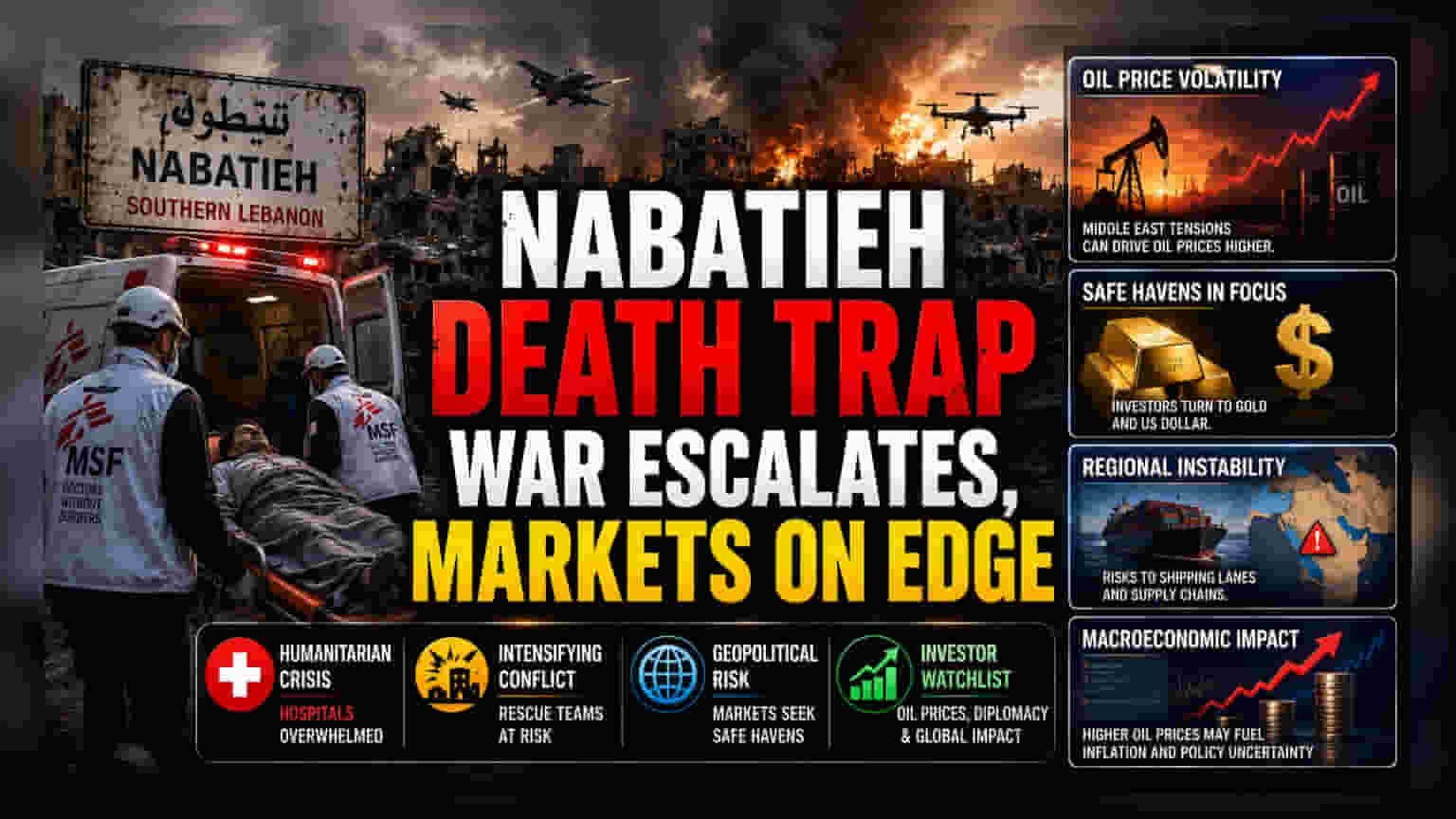
Doctors Without Borders (MSF) has issued a warning regarding the worsening humanitarian crisis in Nabatieh, Lebanon, amid intense military operations. This escalation in the Middle East draws attention from global investors, who typically monitor such regional conflicts for their potential impact on crude oil prices and general market volatility.
What Happened
Doctors Without Borders (MSF) has declared the situation in Nabatieh, southern Lebanon, a “death trap” due to intensifying military operations. The medical aid organization reported that local hospitals are struggling to manage a surge of patients suffering from severe trauma, including head injuries and shrapnel wounds. MSF officials noted that rescue teams are finding it difficult to operate safely due to ongoing shelling, which prevents them from reaching civilians in need of urgent medical care.
The warning follows reports of escalated hostilities in the region. Military actions have continued in southern Lebanon, with aircraft and drones reported in the area. The humanitarian situation remains critical, as rescue efforts are severely hampered by the ongoing conflict.
Why This Matters For Global Markets
For investors, developments in the Middle East often serve as a signal to monitor broader economic stability. While Lebanon is not a major global energy producer, the region is central to the global energy supply chain. Escalating tensions in the Middle East are historically associated with volatility in crude oil prices.
Because India is a significant importer of crude oil, fluctuations in oil prices can impact the country's trade balance and the profit margins of sectors heavily dependent on fuel, such as aviation, paints, and logistics. When regional conflicts escalate, market participants often track oil price movements to assess potential inflationary pressures on the economy.
Geopolitical Risk And Market Sentiment
Global financial markets often react to heightened geopolitical risk by seeking safer assets. Investors typically watch for moves in gold prices or the US dollar, which are often considered safe havens during periods of uncertainty. While specific localized events do not always dictate broad market trends, a sustained escalation in conflict can influence investor sentiment toward emerging markets, potentially leading to increased caution in equity trading.
Additionally, any disruption to shipping lanes or regional logistics in the Middle East can add premiums to insurance and freight costs. While this conflict is currently focused on specific areas, the primary concern for the market is whether such events lead to a broader regional destabilization.
What Investors May Monitor Next
The immediate investor focus remains on whether the situation de-escalates or spreads further. Key monitorables include:
- Global Crude Oil Prices: Continued tracking of Brent and WTI crude to see if geopolitical risk leads to price spikes.
- Official Diplomatic Updates: News regarding potential ceasefires or international mediation efforts, which could stabilize sentiment.
- Regional Stability Reports: Any impact on shipping corridors or regional logistics that could influence global supply chains.
- Macroeconomic Impact: How oil price volatility may affect domestic inflation expectations and central bank policy stances.