

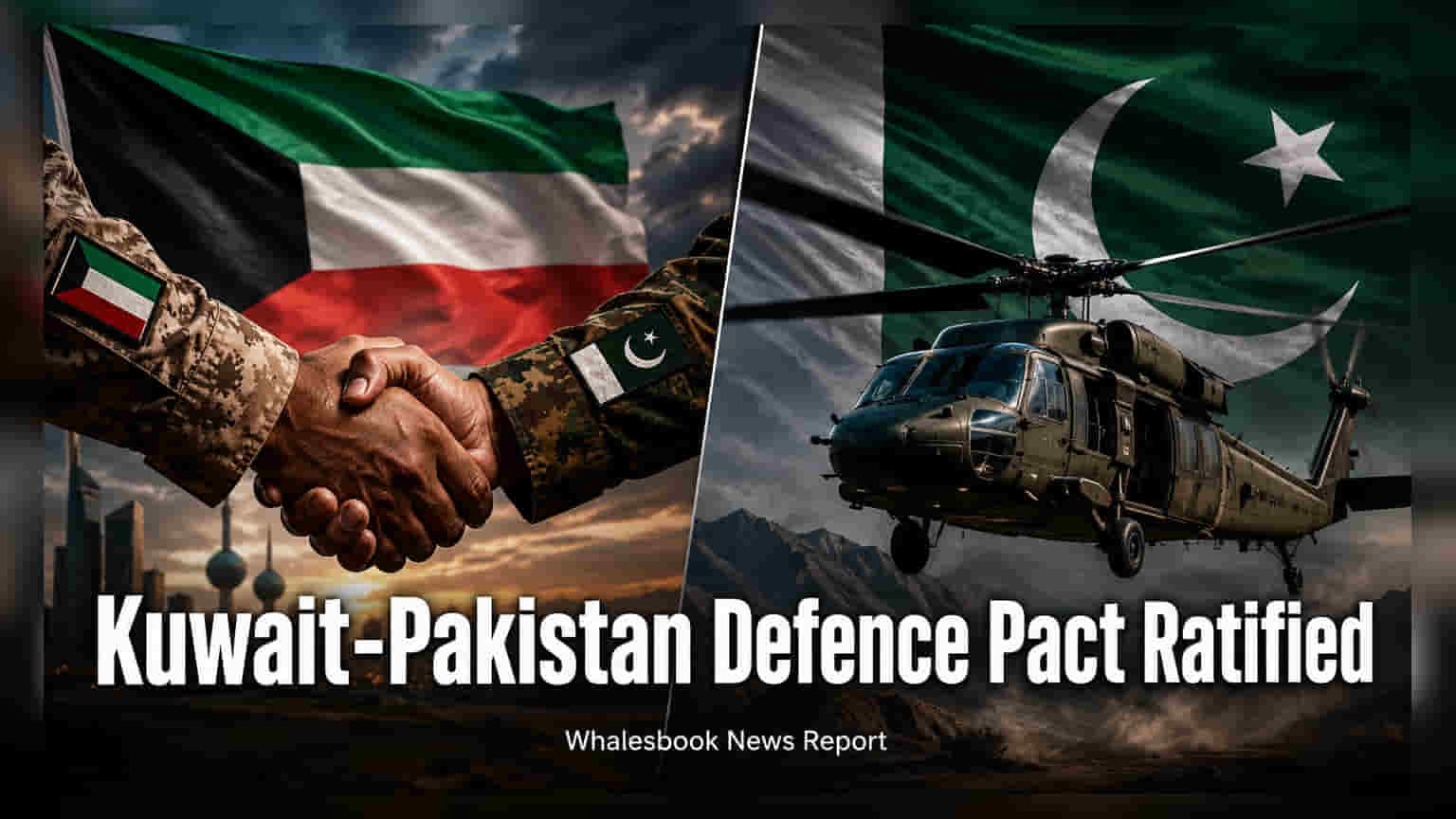
Kuwait has officially ratified a multi-year defense cooperation agreement with Pakistan. This formal move aims to boost intelligence sharing, joint training, and military technology collaboration. For investors, the development highlights Pakistan's ongoing strategic focus on deepening security and economic partnerships across the Gulf region.
Detailed Coverage
Kuwait has formally ratified a defense cooperation agreement with Pakistan, bringing into effect an accord originally signed three years ago. This development, confirmed through an official publication in the Kuwait Al-Youm gazette, establishes a legal and institutional framework for military engagement between the two nations. The agreement is set for an initial duration of five years and includes a clause for automatic renewal, ensuring long-term continuity in bilateral military relations.
Scope of Military and Strategic Collaboration
The agreement covers a wide range of operational areas, including intelligence sharing, logistics support, and joint military training exercises. Beyond standard defense operations, the pact extends to technical sectors such as the development of defense-related technology, research initiatives, and cooperation in electronic communication systems. A designated joint military committee will oversee these activities, manage institutional visits, and handle the exchange of military expertise and scientific research.
Strategic Context and Regional Significance
For Pakistan, this ratification represents a continuation of its diplomatic and strategic efforts to strengthen ties with Gulf Cooperation Council (GCC) member states. By securing formal defense cooperation agreements with nations such as Kuwait and Saudi Arabia, Pakistan aims to position itself as a key partner for regional security and military training. These partnerships are often viewed as foundational steps that can facilitate broader economic and trade discussions, as defense ties frequently serve as a precursor to deepened diplomatic trust.
Monitoring Future Developments
While this agreement is primarily a military and diplomatic milestone, market observers often look for follow-up announcements regarding joint manufacturing projects or technology transfers that could involve defense-related companies. Investors monitoring the defense and geopolitical sectors may track whether this formal ratification leads to specific contract awards or increased cooperation in military production between the two countries. The next key updates to watch for include the first official meetings of the joint military committee and any announcements concerning specific joint training programs or infrastructure projects resulting from this partnership.