

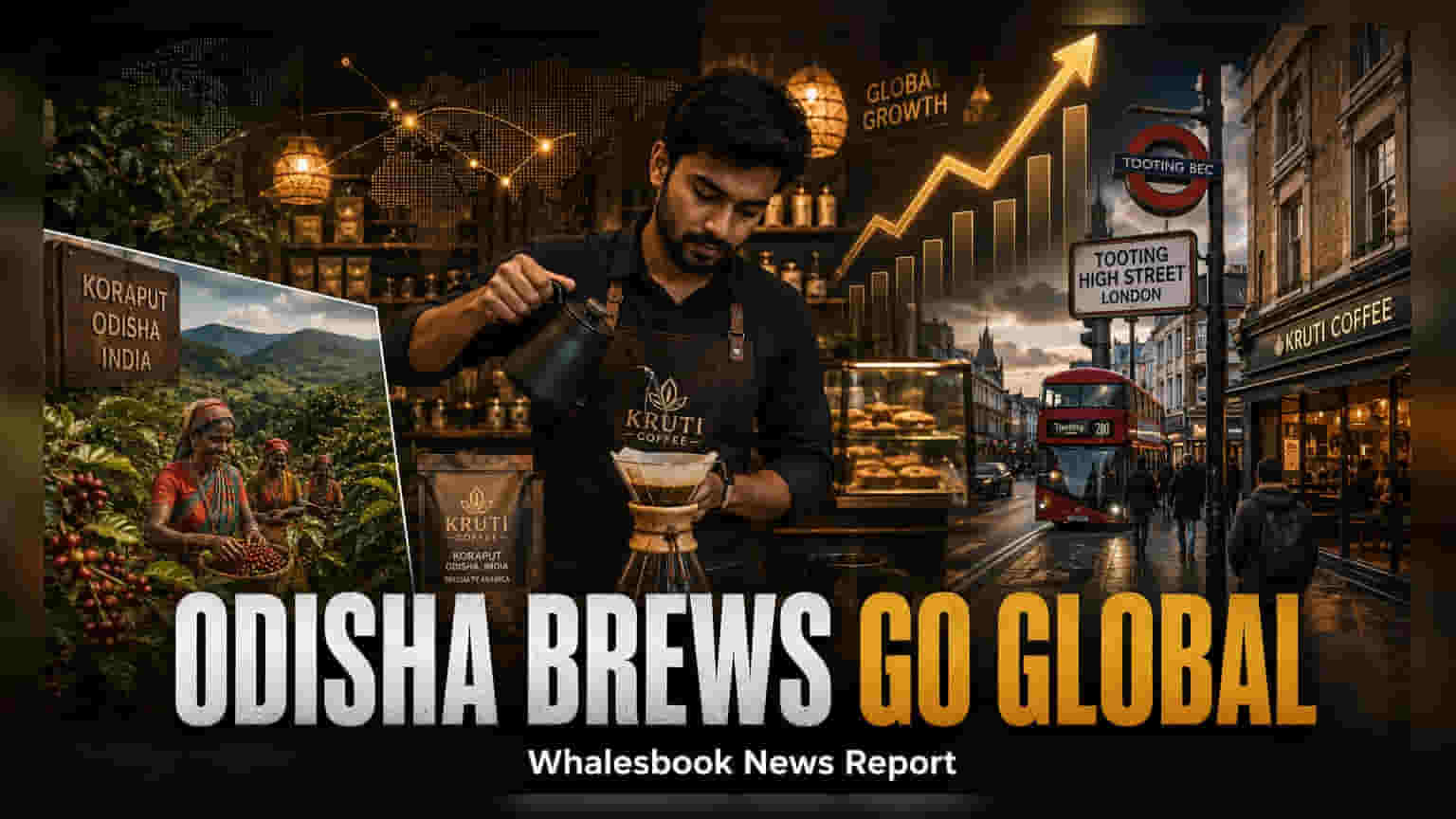
Odisha-based Kruti Coffee has launched its first international cafe in London, leveraging the India-UK trade agreement to expand its footprint. While the company is private, its entry into the highly competitive UK specialty coffee market marks a significant step for Indian agricultural brands looking to scale globally.
Kruti Coffee, a specialty brand originating from the tribal coffee farms of Koraput, Odisha, has officially opened its first international cafe on Tooting High Street in London. This move follows the company’s recent export consignment to the UK, which was facilitated by the India-UK Comprehensive Economic and Trade Agreement. The launch aims to introduce Indian specialty coffee to a mature international audience, showcasing the brand's farm-to-cup model.
The London outlet is designed to highlight the diversity of Indian Arabica beans, featuring manual brewing and espresso-based beverages. For the company, this is not just a retail opening but a strategic effort to establish a presence in a global hub known for its sophisticated cafe culture. By leveraging the trade agreement, the brand has managed to streamline its export process, which is a critical component of its international expansion strategy.
Investors should note that Kruti Coffee is a private entity and is not listed on any Indian stock exchange such as the NSE or BSE. Therefore, there is no direct public investment vehicle for the company. However, the move is notable as it reflects a growing trend of Indian agricultural and specialty food brands attempting to capture value in overseas markets.
Operating in the UK retail sector carries substantial risks. London is a high-cost environment characterized by intense competition from established global chains and numerous local boutique cafes. Kruti Coffee will face significant pressure from operational expenses, including high commercial rents and labor costs in the UK. Furthermore, the company must manage the logistical complexities of maintaining a consistent, high-quality supply chain from Odisha to the UK. The brand’s ability to maintain its profit margins and ensure consumer consistency in this crowded market will be the primary challenge. Success will depend on whether the company can effectively differentiate its product and build lasting customer loyalty against deep-pocketed incumbents. The performance of this first outlet will be a critical monitorable, as it will likely determine whether the company attempts to replicate this model in other international cities.