

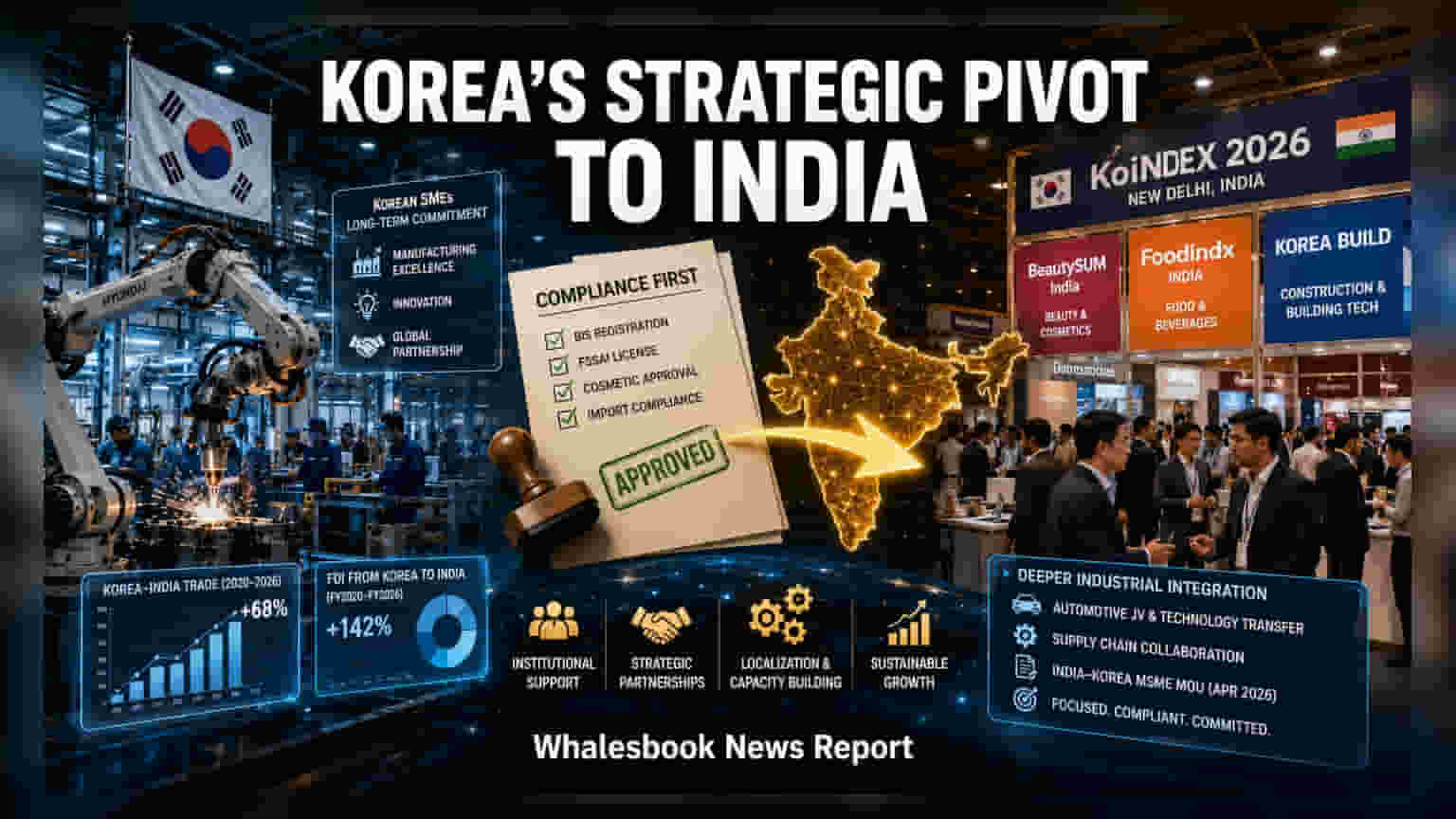
South Korean firms are moving from temporary exports to establishing permanent Indian operations. By prioritizing regulatory compliance and localized supply chains, they are signaling a deeper commitment to the market. Investors should watch how this trend, backed by recent government partnerships and automotive sector investments, influences long-term industrial collaboration in India.
South Korean small and medium-sized manufacturers are undergoing a significant strategic pivot in their approach to the Indian market. For years, many of these companies relied on temporary distributor-led models to test local demand. Today, there is a clear shift toward establishing permanent, localized operations, marking a transition from opportunistic trading to long-term industrial commitment.
Prioritizing Compliance and Local Setup
The most notable change is how these firms approach Indian regulations. In the past, companies often viewed certifications as steps to take after gaining a foothold in the market. Now, firms are treating foundational requirements—such as Bureau of Indian Standards (BIS) registration, FSSAI licensing, and cosmetic import approvals—as non-negotiable prerequisites.
While this approach requires significant upfront capital and months of preparation, it indicates a serious intent to build a reliable supply base. By securing these approvals early, companies are moving away from the "trial" phase and into a structure that supports consistent, year-round business. This trend is further supported by institutional backing from the Gyeonggi Province government and the Korea Federation of SMEs, which are helping firms navigate these complexities through funding and logistical support.
Targeted Trade and Industrial Integration
The 2026 edition of the Korea Industry Expo (KoINDEX), scheduled for late August in New Delhi, reflects this shift toward deeper integration. Moving away from a broad, general format, the event has been reorganized into three specialized exhibitions: BeautySUM India, FoodIndx, and KOREA BUILD. This move helps Korean companies present themselves to the right Indian buyers, facilitating more efficient B2B matchmaking in sectors like construction technology, beauty, and processed food.
Beyond trade shows, the industrial landscape is seeing a push for actual capital investment. A clear example of this trend is the automotive sector, where companies are moving toward joint ventures and deep technology transfers. For instance, the recent strategic investment by Gabriel India, involving a stake in HL Klemove India, highlights how Korean and Indian firms are increasingly intertwining their supply chains to serve the local market better. Such moves are often supported by bilateral agreements, including the April 2026 Memorandum of Understanding (MoU) between the Ministry of MSME in India and South Korea’s Ministry of SMEs and Startups.
Risks and Monitorables
While the shift toward localization is a positive indicator of long-term business confidence, it brings specific risks that investors should track. The upfront cost of compliance and the complexity of local manufacturing are high, which can put pressure on the balance sheets of smaller firms. Furthermore, these companies face intense competition from established domestic and global players who are already well-entrenched in the Indian supply chain. Success will depend on the ability of these Korean firms to effectively customize their products, pricing, and packaging to match the specific needs of the Indian consumer. The next important monitorable will be the rate at which these specialized expos translate into operational joint ventures and new capacity announcements.