

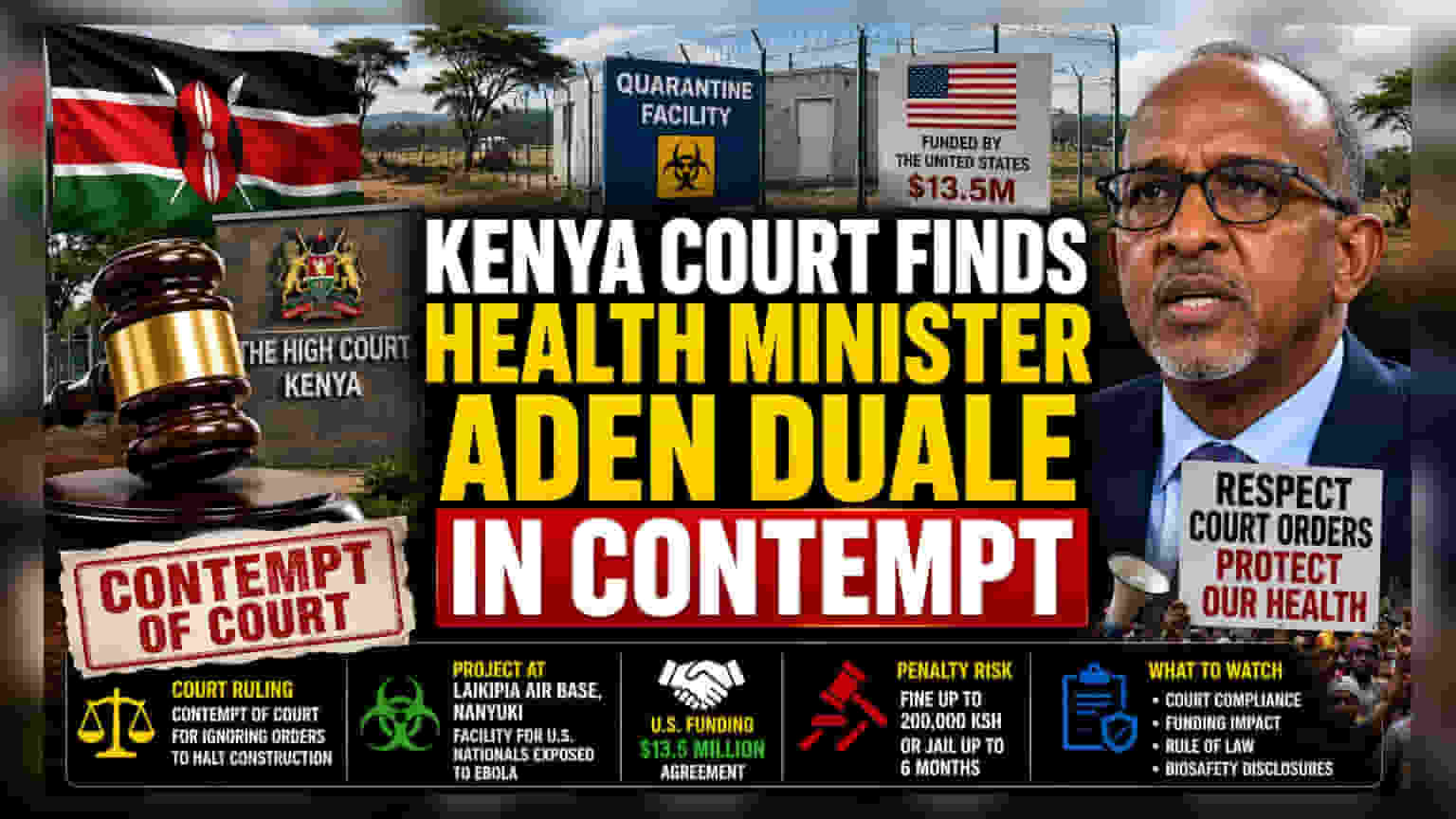
Kenya's High Court found Health Minister Aden Duale in contempt for continuing the construction of a controversial US-funded Ebola quarantine facility. Despite court orders to halt, the government proceeded with the project at the Laikipia Air Base. This legal standoff highlights growing tensions over foreign-led infrastructure, biosafety concerns, and the challenges of upholding judicial directives in high-stakes diplomatic agreements.
What Happened
Kenya’s High Court has issued a ruling finding Health Minister Aden Duale in contempt of court. The decision follows the Minister's decision to proceed with the construction of a quarantine facility for United States nationals, despite explicit directives from the court issued in May and early June to halt all activities. Justice Patricia Nyaundi Mande delivered the ruling, which centers on the site located at the Laikipia Air Base near Nanyuki.
The project has become a flashpoint for legal and social conflict. While the facility is intended to provide care for U.S. nationals exposed to Ebola outbreaks in neighboring countries like the Democratic Republic of Congo and Uganda, the move has faced significant domestic opposition.
The Controversy Behind the Project
The dispute began when reports emerged about the construction of a facility specifically for international nationals, funded by a $13.5 million contribution from the United States. Critics, including the Katiba Institute, a local rights group, challenged the project on the grounds of biosafety and transparency. They raised concerns about the potential importation of the virus into a region that has not recorded any infections.
Public protests have underscored a lack of clarity regarding the deal's specifics, including the required health assessments and operational protocols. For many, the government's acceptance of foreign funding to host such facilities is viewed with skepticism, leading to calls for greater accountability and public disclosure regarding the terms of the agreement.
Diplomatic and Political Context
The situation creates a complex dynamic for the Kenyan government. President William Ruto has publicly defended the project, framing it as a necessary agreement with long-standing international allies. This stance has placed the executive branch in direct conflict with the judiciary, which has sought to pause the project until legal and safety concerns are adequately addressed.
Minister Duale’s decision to continue construction, even after receiving court orders to stop, has deepened the rift. By informing parliament that the government would not halt the project, the Minister signaled a firm commitment to the arrangement, prioritizing the diplomatic agreement over the judicial stay.
Legal and Operational Risks
The contempt ruling introduces immediate legal uncertainty for the project. Minister Duale is scheduled to appear in court for mitigation and sentencing, with potential penalties including a fine of up to 200,000 Kenyan shillings ($1,500) or a jail sentence of up to six months.
Beyond the personal consequences for the Minister, the ruling challenges the viability of the construction timeline. Legal experts suggest that continued defiance of court orders could lead to further injunctions or prolonged litigation, potentially stalling the project indefinitely. For international and domestic observers, the situation serves as a test case for governance, regulatory oversight, and the influence of foreign aid on domestic policy.
What Investors Should Track Next
The immediate monitorable is the outcome of the sentencing hearing and whether the government seeks an appeal or adjusts its approach to the project. Investors and stakeholders in regional infrastructure and diplomatic projects should watch for clarity on the following:
- Whether the government complies with the court's order to pause work, or if it pursues a legal workaround.
- Any impact on the $13.5 million U.S. funding arrangement if the project faces extended delays or cancellation.
- The broader implications for the rule of law and judicial independence in Kenya, which can influence perceptions of regulatory and political risk in the region.
- Official health and biosafety disclosures that the court and advocacy groups have demanded, which could alter the project's requirements and costs.