 Whalesbook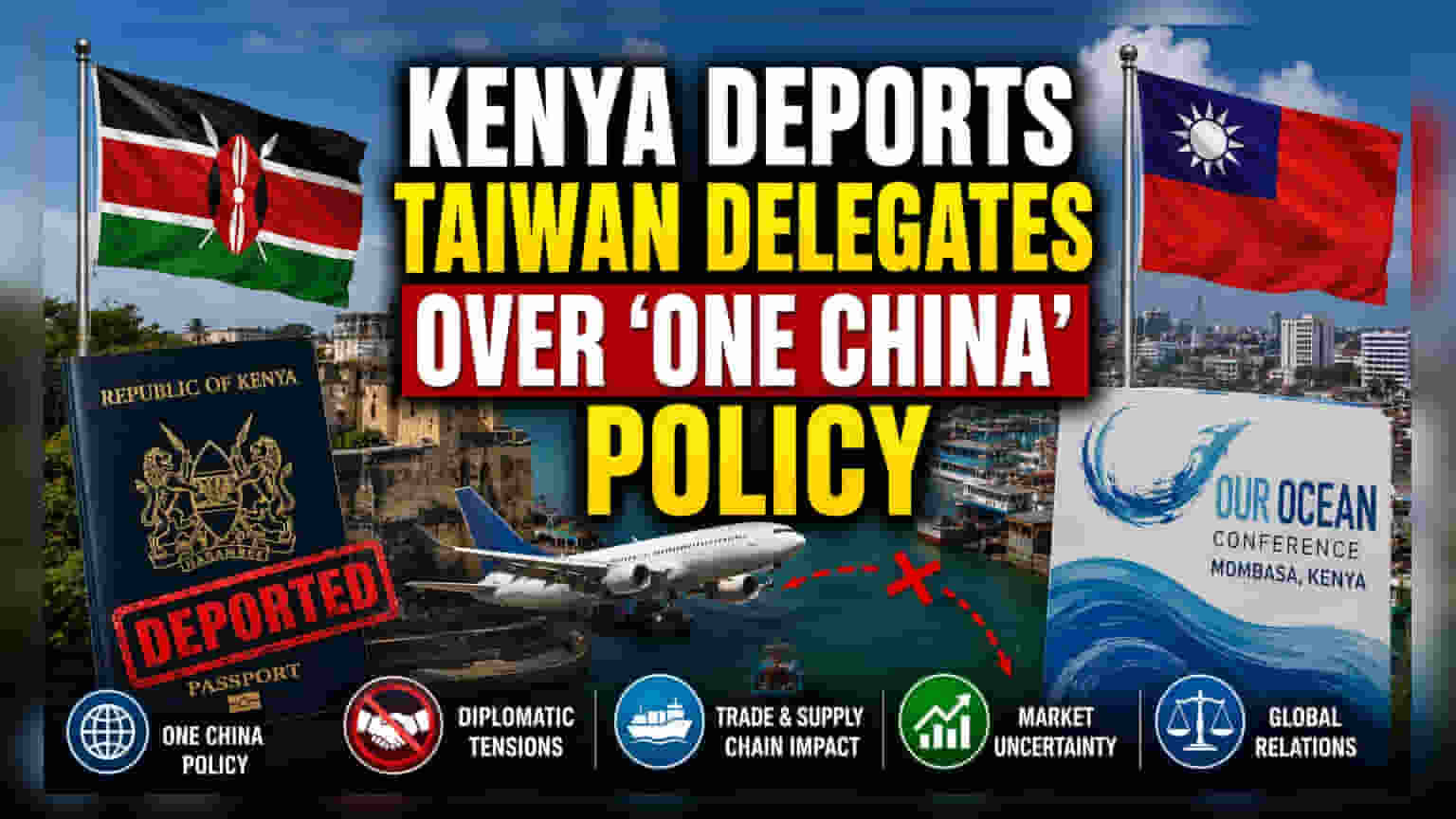


Kenya deported Taiwan delegates bound for a global ocean conference in Mombasa, citing its “one China” policy. This diplomatic friction underscores the ongoing geopolitical risks involving China and Taiwan, which remain key focus areas for global investors monitoring international trade, shipping, and diplomatic stability.
What Happened
Kenya has deported delegates from Taiwan who were traveling to Mombasa to attend the Our Ocean Conference. The Kenyan Ministry of Foreign Affairs confirmed the decision, stating that the nation adheres to the “one China” policy and does not officially recognize passports issued by Taiwan. The delegates, who were scheduled to participate in the global event, were denied entry, and Taiwan’s Ministry of Foreign Affairs has protested the action, citing human rights concerns and describing the treatment of the scholars as obstructionist.
The Diplomatic Context
This incident highlights the complex diplomatic challenges often faced by Taiwan in international forums. Kenya’s position is consistent with its foreign policy, which treats Taiwan as part of China. For diplomatic and international events, such policies can lead to entry barriers for Taiwanese officials or representatives. Taiwan’s Ocean Affairs Council expressed strong disagreement with the move, emphasizing that the exclusion of delegates hinders international cooperation on critical marine issues.
Why Geopolitics Matters For Investors
For investors and global market watchers, incidents involving the China-Taiwan relationship are significant, as they serve as reminders of persistent geopolitical tensions. While this event is primarily diplomatic and focused on a specific conference, it reflects a broader global environment where geopolitical alignments frequently influence international travel, trade agreements, and cooperation between nations.
Geopolitical friction can often lead to uncertainty in international relations. When major economies or their diplomatic partners are involved in disputes or policy enforcement, it creates a layer of unpredictability for global supply chains, international trade partnerships, and the stability of multilateral forums. Investors generally monitor these situations to understand the potential for broader diplomatic realignments or trade frictions that could affect international business environments.
The Global Ocean Focus
The Our Ocean Conference in Mombasa is an international platform designed to address urgent environmental and marine challenges. These include climate change, biodiversity loss, and ocean pollution. A central theme of the conference is the implementation of the Agreement on Biodiversity Beyond National Jurisdiction, commonly known as the High Seas Treaty, which was adopted in June 2023. The treaty aims to establish a framework for protecting marine life in international waters. Diplomatic disagreements at such forums can sometimes distract from or delay the collective progress on these international environmental agreements, which are increasingly important for global resource management.
What Investors Should Track
Investors typically watch for shifts in geopolitical sentiment, as these can influence international policy and, by extension, the stability of trade relationships. Key monitorables include the tone of international diplomatic relations, the ability of global forums to continue their agendas despite political disagreements, and any broader policy shifts that might impact international trade connectivity. While this specific event is a localized diplomatic friction, it remains a part of the wider narrative of global political, trade, and diplomatic interactions that form the backdrop for international business and investment decisions.