

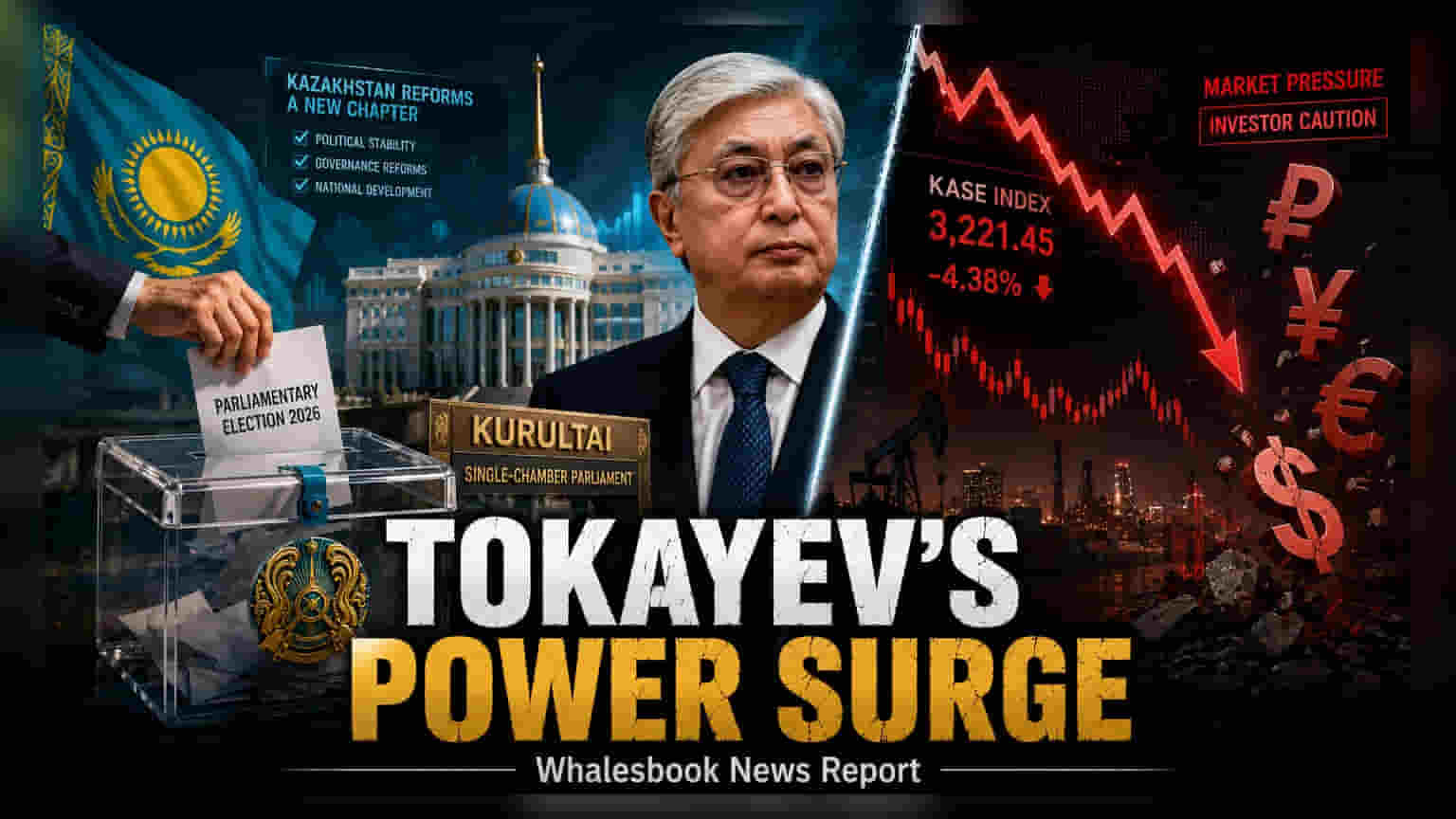
Kazakhstan is voting in its first parliamentary election for the new unicameral 'Kurultai' legislature. For investors, the outcome is significant as it sets the stage for policy continuity under President Tokayev. While S&P recently upgraded the country's credit rating, the nation continues to navigate challenges like inflation, geopolitical pressures, and dependence on oil exports.
Kazakhstan held parliamentary elections on August 23, 2026, marking the first vote for the newly established single-chamber parliament known as the Kurultai. This election follows a constitutional referendum held earlier this year that replaced the previous bicameral system. The shift is part of President Kassym-Jomart Tokayev’s reform agenda, which aims to centralize administrative authority and streamline governance.
The Adilet party, composed of allies of the current administration, is expected to secure a decisive majority in the 145-seat assembly. For international observers and investors, the election is a key test of the government's ability to maintain political stability as it navigates complex economic and geopolitical conditions. The consolidation of power under the presidency is intended to create a more agile decision-making process, though it has drawn attention from analysts regarding the future of political pluralism in the region.
From a financial perspective, Kazakhstan has shown signs of resilience. S&P Global Ratings recently upgraded the country’s sovereign credit rating to 'BBB/A-2' with a stable outlook. This upgrade reflects the country's effective fiscal management and its ability to maintain steady economic growth despite global volatility. However, the economy faces ongoing pressures from an inflation rate that reached 10.2% earlier this year, alongside the persistent challenge of managing rising costs for consumers.
The country’s economic strategy remains heavily tied to energy exports, particularly through the Caspian Pipeline Consortium. Investors often monitor developments in Kazakhstan closely due to its position as a major commodity supplier and its efforts to balance relations between Russia, China, and Western powers. Any shifts in domestic policy resulting from the new parliament could impact future trade agreements and infrastructure investment.
Beyond the headline political results, market participants are tracking several structural risks. The economy remains sensitive to commodity price fluctuations and potential supply chain disruptions. Furthermore, the government’s ability to manage public discontent—which stems from inflation and tax policies—is a key factor for long-term stability. The recent legal and political focus on independent media and journalists is another area that observers monitor, as it can influence international perceptions of the country's regulatory and business environment.
The next steps for investors involve watching the implementation of the new legislative agenda by the Kurultai. Key monitorables include future government budget allocations, central bank policy adjustments to address inflation, and updates on energy export infrastructure projects. Market participants will also track how the new parliament manages the balance between necessary economic reforms and maintaining social stability.