

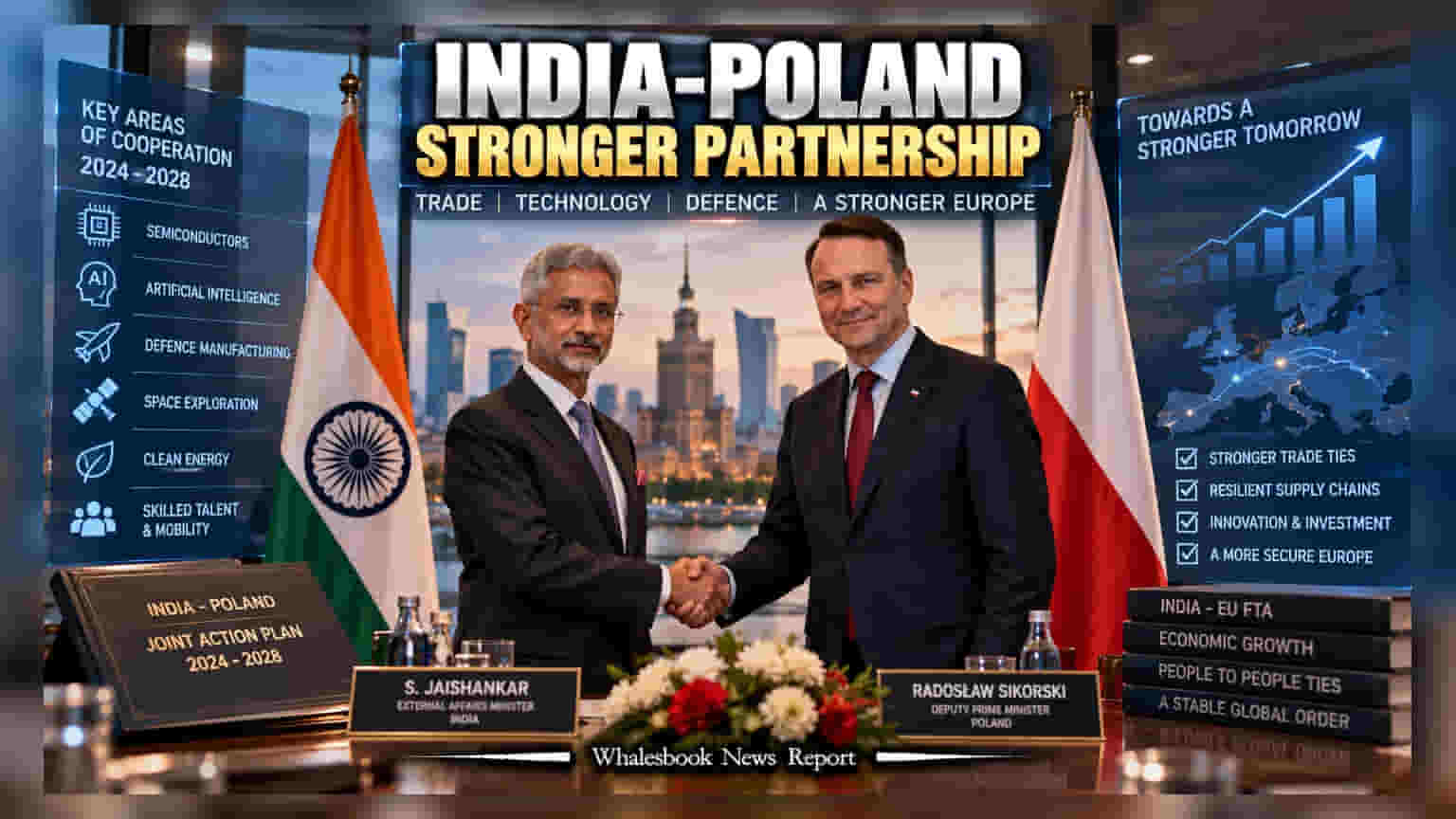
External Affairs Minister S. Jaishankar’s visit to Poland focuses on the Joint Action Plan 2024-2028, aiming to boost cooperation in defense, semiconductors, and artificial intelligence. The talks also address global supply chain stability amid ongoing geopolitical conflicts, which remain a key monitorable for Indian industries reliant on energy and raw material imports.
External Affairs Minister S. Jaishankar’s visit to Warsaw, Poland, signals a significant push to elevate India’s economic and strategic cooperation with Central Europe. The primary focus of the visit is the review and implementation of the Joint Action Plan for 2024-2028, a framework designed to deepen bilateral ties across critical high-growth sectors.
Focus on Key Economic Sectors
The discussions between Minister Jaishankar and Deputy Prime Minister Radosław Sikorski centered on identifying synergies in technology and manufacturing. The roadmap for the 2024-2028 period prioritizes collaboration in areas such as defense manufacturing, semiconductor development, artificial intelligence, space exploration, and clean energy. For Indian businesses and investors, these sectors are currently high-priority, and governmental agreements in these fields often precede opportunities for corporate partnerships, technology transfers, and collaborative research.
Both nations are also exploring how to align their economic goals within the context of a potential Free Trade Agreement between India and the European Union. Progress on such an agreement could reduce trade barriers, benefiting Indian exporters and manufacturing firms that are increasingly looking to diversify their market presence in the European bloc.
Geopolitical Impact on Supply Chains
A critical part of the dialogue addressed the ongoing geopolitical tensions, specifically the conflict in Ukraine and instability in West Asia. From an economic perspective, these conflicts create uncertainty for global supply chains, particularly in the movement of food, fuel, and fertilizers. Minister Jaishankar reiterated that diplomacy and dialogue are essential to resolving these issues, emphasizing that sustained warfare negatively impacts global economic stability. Indian companies that rely on imports of energy or agricultural inputs track these geopolitical developments closely, as diplomatic resolutions or shifts in trade routes directly affect input costs and operational margins.
Future Outlook
Beyond trade and technology, the visit touched upon establishing clearer frameworks for professional labor mobility. By moving toward structured labor agreements, the two countries aim to replace irregular migration with organized professional pathways. This shift is part of India’s broader strategy to position its workforce as a vital component of the global economy.
Investors and market participants may track progress on the Joint Action Plan in the coming quarters. Specifically, updates regarding joint ventures in defense and tech, as well as any milestones toward the India-EU trade framework, will be the next key monitorables for the sectors involved.