

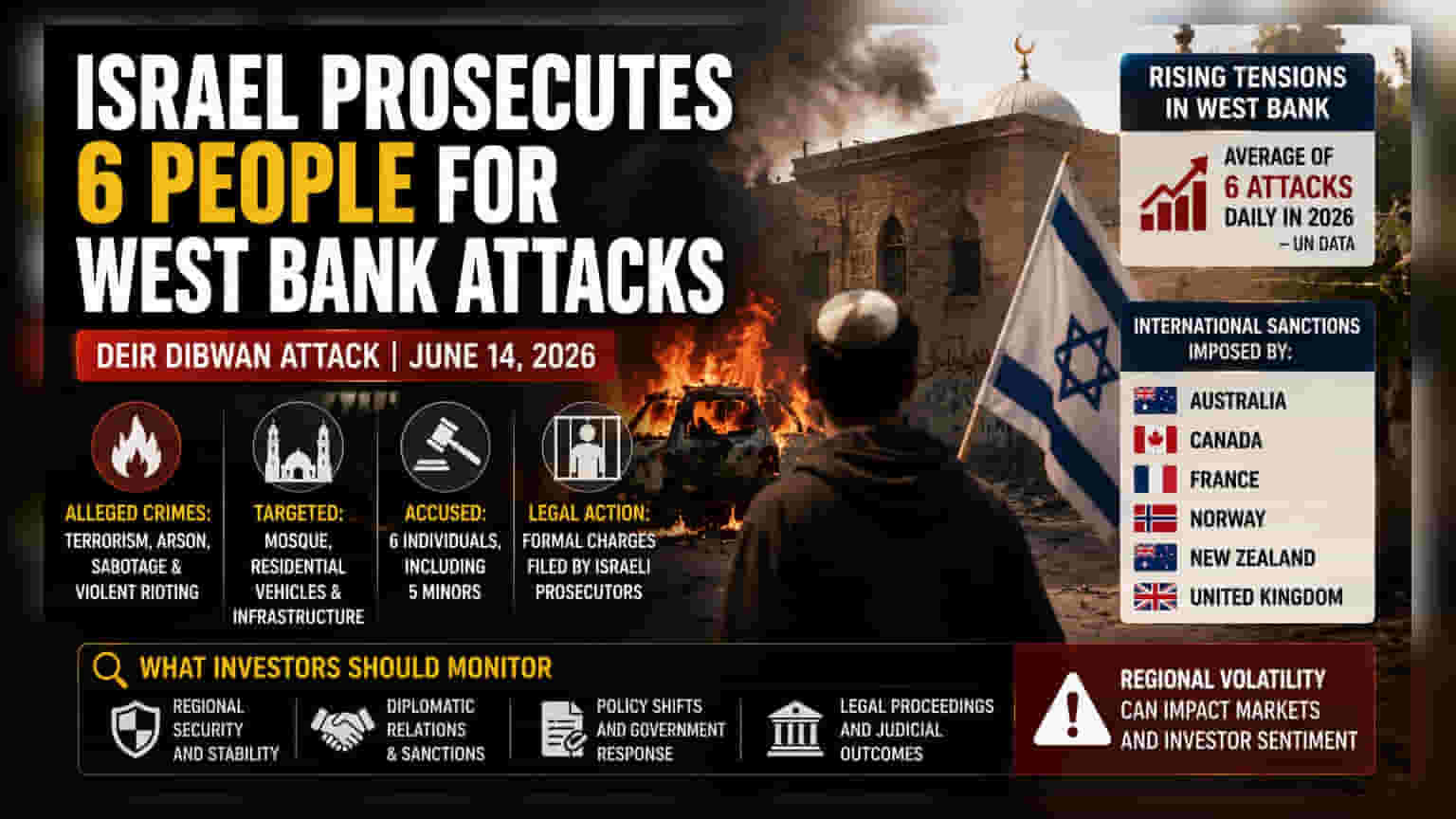
Israeli authorities have charged six individuals with terrorism and rioting following a violent attack on the village of Deir Dibwan. This development occurs amid rising regional instability and increasing international sanctions, a situation that remains a significant point of observation for global observers tracking geopolitical risks in the Middle East.
What Happened
Israeli prosecutors have formally charged six individuals, including five minors, in connection with a violent incident that occurred in the Palestinian village of Deir Dibwan on June 14, 2026. The indictments allege acts of terrorism, arson, sabotage, and violent rioting. According to reports, the individuals involved targeted local infrastructure, including a mosque and residential vehicles, using incendiary materials and weapons during the assault.
Regional Stability and Geopolitical Context
For global observers and investors, this incident is part of a broader trend of escalating tensions in the occupied West Bank. United Nations data for 2026 suggests a rising frequency of such events, with an average of six settler-related attacks reported daily. While these events are primarily social and political in nature, they contribute to a volatile regional environment. Maintaining stability in this area is a critical factor for diplomatic relations and regional security, which are often monitored by international bodies and foreign governments.
Global Sanctions and Political Response
This legal action follows the implementation of coordinated international sanctions by several nations, including Australia, Canada, France, Norway, New Zealand, and the United Kingdom. These measures are designed to target networks suspected of financing or enabling settler violence.
However, the domestic response within Israel has remained divided. Some political figures, including Finance Minister Bezalel Smotrich and various settler leaders, have dismissed these international penalties. The stated position of these figures is that such sanctions do not change their approach to settlement activities, creating a noticeable gap between international policy and local political decisions.
What Investors Should Monitor
While this is not a corporate event, regional stability remains a factor that influences broader market sentiment. Investors tracking Middle East dynamics generally monitor several key indicators:
- Regional Security: Any significant escalation in violence or civil unrest can impact supply chains and regional commerce.
- Diplomatic Relations: The widening gap between the stance of various Western nations and Israeli policy regarding sanctions may lead to further diplomatic friction.
- Policy Shifts: Any future changes in government policy regarding settlement activities or domestic law enforcement could alter the security landscape.
The ongoing legal proceedings against the individuals charged will be a focal point to see how the judiciary handles such cases amidst the prevailing political atmosphere.