

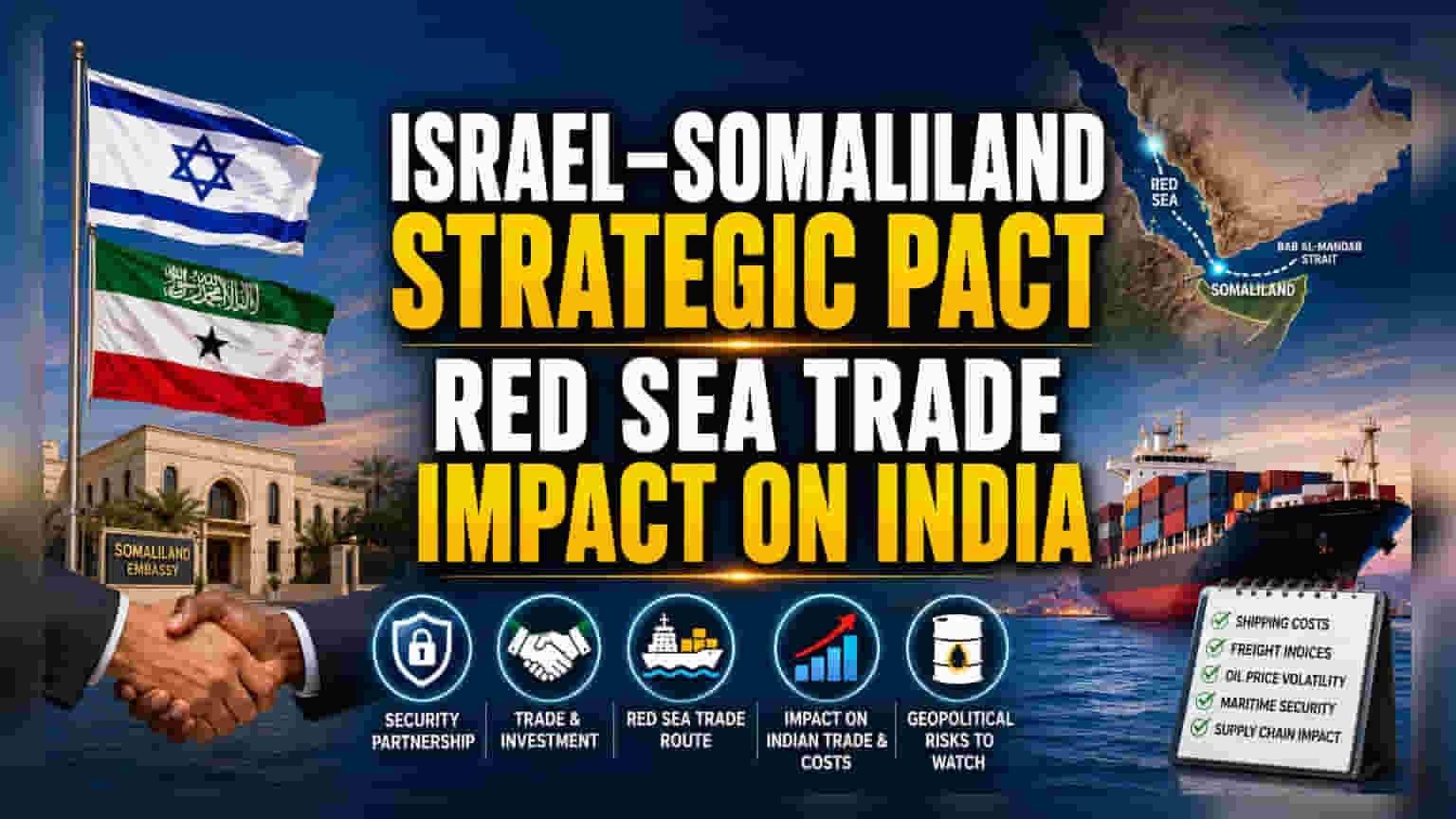
Israel and Somaliland have signed a strategic agreement, strengthening ties in the Red Sea region. For Indian investors, this development in a vital maritime trade corridor could influence shipping costs, insurance premiums, and energy import security, requiring a close watch on potential regional supply chain disruptions.
What Happened
Israel and Somaliland have entered into a strategic cooperation agreement following a high-level state visit by Somaliland President Abdirahman Mohamed Abdullahi to Jerusalem. The partnership, which includes the opening of a Somaliland embassy in West Jerusalem, focuses on security, trade, and regional strategy. This move marks a significant shift in diplomatic relations for Somaliland, a territory on the Horn of Africa that controls a vital section of the coastline overlooking the Gulf of Aden.
The Red Sea Trade Connection
The Red Sea and the Bab al-Mandab Strait are among the world's most critical maritime corridors. This region is a major artery for global shipping, facilitating a large portion of the trade between Asia and Europe. For India, this waterway is essential for the import of crude oil and the export of goods to markets in Western Asia and Europe. Any change in the security landscape or geopolitical alignment in this area directly affects the flow of goods and raw materials, making it a critical area for supply chain tracking.
Potential Impact on Indian Trade and Costs
When geopolitical tensions rise in the Red Sea, Indian companies, particularly in the shipping, logistics, and oil and gas sectors, may face indirect effects. Increased regional tension often leads to higher war-risk insurance premiums for commercial vessels passing through the region. If shipping lanes are perceived as unstable, vessels may divert routes, which increases fuel consumption and transit times, ultimately driving up freight rates. For Indian importers and exporters, these added costs can compress profit margins unless they are passed on to consumers.
Understanding the Geopolitical Risks
The agreement has drawn sharp criticism from several regional players, including the Houthis, who have warned of potential responses. For investors, the primary concern in such geopolitical developments is the risk of conflict escalation. If the region faces heightened hostility, the resulting uncertainty can cause volatility in global commodity markets, including oil prices. A spike in oil prices can impact India’s import bill and potentially influence domestic inflation trends, which are key variables for market sentiment.
What Indian Investors Can Track
Investors may keep a close watch on several factors to gauge the stability of these trade routes. Monitoring global shipping freight indices can provide early signals of rising costs in the region. Additionally, any major volatility in global crude oil prices, often triggered by Middle East and Horn of Africa tensions, remains a key variable for oil-importing economies like India. Finally, updates on maritime security in the Red Sea and any official government advisories regarding shipping lanes will be the most practical data points for companies with heavy exposure to international trade.