 Whalesbook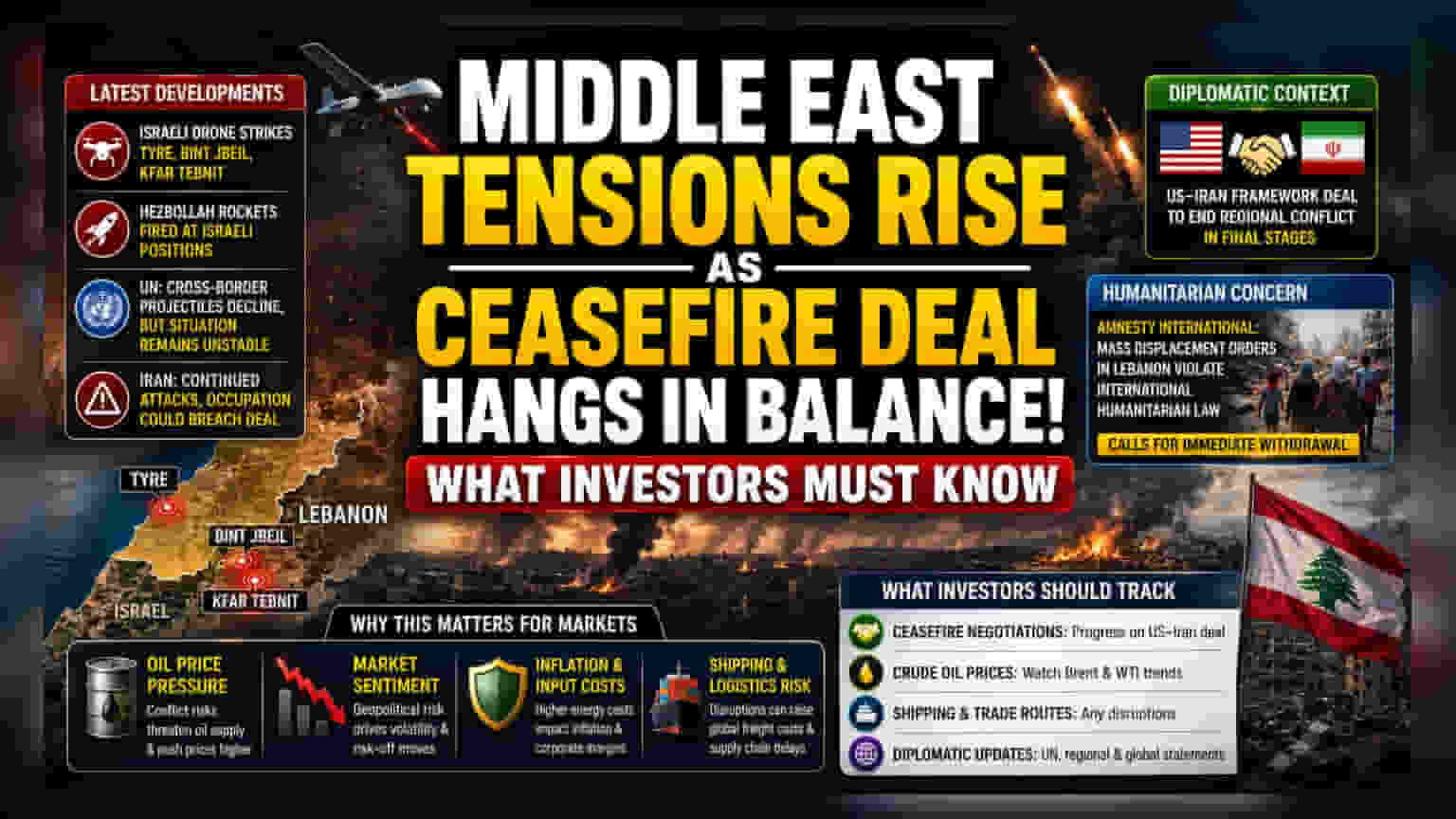


Israeli air strikes have persisted in southern Lebanon despite a pending ceasefire agreement led by the US and Iran. The ongoing violence poses risks to the peace process. For investors, this geopolitical instability is a key factor to watch, as it can influence global crude oil prices, disrupt trade routes, and drive broader market volatility, affecting import-dependent economies.
What Happened
Israeli military operations have continued in southern Lebanon, with recent drone strikes targeting areas including Tyre, Bint Jbeil, and Kfar Tebnit. The intensified activity comes even as a significant US-Iran framework agreement aimed at ending the regional conflict is in the process of being finalized. In response to the strikes, Hezbollah forces have launched rockets toward Israeli positions.
While the United Nations has reported a measurable decline in cross-border projectiles compared to previous weeks, the situation remains unstable. Iran, a key party in the negotiations, has cautioned that continued Israeli military actions and the occupation of territory could be viewed as a breach of the potential ceasefire agreement, complicating the diplomatic efforts to de-escalate the conflict.
Why It Matters For Market Sentiment
Geopolitical tension in the Middle East is a primary driver of market uncertainty. For global investors, the primary concern is the potential impact on energy markets. Major conflicts in this region often create worries about the security of oil supply lines and maritime trade routes. Even short-term escalations can trigger volatility in global crude oil prices, which directly affects inflation and input costs for energy-dependent industries.
Additionally, persistent conflict can influence global risk sentiment. Investors often reduce exposure to equities when uncertainty rises, leading to increased demand for safe-haven assets. For Indian investors, this is particularly relevant, as fluctuating oil prices can impact the domestic economy, currency strength, and the profit margins of sectors heavily reliant on fuel or imports.
The Human Rights And Legal Context
Amnesty International has recently addressed the situation, characterizing the Israeli military's mass displacement orders in Lebanon as significant violations of international humanitarian law. The organization has called for an immediate withdrawal of forces, highlighting the scale of civilian displacement. Such reports, while primarily humanitarian in nature, also contribute to the broader narrative of instability that markets weigh when assessing the duration and severity of the conflict.
What Investors Should Track
Investors may monitor the following developments to gauge the potential economic impact:
Ceasefire Negotiations: The formalization of the US-Iran deal remains the most critical factor. Any breakdown or further delay could prolong market uncertainty.
Crude Oil Prices: Trends in global oil benchmarks provide immediate feedback on how the market perceives the risk to supply chain security.
Shipping and Logistics: Any disruption to maritime trade routes in the Mediterranean or nearby regions can affect global logistics costs and supply chains.
Diplomatic Statements: Official updates from the United Nations and the involved nations will be essential for understanding the likelihood of a sustained reduction in violence.