 Whalesbook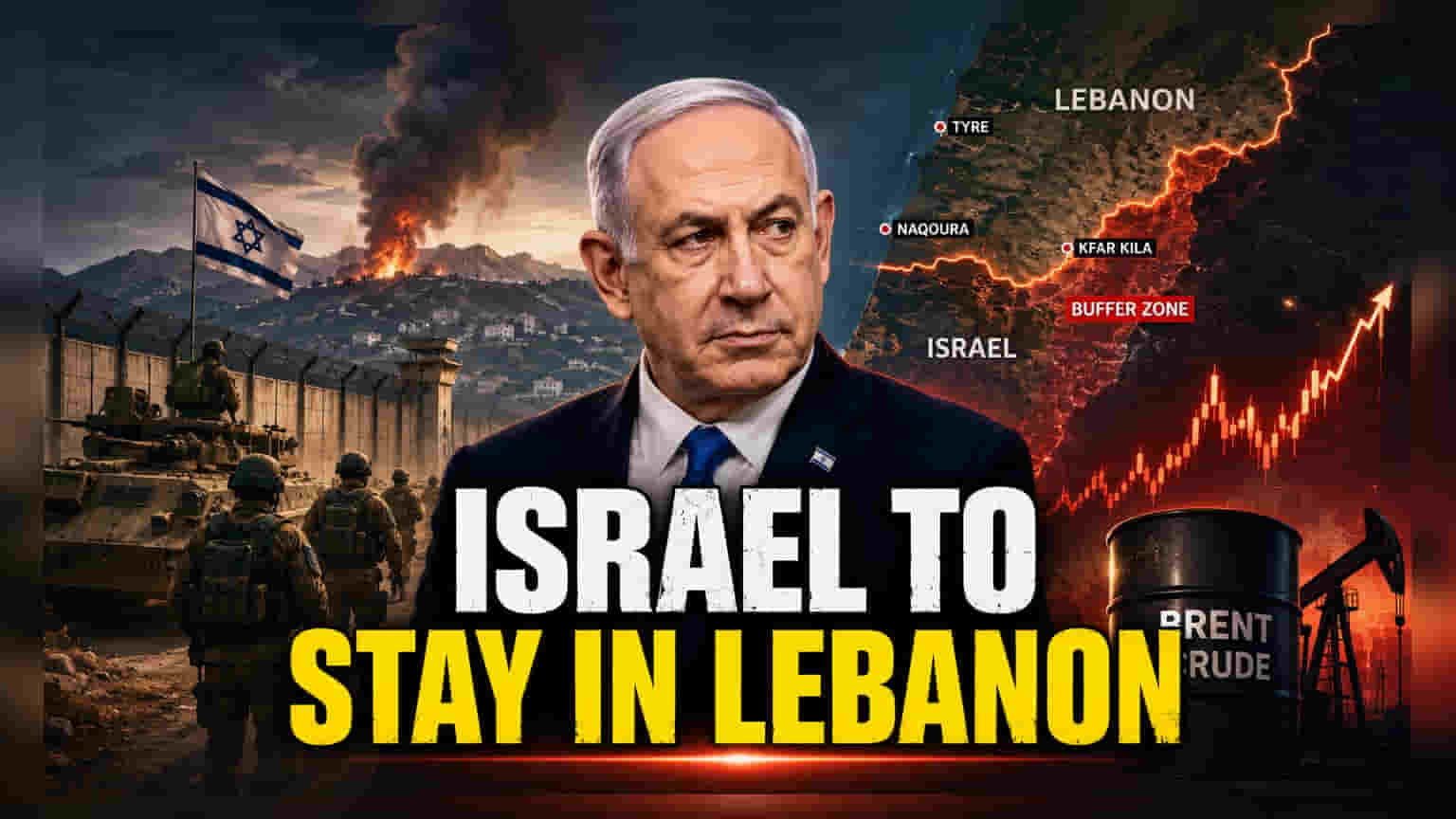


Israeli PM Benjamin Netanyahu's refusal to withdraw troops from Lebanon, despite a US-Iran-brokered agreement, has created fresh geopolitical uncertainty. For Indian investors, this conflict is a key monitorable due to its potential impact on global crude oil prices, inflation, and market volatility.
What Happened
Israeli Prime Minister Benjamin Netanyahu has declared that Israeli forces will not withdraw from occupied Lebanese territory, despite a memorandum of understanding signed on Sunday following a US-Iran-brokered ceasefire agreement. Netanyahu stated that Israeli troops would remain in the established security buffer zone indefinitely to counter regional threats. This decision follows weeks of escalating conflict and cross-border operations. The announcement has created diplomatic friction, particularly given that the ceasefire was intended to terminate military operations on all fronts, including Lebanon. Israeli Defense Minister Israel Katz has supported this policy, indicating that the move is aimed at protecting Israeli borders, regardless of international pressure.
Why This Matters For Indian Investors
Geopolitical tension in the Middle East often acts as a significant trigger for global financial markets, primarily through the channel of crude oil prices. India remains one of the world's largest importers of crude oil. Any sustained conflict in the Middle East, especially one involving major oil-producing or transit-influencing regions, creates the risk of supply disruptions or premiums on oil prices. If the ceasefire fails to hold, markets may brace for increased volatility in energy costs.
The Crude Oil And Inflation Connection
For Indian investors, the direct impact of Middle Eastern instability is often felt through the performance of Oil Marketing Companies and the broader macro-economic environment. When global oil prices spike due to geopolitical uncertainty, it can lead to higher input costs for manufacturers and increased inflationary pressure. High inflation often forces central banks to maintain higher interest rates for longer periods, which can dampen economic growth and corporate earnings. Investors typically track Brent Crude prices as a proxy for how this instability might affect India’s import bill and the rupee’s valuation against the dollar.
Market Sentiment And Volatility
Beyond direct energy costs, geopolitical instability often leads to a 'risk-off' sentiment in global equity markets. When investors fear uncertainty, they often move capital from emerging markets toward safer assets, such as gold or government bonds. While the Indian market has shown resilience in the past, heightened regional tensions can lead to short-term fluctuations in the Nifty and Sensex. The ability of the ceasefire to endure, or the potential for further escalation, will likely remain a background factor influencing institutional investment flows.
What Investors Should Monitor
Investors may keep a close watch on three primary indicators as the situation develops. First, the movement in global crude oil prices will be a critical gauge of how the market perceives the supply risk. Second, any further diplomatic updates regarding the US-Iran-brokered memorandum will provide clarity on whether the ceasefire has any chance of long-term survival. Third, institutional investor activity in India, including Foreign Institutional Investor (FII) flows, may signal whether the market is pricing in significant geopolitical risk. Watching these factors helps in understanding the potential duration of market volatility without needing to react to daily headline noise.