

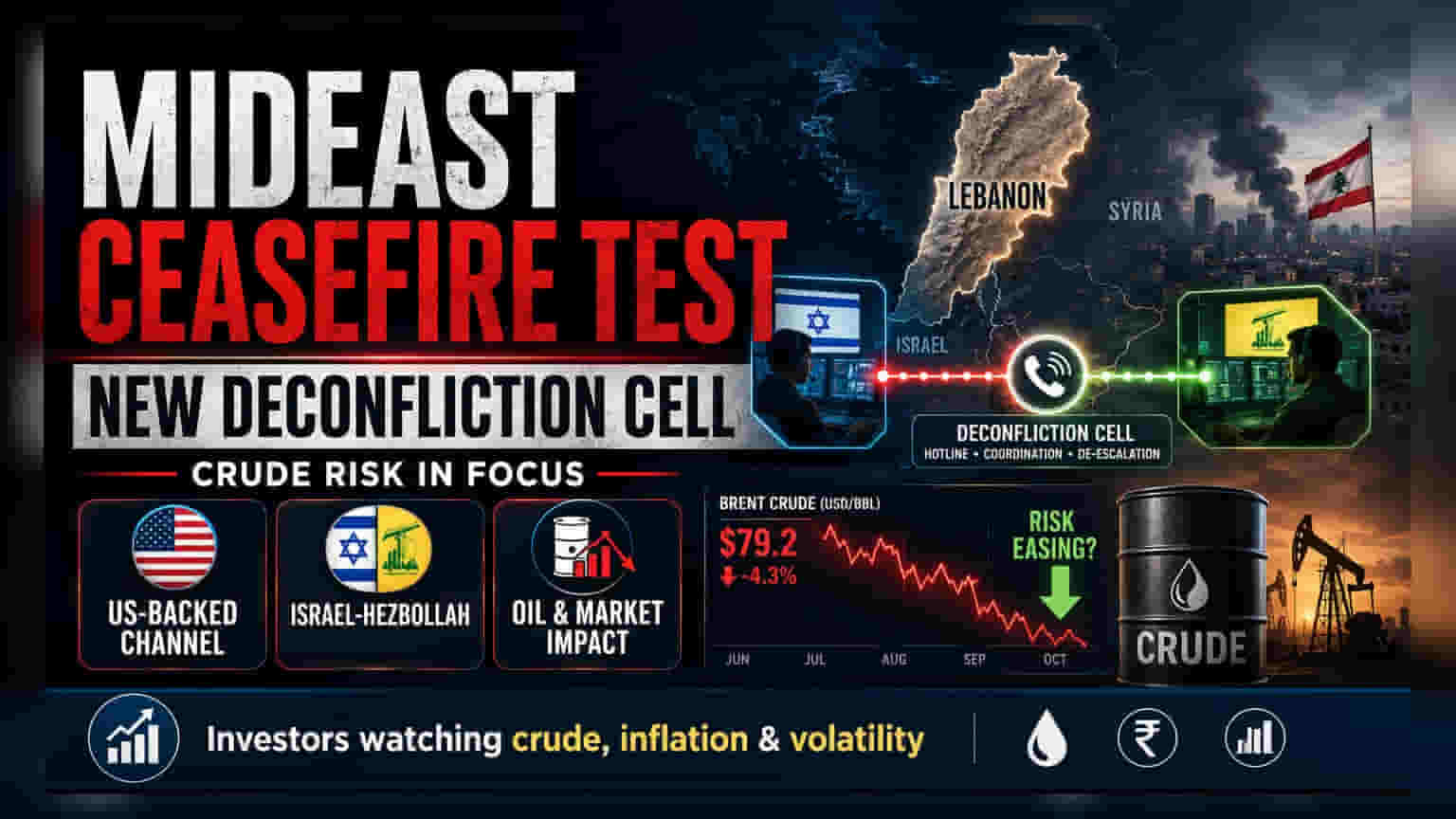
A new communication cell between Israel and Hezbollah has been established to stabilize the ceasefire in Lebanon, with U.S. support. For Indian investors, the focus remains on whether this mechanism can reduce regional tensions, which often impact global crude oil prices and market volatility. The situation remains fragile due to ongoing geopolitical divides.
What Happened
A new “deconfliction cell” has been launched to strengthen the fragile ceasefire between Israel and Hezbollah in Lebanon. This initiative, supported by the United States, is designed to serve as a direct communication channel between the parties. The primary goal is to prevent isolated incidents or minor clashes from escalating into a wider regional conflict.
While the United States and international mediators see this as a step toward managing the current situation, the move comes amid ongoing strikes and complex negotiations. The mechanism is intended to allow for immediate contact to de-escalate potential violence before it spirals out of control.
Why This Matters For Investors
For Indian market participants, the significance of this development lies in its potential impact on global crude oil prices and broader market sentiment. The Middle East is a critical region for global energy supply. Any escalation in conflict often leads to fears of supply disruption, which can push oil prices higher.
When oil prices rise, India—a major importer—often faces pressure on its current account, currency, and inflation. Companies in sectors like Oil Marketing Companies (OMCs), aviation, paints, and chemicals are particularly sensitive to these fluctuations. A functional deconfliction cell could, in theory, help stabilize the situation and reduce the risk of a sudden spike in energy costs. However, the market impact depends entirely on whether this cell actually succeeds in keeping violence levels low.
The Geopolitical Reality Check
Despite the creation of this communication channel, significant risks remain. The underlying geopolitical tensions between Israel, Hezbollah, and their respective backers, such as Iran, have not been resolved. Israel has stated it intends to maintain its operational freedom, while Hezbollah remains heavily armed.
As U.S. Vice President JD Vance noted, the effectiveness of such measures is often limited, with ceasefires sometimes acting only to reduce, rather than eliminate, conflict. Analysts point out that the path to disarmament and long-term peace remains uncertain. For investors, this means the risk of a sudden flare-up in the region persists, which can create unpredictable movements in global commodity markets.
What Investors Should Track
Investors may keep an eye on headlines emerging from the Middle East, as they remain a key variable for global volatility. The primary monitorable is whether this deconfliction cell leads to a sustained reduction in hostilities or if violence continues despite the communication channel. Additionally, tracking global crude oil price movements and the commentary from major rating agencies or energy bodies regarding regional supply chain risks will provide better clarity on how this situation may influence Indian markets in the coming weeks.