

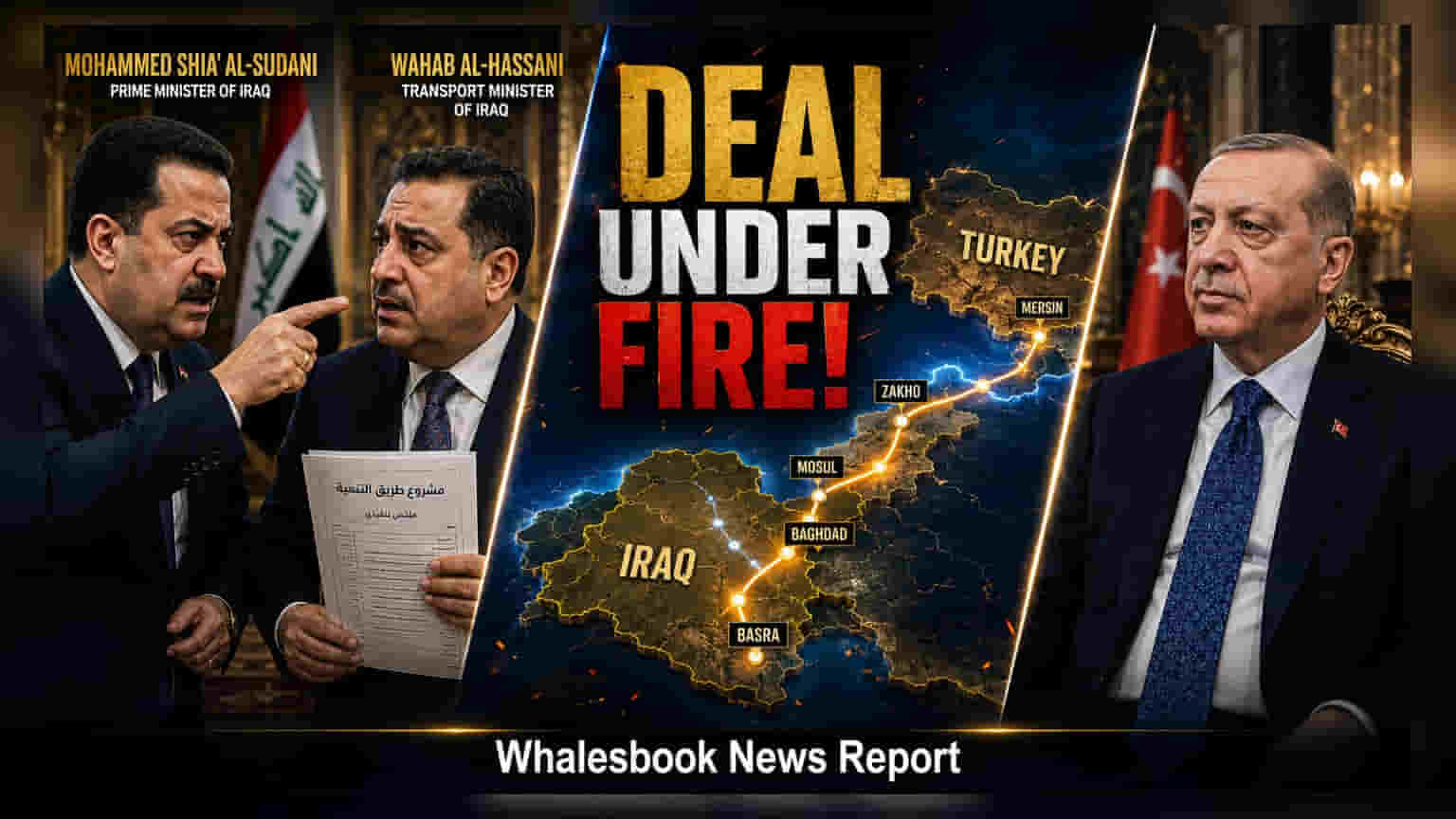
Iraqi Prime Minister Mohammed Shia' al-Sudani publicly intervened to finalize a key infrastructure agreement with Turkey after his transport minister hesitated. The Development Road Project aims to link the Grand Faw Port to Turkey, positioning Iraq as a major regional trade corridor between Asia and Europe. Investors are watching for signs of political stability as the project attempts to balance regional influence and economic diversification.
An unusual public incident occurred at a formal ceremony in Ankara, where Iraqi Prime Minister Mohammed Shia' al-Sudani was forced to intervene to ensure the signing of a key Memorandum of Understanding for the Development Road Project. The agreement, intended to strengthen economic ties with Turkey, was nearly left unsigned until the Prime Minister directed his Transport Minister, Wahab Al-Hassani, to formalize the deal in the presence of Turkish President Recep Tayyip Erdogan.
Strategic Importance of the Trade Corridor
The Development Road Project is central to Iraq’s long-term economic strategy. By building a network of railways and highways connecting the Grand Faw Port on the Persian Gulf to the Turkish border, Iraq hopes to create a faster trade route between Asia and Europe. For the Iraqi economy, which has historically relied heavily on oil exports, this project is designed to attract foreign capital and turn the nation into a regional logistics and transport hub. Successful completion could significantly diversify the country’s revenue sources and reduce dependence on commodity exports.
Geopolitical and Internal Risks
While the project holds promise for infrastructure growth, it faces complex political headwinds. The hesitation displayed during the signing ceremony has brought attention to potential internal divisions within the Iraqi government. Analysts have suggested that certain political factions, including those with close ties to Iran, may harbor concerns that this new corridor could reduce Iran's influence as an existing transit route for regional trade. These internal pressures represent a significant execution risk for the project, as any lack of consensus could lead to future delays or bureaucratic hurdles.
Next Steps for Investors
For those tracking the region, the primary monitorable is whether the Iraqi government can maintain a unified stance on the project’s execution. Investors may look for further clarity on funding mechanisms, the timeline for the development of the Grand Faw Port, and the progression of the rail and road network construction. Additionally, monitoring any follow-up statements from the transport ministry or further inter-governmental agreements will be essential to understanding if the project remains on track despite the clear signs of political friction. The long-term success of this initiative will depend heavily on the ability to navigate regional geopolitics and sustain domestic political support.