

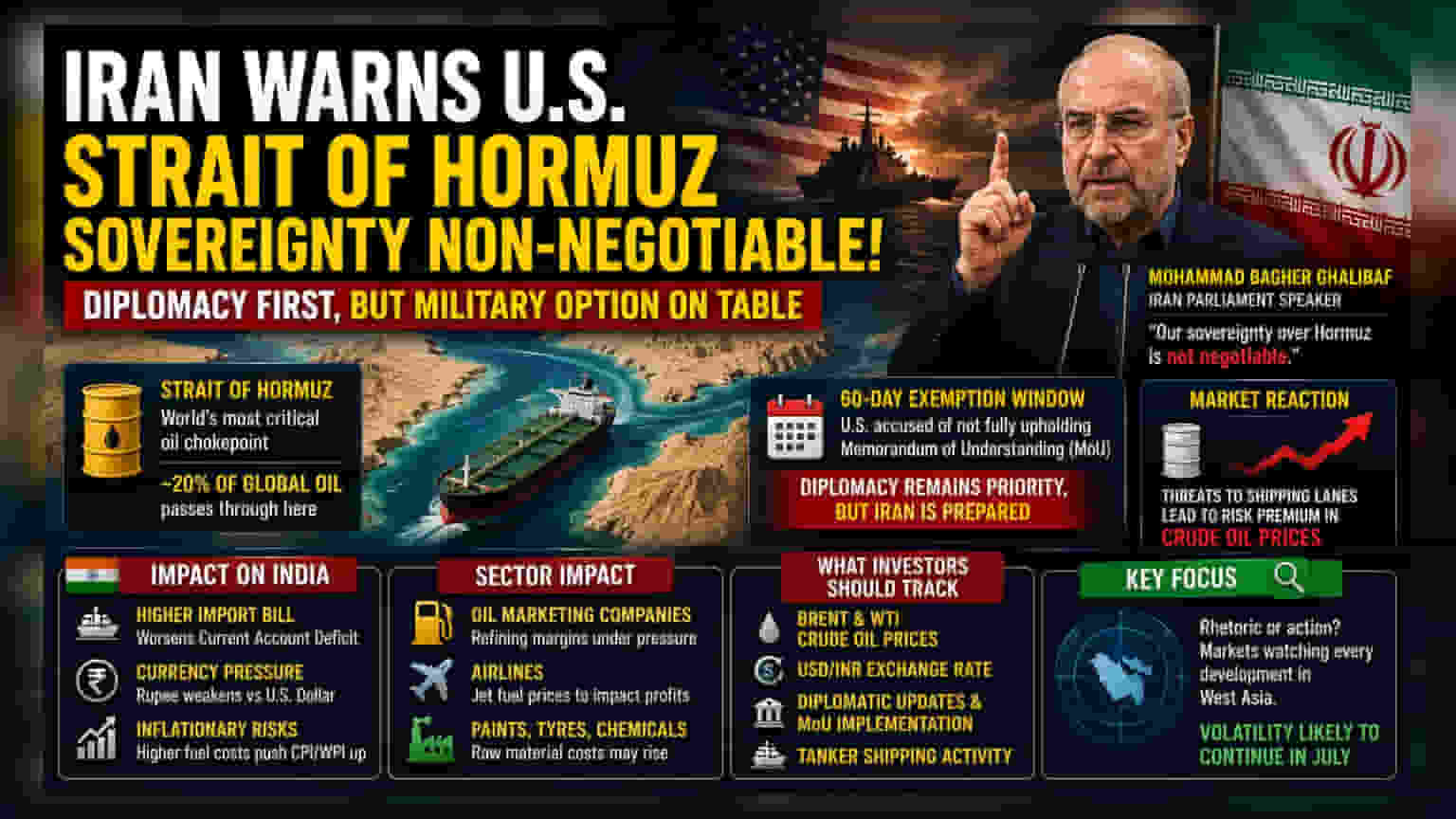
Iran has issued a warning to the U.S. regarding its diplomatic memorandum and the sovereignty of the Strait of Hormuz, a critical route for global oil supplies. This geopolitical tension introduces uncertainty into oil markets, which directly impacts India’s import bill, inflation, and domestic stock market sentiment.
What Happened
Iran’s Parliament Speaker, Mohammad Bagher Ghalibaf, has issued a direct warning to the United States regarding the potential for military confrontation. The statement comes after the failure of the U.S. to fully uphold terms from a recently signed memorandum of understanding (MoU). While Tehran has expressed that diplomacy remains its priority, Ghalibaf emphasized that the country is prepared for a military response if necessary. A major point of contention is the Strait of Hormuz, a narrow waterway through which a significant portion of the world's oil is transported. Ghalibaf declared Iran's sovereignty over the area as non-negotiable and criticized any attempts to challenge this position.
Why The Strait Of Hormuz Matters
The Strait of Hormuz is widely considered the world's most important oil chokepoint. Because a large percentage of global oil production travels through this narrow passage, any rhetoric or action that threatens to disrupt shipping lanes leads to an immediate "risk premium" in crude oil prices. Markets often react negatively to such geopolitical instability because it creates fear of supply shortages. For global investors, the uncertainty surrounding the 60-day exemption period mentioned in the memorandum creates a window of volatility that traders and analysts monitor closely.
Impact On Indian Markets
For Indian investors, geopolitical events in the Middle East have a direct financial ripple effect. India imports a significant portion of its crude oil requirements. When global oil prices spike due to uncertainty or supply fears, India’s oil import bill rises. This has several consequences:
Higher Import Bill: A larger import bill puts pressure on India's Current Account Deficit, which is the difference between what the country earns from exports and what it spends on imports.
Currency Pressure: Increased demand for dollars to pay for costlier oil can weaken the Indian Rupee against the U.S. Dollar.
Inflationary Risks: Higher energy costs feed into logistics, transport, and manufacturing costs, which can increase overall inflation (CPI/WPI) in the economy.
Sector-Specific Effects
Investors often track how oil price volatility affects specific Indian sectors. Oil Marketing Companies (OMCs) like IOC, BPCL, and HPCL may see their refining margins and profitability impacted if they cannot pass on higher costs to consumers. On the other hand, airline stocks like IndiGo are sensitive to jet fuel prices, which are linked to crude. Additionally, sectors like paints, tyres, and chemicals, which use crude oil derivatives as raw materials, may face margin pressure if oil prices remain elevated for an extended period.
What Investors Should Track
The market reaction to such news depends heavily on whether the rhetoric translates into action. Investors may look for updates on the implementation of the memorandum, any further diplomatic dialogue, or changes in tanker shipping activity. The most immediate indicators to track include the movement of Brent and WTI crude oil prices, the USD/INR exchange rate, and any official statements from the involved governments regarding the status of the de-confliction cell mentioned by Iranian officials.