

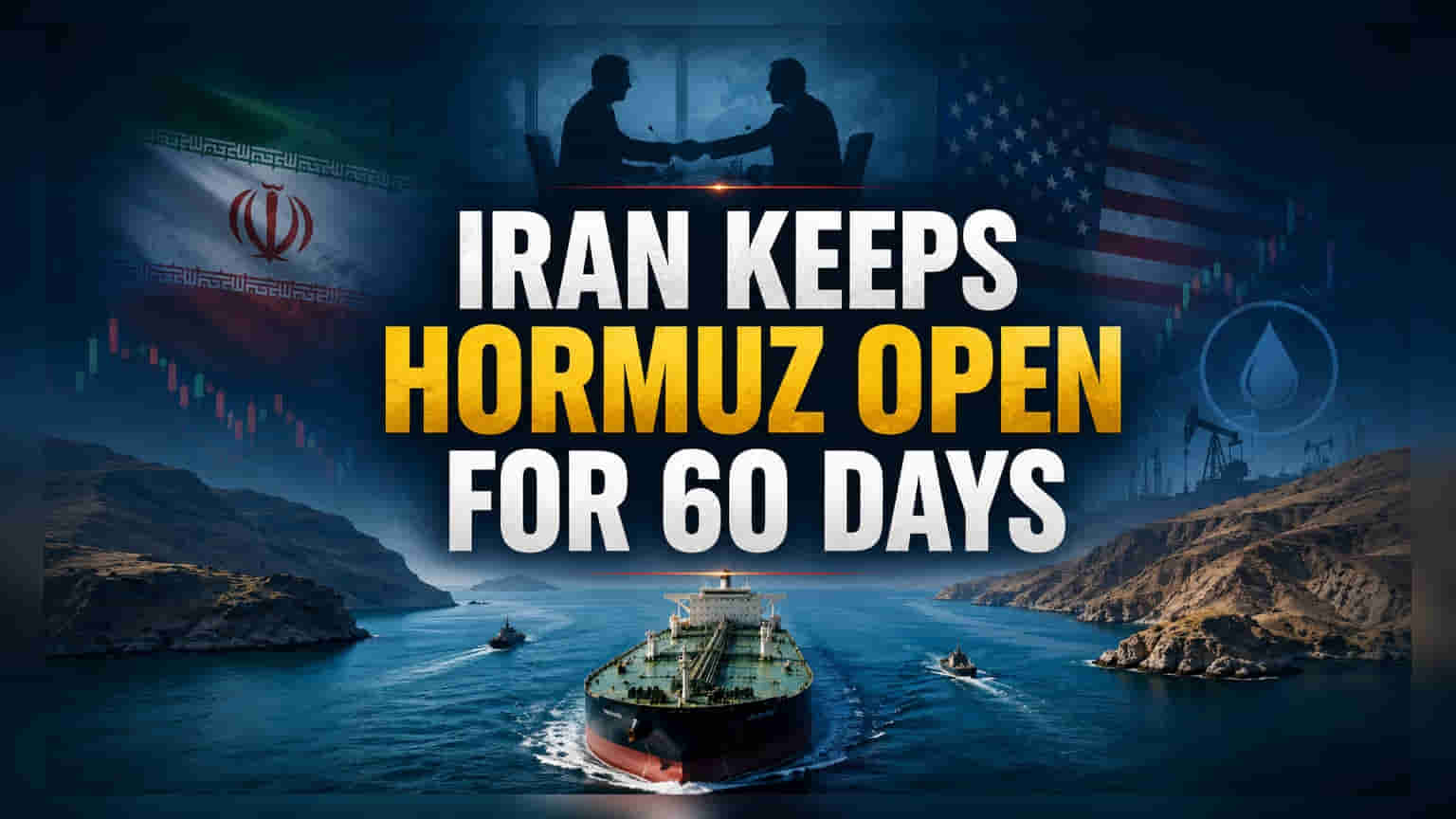
Iran has signaled potential progress in diplomatic talks with the US, contingent on regional ceasefire terms. Crucially for global markets, Iran stated it will keep the Strait of Hormuz open without passage fees for 60 days. For Indian investors, this geopolitical situation is key, as the Strait of Hormuz is a vital oil transit route. Any volatility here directly affects crude oil prices, impacting Indian Oil Marketing Companies, aviation stocks, and domestic inflation.
What Happened
Iran’s Deputy Foreign Minister, Saeed Khatibzadeh, recently signaled a potential shift toward resuming diplomatic talks with the United States. This progress is conditioned on Washington demonstrating seriousness and ensuring adherence to a signed memorandum of understanding, which includes specific terms regarding Israel and regional stability. However, the diplomatic path remains uncertain; scheduled talks in Switzerland were abruptly cancelled, reportedly due to escalations in fighting between Israel and Hezbollah in Lebanon.
The Strait Of Hormuz Factor
For global and Indian markets, the most significant update concerns the Strait of Hormuz. This narrow waterway is one of the world’s most critical chokepoints for oil and gas transit. Iran has stated it will continue to provide navigation services in the region, consistent with international law, and will not impose passage fees for the next 60 days. However, the mention of a potential "new management mechanism" to be introduced after this period creates a layer of uncertainty for global energy supply chains.
Why This Matters For Indian Investors
Geopolitical tension in the Middle East is a major variable for Indian financial markets because India imports a significant portion of its crude oil requirements. When events threaten the flow of oil through the Strait of Hormuz, global crude oil prices often react with volatility.
Indian Oil Marketing Companies (OMCs) like IOCL, BPCL, and HPCL are sensitive to these fluctuations, as sudden spikes in crude prices can impact their marketing margins and profitability. Similarly, the aviation sector, which relies on Aviation Turbine Fuel (ATF) derived from crude oil, often faces margin pressure when fuel costs rise. Furthermore, higher oil prices can lead to a rise in domestic inflation and put pressure on the Indian Rupee.
Business Risks And Market Uncertainty
While the commitment to keep the waterway open for 60 days offers short-term stability, the broader environment remains unstable. The breakdown of talks in Switzerland highlights that regional conflicts, such as the situation in Lebanon, can rapidly derail diplomatic efforts. For investors, this means the risk of supply chain disruption or oil price shocks remains a factor to consider. The market will likely remain sensitive to any further news regarding these talks or changes in the status of the Strait of Hormuz.
What To Watch Next
Investors should monitor official statements regarding the progress of US-Iran diplomatic efforts and any updates on regional security in the Middle East. Beyond the headlines, the key monitorable for the energy sector will be the 60-day timeline set by Iran for the current navigation arrangements. Any clarity on the "new management mechanism" for the Strait of Hormuz will be an important data point for global oil pricing, which in turn influences the outlook for Indian oil-dependent sectors.