

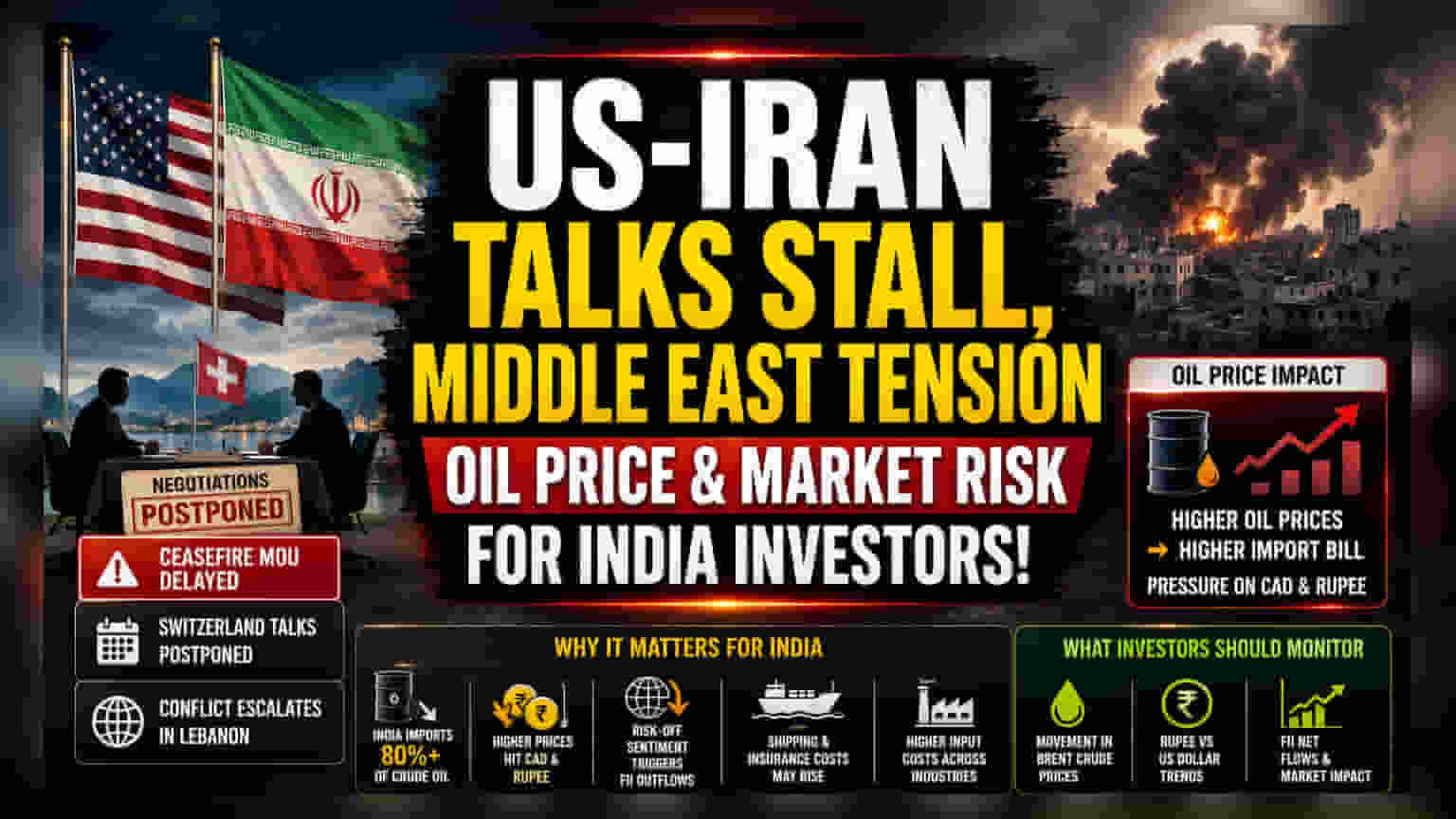
Talks between the US and Iran regarding a permanent ceasefire have been delayed following continued military operations in Lebanon. For Indian market participants, this geopolitical tension increases the risk of higher crude oil prices and potential currency volatility, as India remains a major importer of energy.
What Happened
Recent efforts to establish a memorandum of understanding (MoU) between the United States and Iran, aimed at securing a permanent ceasefire across conflict zones including Lebanon, have hit a roadblock. Reports indicate that scheduled negotiations between the two nations, which were intended to be held in Switzerland, have been postponed. This development follows a period of intensified military activity in Lebanon, with diplomatic channels appearing to struggle as the conflict continues to escalate.
Impact on Energy and Markets
For Indian investors, the primary concern regarding instability in the Middle East is the impact on crude oil prices. India imports over 80% of its crude oil requirements, making the economy highly sensitive to disruptions in supply chains or geopolitical premiums added to oil prices. While the current situation does not necessarily imply an immediate supply shock, prolonged uncertainty in the region often leads to volatility in global benchmarks such as Brent crude.
When oil prices rise, it tends to increase India’s import bill, which can put pressure on the Current Account Deficit (CAD) and potentially impact the Indian Rupee. Investors often watch these developments to assess the risk of imported inflation, which can influence monetary policy and corporate input costs.
Why Geopolitical Risk Matters for India
Geopolitical tension often triggers a 'risk-off' sentiment in global financial markets. When investors fear instability, they frequently move capital out of emerging markets like India and into safer assets, such as the US Dollar or gold. This behavior can result in outflows from Foreign Institutional Investors (FIIs), potentially creating downward pressure on Indian equity indices.
Furthermore, the conflict in the Middle East can affect shipping and logistics. Any escalation that impacts maritime security or insurance premiums for vessels in the region can increase the landed cost of goods, indirectly affecting sectors ranging from chemicals to manufacturing that rely on imported raw materials.
What Investors Should Monitor
Investors may look for updates on the diplomatic front to see if the US-Iran talks are rescheduled, as any progress toward stability could help ease the geopolitical risk premium currently associated with the region. Key monitorables include the movement of global crude oil benchmarks, which directly signal market sentiment regarding supply stability. Additionally, the performance of the Indian Rupee against the US Dollar and FII net flow data will provide further context on how the global risk environment is influencing the domestic market.