

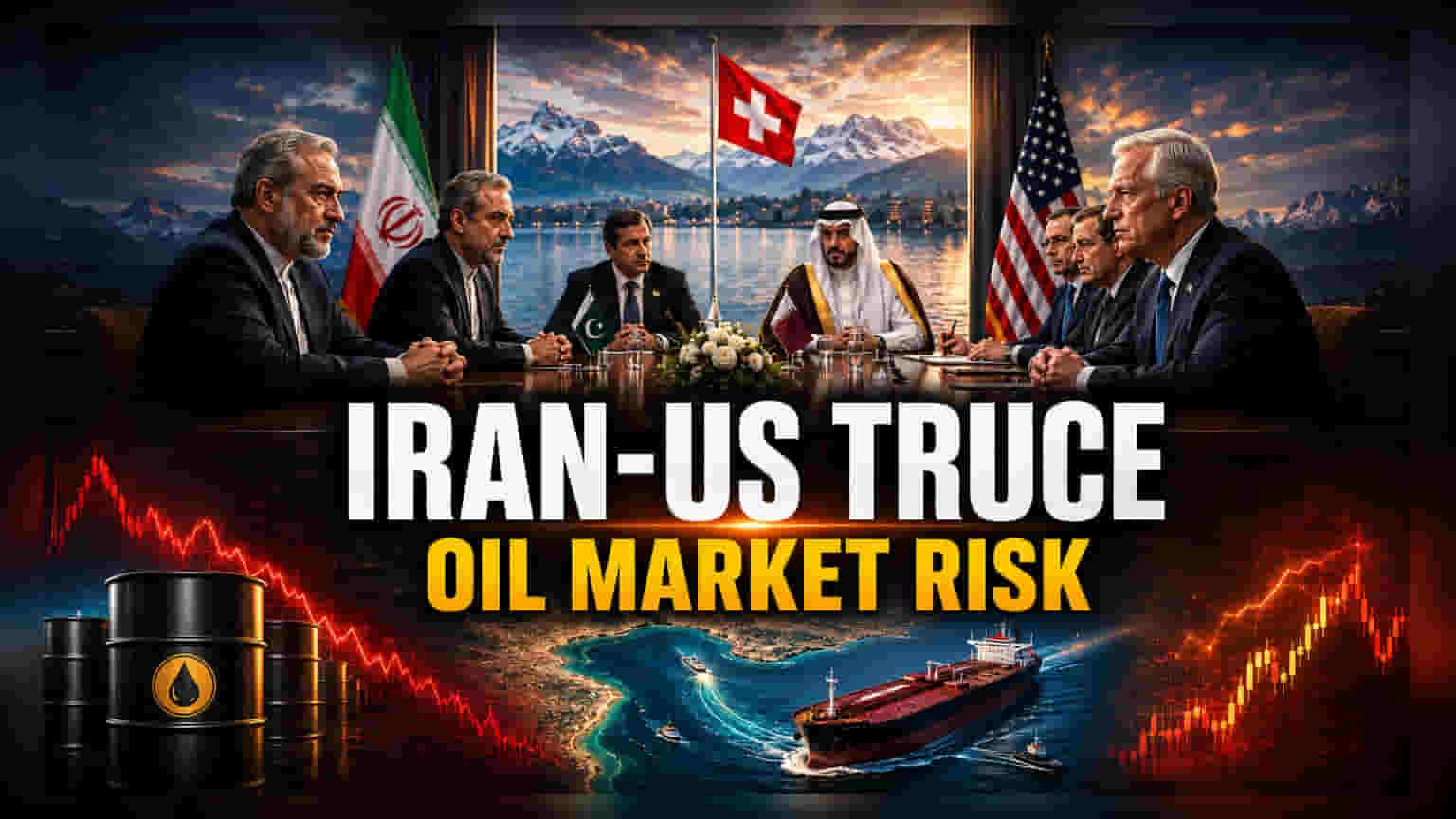
Iran and US negotiators are meeting in Switzerland to finalize a ceasefire memorandum. For investors, the primary concern is the stability of the Strait of Hormuz, a vital route for global oil transit. Uncertainty surrounding the deal’s implementation, due to internal Iranian opposition, may keep energy markets volatile.
What Happened
Negotiators from Iran and the United States have convened in Switzerland to work on a memorandum of understanding (MoU) aimed at ending hostilities. The Iranian delegation is being led by Parliament Speaker Mohammad Bagher Ghalibaf and Foreign Minister Abbas Araghchi, while US Vice President JD Vance is heading the American team. The discussions are being facilitated by Pakistan and Qatar as mediators. The primary goal of these talks is to reach an agreement that halts ongoing conflict, though internal dissent within Iran has added layers of complexity to the diplomatic process.
Why It Matters For Global Markets
The Strait of Hormuz is one of the world's most critical oil supply routes. Any diplomatic breakthrough that ensures the safety of this passage is generally viewed as positive for energy stability. Conversely, if the ceasefire talks fail or lead to renewed uncertainty, market risks related to crude oil supply and shipping costs can escalate. For investors, the key factor is not just the agreement itself, but the durability of the truce, as disruptions in this region have historically triggered volatility in global oil prices and increased shipping insurance premiums.
The Internal Risk Factor
While the diplomatic effort is underway, the deal faces significant domestic hurdles in Iran. There is notable friction between hardline political factions and the country’s leadership. Although President Masoud Pezeshkian has described the MoU as a historic document, reports indicate that Supreme Leader Mojtaba Khamenei provided only reluctant approval. Some hardline legislators have publicly questioned the leadership's stance, creating an environment of political unpredictability. This internal discord raises questions about whether the agreement can be fully implemented or if it remains vulnerable to local political shifts.
Business and Logistics Impact
The Ministry of Foreign Affairs in Iran has identified the enforcement of this MoU, particularly regarding its impact on Lebanon and the security of the Strait of Hormuz, as a priority. Any change in the status quo in these regions directly influences the risk profile for global shipping companies and energy importers. Indian investors with exposure to oil marketing companies, aviation, and logistics sectors typically track these geopolitical updates, as prolonged tension often leads to higher raw material costs and input price inflation.
What Investors Should Track
The most important monitorable is the official confirmation of the MoU terms and any subsequent updates regarding compliance. Market watchers should look for stability in global oil prices and reports on shipping traffic through the Strait of Hormuz. Given the internal opposition highlighted by hardline factions, the persistence of the political leadership's support for the deal will be crucial to its success. Any divergence in official statements from Tehran or the US will likely be the first signal of whether the ceasefire remains on track or faces potential delays.