

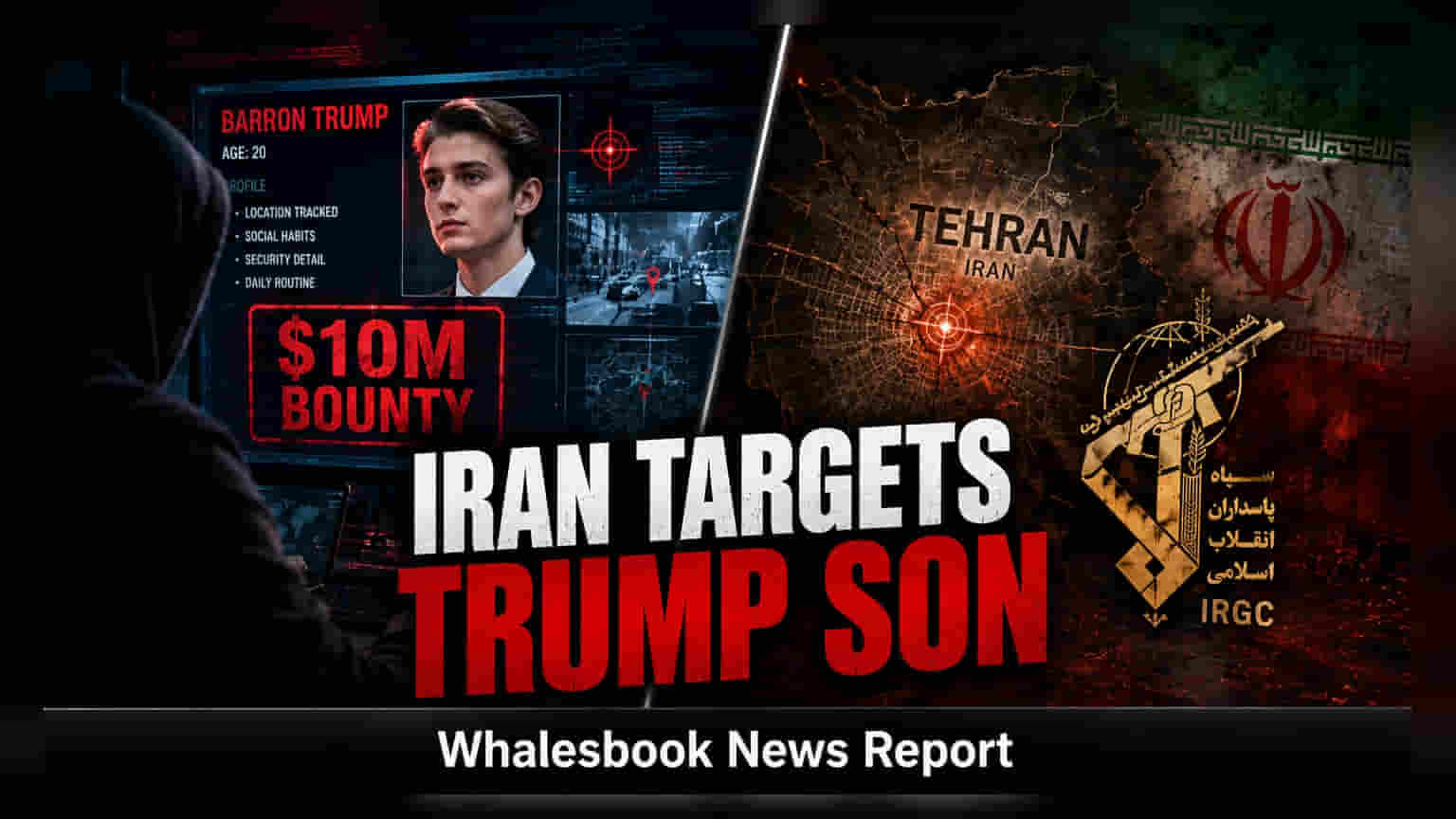
Iranian state television has aired a video targeting Barron Trump, son of U.S. President Donald Trump, claiming a $10 million bounty. Analysts view the broadcast, which alleges surveillance of his security and movements, as part of an escalating psychological warfare campaign rather than a confirmed operational threat.
Iranian state television, specifically Channel 3, has broadcast a video segment targeting Barron Trump, the 20-year-old son of U.S. President Donald Trump. The three-minute segment, which has gained attention for its inflammatory nature, included dramatized graphics and claims of a $10 million bounty placed on his head.
The broadcast, titled "Where to kill Barron Trump?", utilized stylized animations and surveillance-style imagery to allege that Barron’s movements, social habits, and security detail were being tracked. The video claimed that information regarding his private activities and daily routines had been compromised, suggesting methods to bypass Secret Service protocols.
While the video has caused concern, analysts and geopolitical observers generally characterize the broadcast as a component of a broader psychological warfare and propaganda campaign against the Trump family, rather than a confirmed or viable operational plan. There is no independent evidence to support the claims regarding actual security breaches or the validity of the alleged bounty. The nature of the production, relying heavily on stylized graphics and unverified claims, is consistent with past instances of aggressive rhetoric from media outlets linked to the Islamic Revolutionary Guard Corps (IRGC).
This incident follows a series of escalating threats from Iranian media targeting the Trump family, including a similar broadcast last month that focused on former First Lady Melania Trump. These actions occur against the backdrop of strained relations between the United States and Iran, characterized by years of mutual threats and regional friction. The situation highlights the volatile state of diplomatic ties, where media campaigns are often used to signal defiance or amplify tensions.
For observers tracking geopolitical developments, the key monitorable remains the official response from U.S. authorities and whether such rhetoric leads to a tangible change in security posture or diplomatic discourse. The broadcast serves as a reminder of the ongoing information war that continues to accompany the complex U.S.-Iran relationship.