

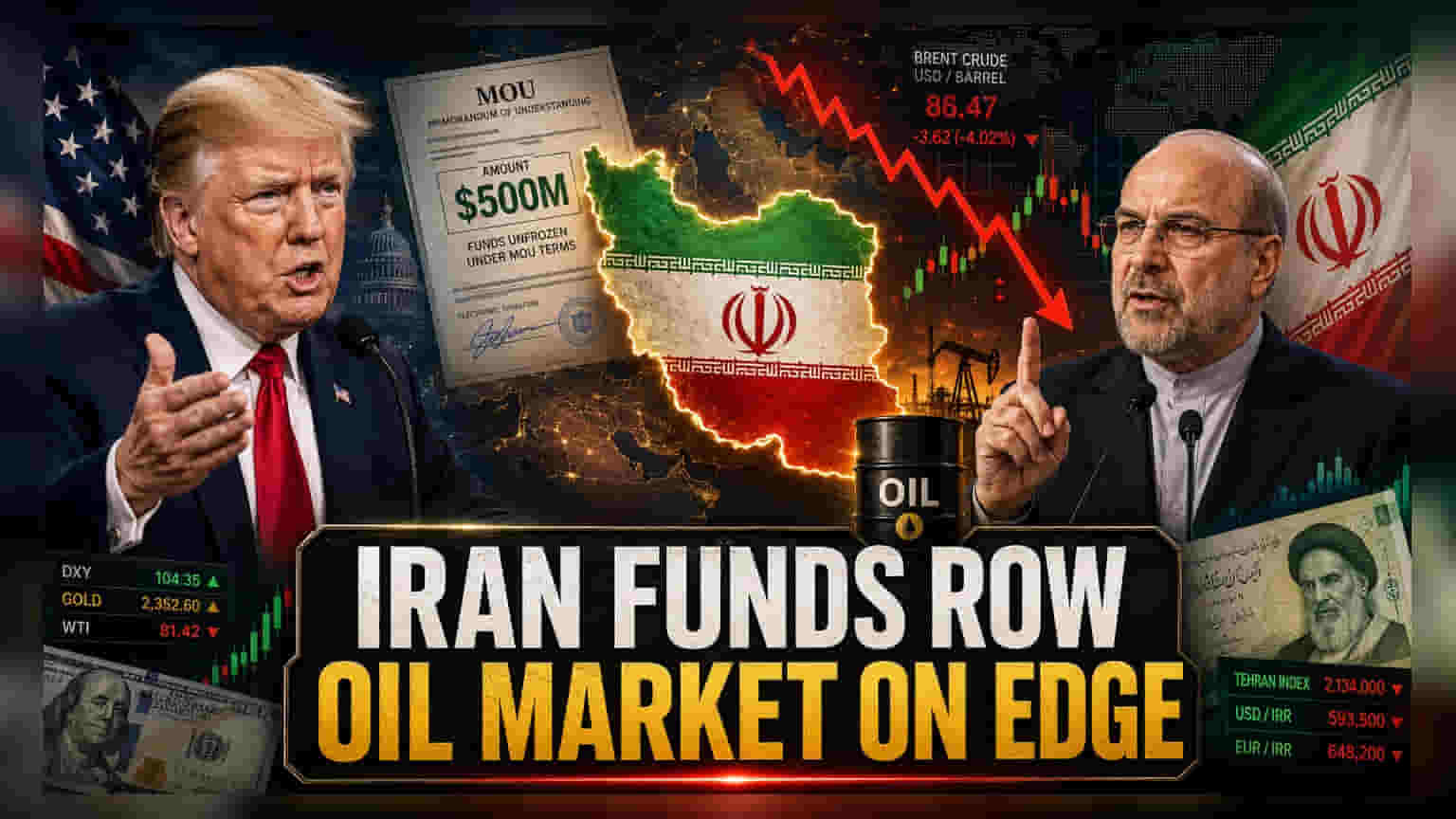
Iran’s Parliament Speaker Mohammad Bagher Ghalibaf has rejected US claims that $500 million in released Iranian funds would be used solely to buy American agricultural goods. This diplomatic disagreement highlights ongoing uncertainty surrounding the deal, which investors monitor for its potential impact on global crude oil supply expectations and regional stability.
What Happened
Iran’s Parliament Speaker, Mohammad Bagher Ghalibaf, has officially rejected claims made by U.S. President Donald Trump regarding the use of $500 million in unfrozen Iranian funds. The funds are reportedly part of a Memorandum of Understanding (MOU) brokered through Pakistan, with electronic signatures dating back to June 18, 2026. President Trump had stated that this financial relief would be directed exclusively toward purchasing American agricultural products, such as corn and wheat.
Ghalibaf took to social media to publicly refute this, stating that the funds would not be restricted to U.S. commodities. He characterized the U.S. narrative as inaccurate, suggesting that the MOU does not contain legal clauses that mandate such purchases.
Why This Matters for Investors
For investors, the primary concern regarding Iran is its status as a significant global oil producer. Any diplomatic development involving Iranian sanctions or the unfreezing of assets is closely watched because it can influence expectations regarding the return of Iranian oil to the global market. When negotiations become public and contentious, it signals that the diplomatic path to easing supply constraints may be complicated or delayed.
Global crude oil prices are sensitive to geopolitical news in the Middle East. While this specific dispute focuses on the usage of funds, the underlying friction suggests that the broader deal remains fragile. For energy-importing nations like India, fluctuations in global oil supply sentiment can affect import costs, inflation, and the profitability of oil-marketing companies.
The Diplomatic Context
This disagreement follows comments from U.S. officials, including Vice President JD Vance and Secretary of State Marco Rubio. U.S. officials have emphasized the need for a deal that does not compromise security and benefits American interests, such as exports. Conversely, Iranian officials, including the Central Bank Governor, have maintained that the released funds would be flexible and not necessarily tied to essential goods from the U.S.
The public nature of this disagreement—with Ghalibaf calling the MOU a "declaration of U.S. defeat"—reflects the challenges in reconciling the positions of both nations. The MOU, which is currently the subject of these conflicting interpretations, remains a key document to watch as more details emerge.
What Investors Should Track Next
Investors should focus on whether the MOU moves toward full implementation or if these conflicting public statements signal a stall in the agreement. The key monitorables include official statements from either government regarding the actual movement of funds, any updates on the specifics of the trade agreement, and broader movements in global crude oil prices. If the dispute escalates, it may continue to create uncertainty in the energy markets, which often influences investor sentiment toward oil-dependent sectors.