

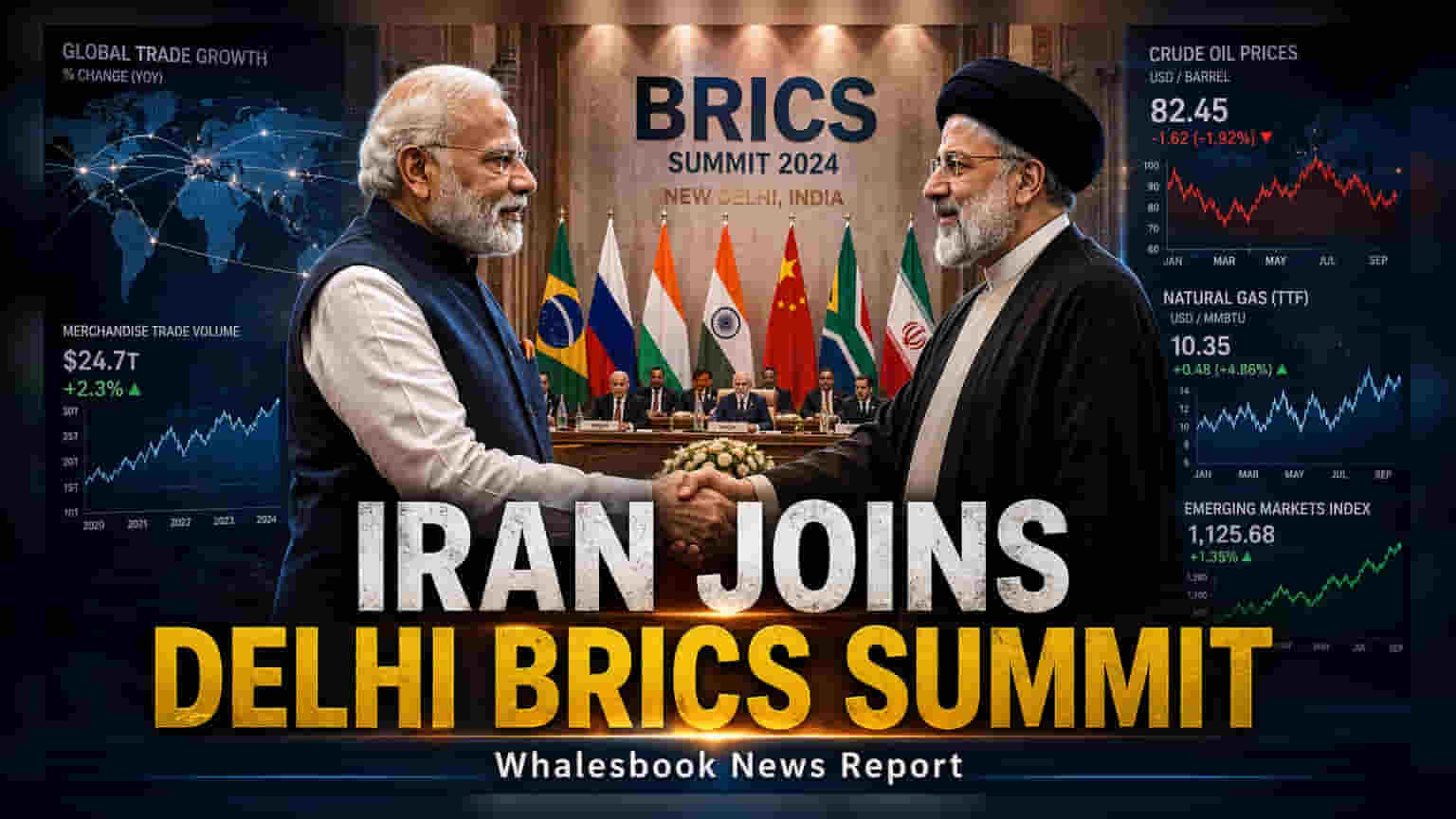
Iranian President Masoud Pezeshkian will travel to New Delhi for the 18th BRICS Summit on September 12–13, 2026. The meeting will bring together leaders from 11 member nations to discuss global trade, regional security, and energy cooperation. Investors and market participants will monitor the summit for signals on maritime security and energy stability, as India leads the bloc under its 2026 chairship.
Iranian President Masoud Pezeshkian is scheduled to visit New Delhi next month to participate in the 18th BRICS Summit, taking place on September 12–13, 2026. This visit is a significant diplomatic event, as it marks one of the first major gatherings of the bloc under India’s 2026 chairship. The summit will focus on the theme "Building for Resilience, Innovation, Cooperation and Sustainability," highlighting the group’s efforts to strengthen economic and strategic ties among member nations.
Since 2024, the BRICS bloc has undergone significant expansion. After welcoming Iran, Egypt, Ethiopia, and the United Arab Emirates as full members in 2024, the group further grew with the inclusion of Indonesia in 2025. This now brings the total number of full members to eleven, creating a diverse coalition that spans several key global regions.
India’s Diplomatic and Economic Focus
India took over the BRICS chairship from Brazil at the start of 2026. The summit in New Delhi serves as a platform for India to facilitate high-level bilateral discussions, particularly concerning regional security and global economic cooperation. The participation of the Iranian President is viewed as an opportunity to discuss West Asian stability, a region that is critical for global energy supplies and maritime trade.
For market observers and investors, the key monitorables from the summit include any joint declarations regarding trade mechanisms and energy security. As India is a major importer of crude oil, stability in West Asia and the security of trade routes, including the Strait of Hormuz, remain critical factors for the domestic economy. The summit may provide clarity on how BRICS members intend to handle the complexities of trade, especially in the context of international sanctions and fluctuating global oil prices.
Potential Economic and Geopolitical Risks
While the summit aims to foster cooperation, the broader geopolitical landscape presents challenges. Ongoing tensions in West Asia and existing international trade sanctions on Iran create a complex environment for multilateral trade. Market participants will be watching for any statements on how the bloc plans to navigate these pressures to ensure uninterrupted energy flows and commercial security. The outcome of bilateral talks between Indian leadership and visiting heads of state will be a critical indicator of future diplomatic and economic alignments.
The next important update for market watchers will be the formal outcome of the summit, including the "New Delhi Declaration" and any specific agreements signed between India and other member nations regarding infrastructure, energy, and cross-border trade.