

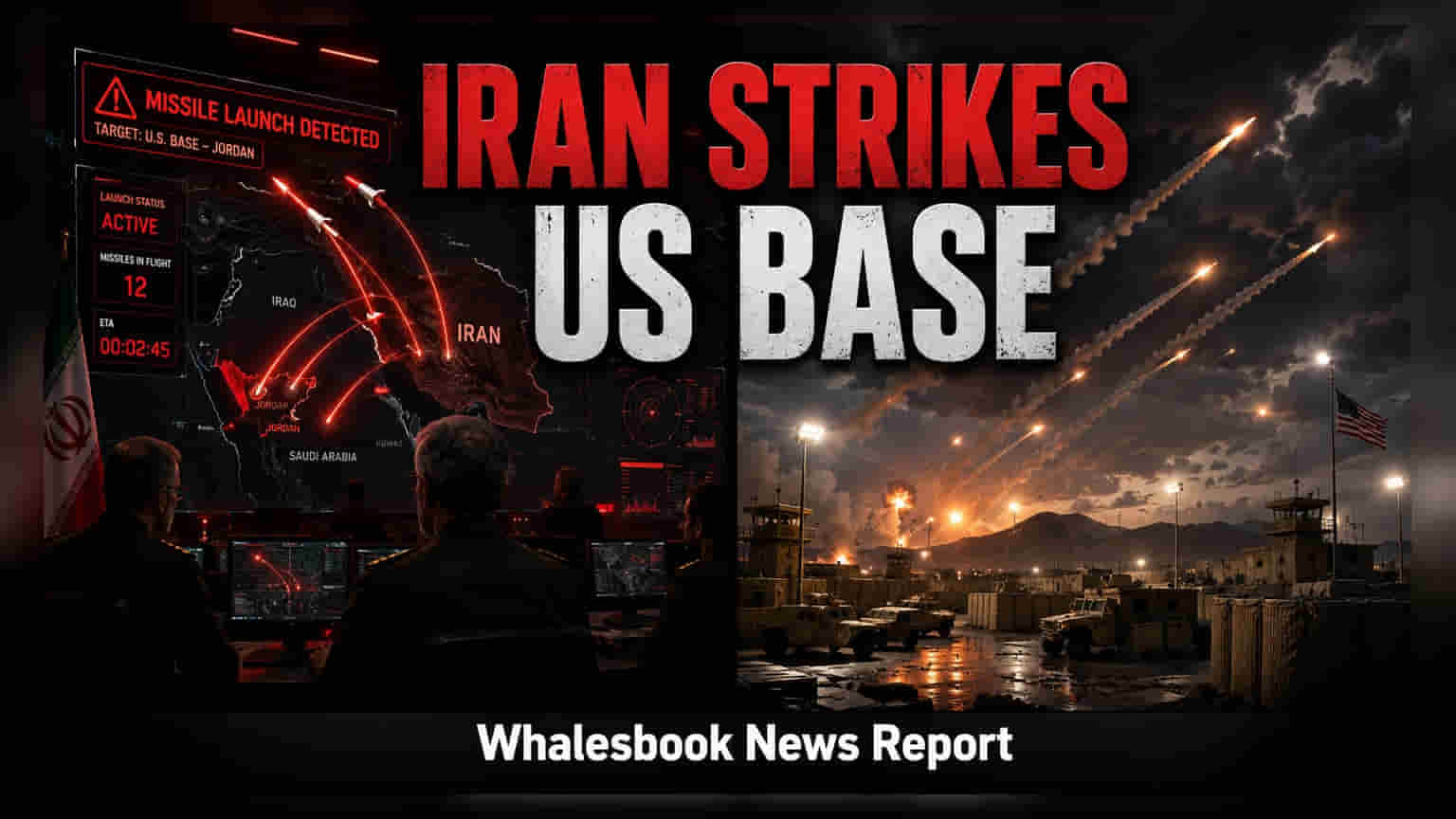
Iran launched a missile attack on a U.S. military facility in Jordan, significantly raising geopolitical tensions in the Middle East. This escalation creates uncertainty for global financial markets, particularly regarding crude oil prices and supply chain stability. Investors are now closely monitoring potential responses from the United States and global energy markets.
A surprise missile strike by Iran on a United States military facility in Jordan has sharply increased geopolitical instability in the Middle East. This direct action against a U.S. installation marks a shift from previous methods of regional engagement, raising concerns about a broader conflict. For Indian investors, the immediate impact of such geopolitical events is often seen through movements in commodity prices and currency stability.
Impact on Global Energy Markets
Geopolitical tension in the Middle East is historically linked to volatility in crude oil prices. As a major importer of crude oil, India is sensitive to supply chain disruptions and price hikes in the energy sector. A prolonged period of tension or military escalation in this region can lead to higher import costs, which puts pressure on India's trade deficit and can affect the profit margins of domestic companies that rely on petroleum-based raw materials, such as those in the paints, chemicals, and aviation sectors.
Market Sentiment and Risk Assessment
The uncertainty caused by this strike may lead to increased caution in equity markets. Global investors often move capital toward safer assets like gold or the U.S. dollar during periods of high geopolitical risk. This shift can cause foreign institutional investors to pull funds out of emerging markets like India, potentially leading to increased volatility in the Nifty and Sensex. While the long-term impact depends on the scale and nature of the diplomatic and military response, the immediate risk for shareholders is the potential for sharp intraday price swings.
Monitoring Future Developments
Investors should track official statements from the United States government regarding its response, as well as updates on global oil price movements. Other important factors to watch include the stability of regional trade routes and any potential impact on the Indian Rupee, as currency depreciation driven by global risk aversion can further increase the cost of essential imports. The situation remains fluid, and market reactions will likely be heavily influenced by whether the conflict remains localized or expands into a broader regional struggle.