 Whalesbook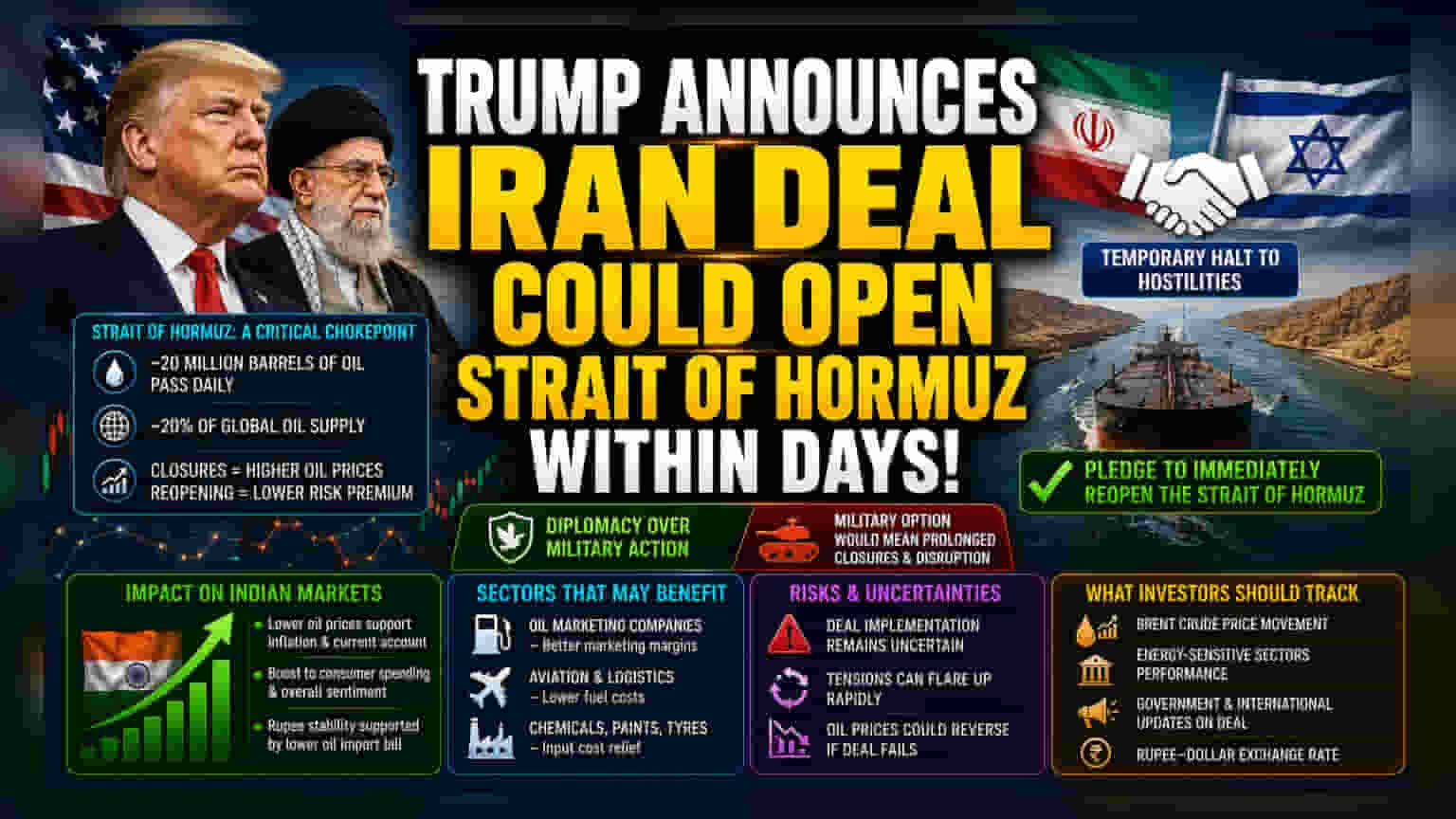


What Happened
President Donald Trump has announced potential progress in negotiations with Iran, suggesting that a deal could be finalized within days. According to the announcement, the agreement includes a temporary halt to hostilities between Iran and Israel. A core element of this development is the pledge to immediately reopen the Strait of Hormuz upon the signing of an agreement. The US administration emphasized that this economic path is preferred over military action, which would likely lead to prolonged closures of this essential maritime passage.
Why The Strait Of Hormuz Matters
The Strait of Hormuz is one of the world's most critical "chokepoints" for energy supplies. A significant portion of the world's daily oil production passes through this narrow waterway. For global markets, any tension in this region typically drives up oil prices due to fears of supply disruption. Conversely, the prospect of a reopening is viewed by the market as a positive factor that could reduce the geopolitical risk premium currently built into crude oil prices. Stability in this region is essential for predictable global energy flows.
Impact On Indian Markets
For Indian investors, crude oil prices are a major economic indicator. India is a large importer of crude oil, and lower energy costs generally provide a boost to the broader economy by helping to control inflation and improving the country's current account balance.
Several sectors are sensitive to oil price movements. Oil Marketing Companies (OMCs) often benefit from more stable or lower crude prices, which can support their marketing margins. Similarly, industries where crude oil derivatives are key inputs—such as paints, tyres, chemicals, and logistics—may see cost relief if oil prices remain stable or decline. Conversely, a reduction in energy costs can support consumer spending power, which is positive for the overall market sentiment.
The Risks And Uncertainties
While the news of a potential deal is significant, investors often view geopolitical agreements with caution due to the history of such negotiations. The primary risk is implementation. Historical precedents show that tensions in this region can be fragile, and political developments may change rapidly. Markets tend to be volatile around such news, and a failure to finalize the deal could lead to a reversal in sentiment. Furthermore, even if a deal is signed, the timeline for normalization of shipping routes and the actual impact on oil supply can be subject to delays or regional friction.
What Investors Should Track
Investors may keep a close watch on international crude oil benchmarks, such as Brent Crude, as these will likely reflect the market's immediate assessment of the deal's success. Additionally, tracking the performance of energy-sensitive sectors like oil marketing, aviation, and logistics can provide insight into how the market is pricing these developments. Monitorables also include government statements regarding energy imports and any official updates on the implementation of the agreement. Keeping an eye on the Rupee's movement against the Dollar will also be relevant, as lower oil import bills generally support currency stability.