

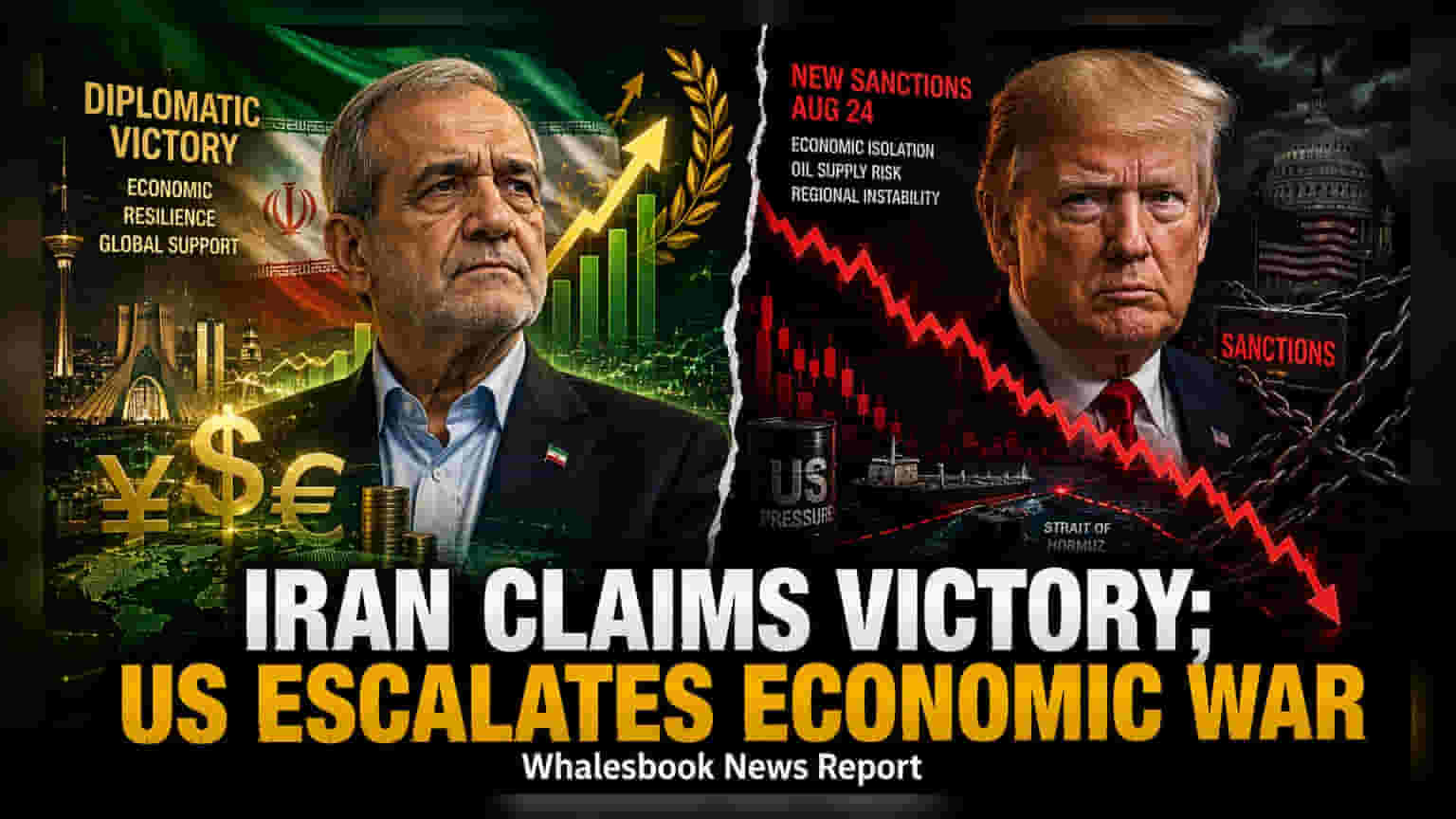
Iranian President Masoud Pezeshkian has declared the conflict with the US over, even as Washington prepares new, major sanctions for August 24, 2026. The expiration of the June 2026 peace memorandum and rising uncertainty in the Strait of Hormuz may impact global oil markets, creating potential volatility for investors monitoring Indian trade and inflation.
Iranian President Masoud Pezeshkian announced on Friday that the conflict with the United States should conclude, asserting that Tehran has secured a global diplomatic victory. This claim comes as the US administration is preparing to intensify its economic campaign against Iran. Treasury Secretary Scott Bessent is scheduled to announce a new series of sanctions on August 24, 2026, signaling that Washington remains focused on isolating Iran’s economy to force changes in its nuclear and regional policies.
Escalating Sanctions and Energy Markets
The ongoing tension has effectively ended the impact of the June 17, 2026, Islamabad Memorandum of Understanding, which was intended to de-escalate hostilities between the two nations. With the collapse of this agreement, market observers are focused on the Strait of Hormuz, a critical shipping route for global oil supplies. The region has seen a significant reduction in tanker traffic as both nations resume more aggressive postures. For Indian investors, this instability matters significantly. As a major importer of crude oil, India is sensitive to supply chain disruptions and price volatility in the Middle East. If tensions continue to reduce shipping volume or prompt retaliation, the resulting pressure on crude oil prices could influence domestic inflation, the rupee, and the margins of Indian oil marketing companies.
Diplomatic Friction and Regional Tension
Adding to the uncertainty, internal policy differences within the US administration have emerged regarding Middle East strategy. Tom Barrack, the US Special Envoy for Syria, recently stated that Israel’s occupation of the Golan Heights contradicts international law and UN resolutions. This position creates a visible rift, as it departs from the US policy established in 2019 which recognized Israeli sovereignty over the territory. While this is primarily a diplomatic issue, such inconsistencies in messaging can sometimes affect broader regional stability and investor confidence in US foreign policy consistency.
Market participants are currently monitoring the upcoming announcement on August 24 for clarity on the scope of the new sanctions. The primary risks to track include potential fluctuations in global energy prices and any escalation in military or trade posturing that could further restrict oil shipments. Investors should watch for commentary from oil producers and central banks regarding the potential for sustained volatility in the commodities market.