 Whalesbook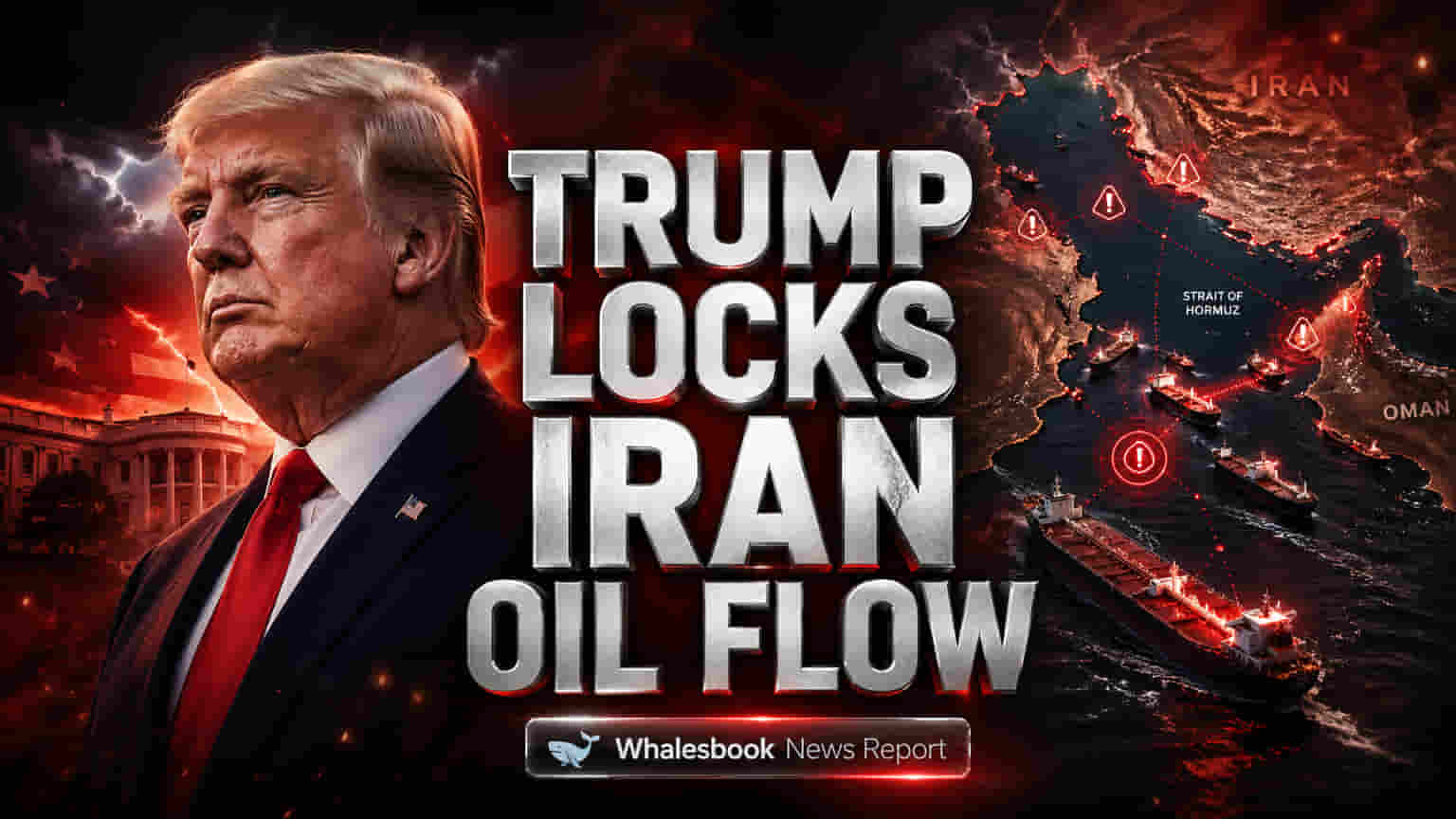


Economic pressure on Iran, focused on the Strait of Hormuz, has led to the most significant energy disruption in modern history. While crude oil prices have risen immediately, deeper implications stem from geopolitical risk, which is increasingly influencing global energy security and economic outlooks.
Strait of Hormuz: A Vital Energy Passage
The Strait of Hormuz is a vital route for global energy transit, typically handling about 20% of the world's oil and LNG supply. Recent events have severely disrupted this key passage, with shipping curtailed by a dual blockade involving Iran and the United States. This has led to an estimated daily loss of 7.5 to over 13 million barrels of crude and refined products, a scale the International Energy Agency (IEA) calls the largest disruption on record.
Market Reaction and Price Surge
Brent crude oil has surged past $100 per barrel, trading near $111, while West Texas Intermediate (WTI) hovers around $100. Analysts at Goldman Sachs have raised their fourth-quarter oil price forecasts, expecting prices to remain elevated. However, these figures may not fully capture the added risk premium. The market is quickly pricing in potential prolonged outages, shipping delays, and escalation, rather than waiting for actual physical shortages. Projections suggest Brent could reach $125-$150 or higher if the Strait stays closed. Some forecasters warn prices could remain elevated for years due to limited global spare production capacity. The IEA has also warned that markets are underestimating the closure's full impact.
Beyond Supply: Wider Economic Impact
This sustained disruption goes beyond immediate commodity prices. The IEA notes the crisis involves simultaneous tensions in oil and gas markets, causing sharp price increases and delaying LNG supply. The global impact is significant, with developing nations bearing the brunt of higher energy and food prices, worsening inflation and slowing economic growth. Historically, major oil price spikes often lead to economic downturns or recessions. The current situation, potentially more severe than the 1970s oil shocks and the Russia-Ukraine conflict, raises serious concerns for global energy security. Additionally, energy security concerns are broadening beyond oil imports. The U.S. Energy Security Index highlights growing import risks for critical minerals needed for both traditional and new energy technologies.
Underpriced Risks and Market Dynamics
Current market focus may be too heavily on immediate supply figures, overlooking the broader market risk from a prolonged blockade. The price premium for geopolitical risk in oil could be significantly understated. Traders are factoring in extended disruption scenarios, but the cascading effects of sustained high energy costs—including reduced consumer demand, lower industrial activity, and amplified inflation—pose a wider threat than immediate supply numbers suggest. With limited global spare production capacity, any further shocks or prolonged inaction could cause much larger price surges. The market is also sensitive to diplomatic shifts. A sudden peace deal or de-escalation, while welcome, could quickly erase the geopolitical risk premium, leading to sharp price drops if underlying supply and demand don't fundamentally rebalance. Tightening sanctions on Iranian oil, affecting Chinese refineries and shipping, aim to cut Iran's revenue. This strategy could take three to four months to impact export revenues but fundamentally pressures the nation's economy.
Outlook for Oil Prices
Analysts expect oil prices to remain volatile and elevated in the medium term. Forecasts for late 2026 place Brent around $90 and WTI at $82, assuming some de-escalation by mid-year. However, the risk of further escalation or prolonged disruption means prices could stay much higher. The World Bank forecasts Brent averaging $86 in 2026, assuming severe disruptions end by May – a scenario that looks increasingly optimistic given the current stalemate. The global energy system faces ongoing structural challenges, with potential for further supply shocks and persistent inflation as long as the Strait of Hormuz remains a focal point of geopolitical tension.