

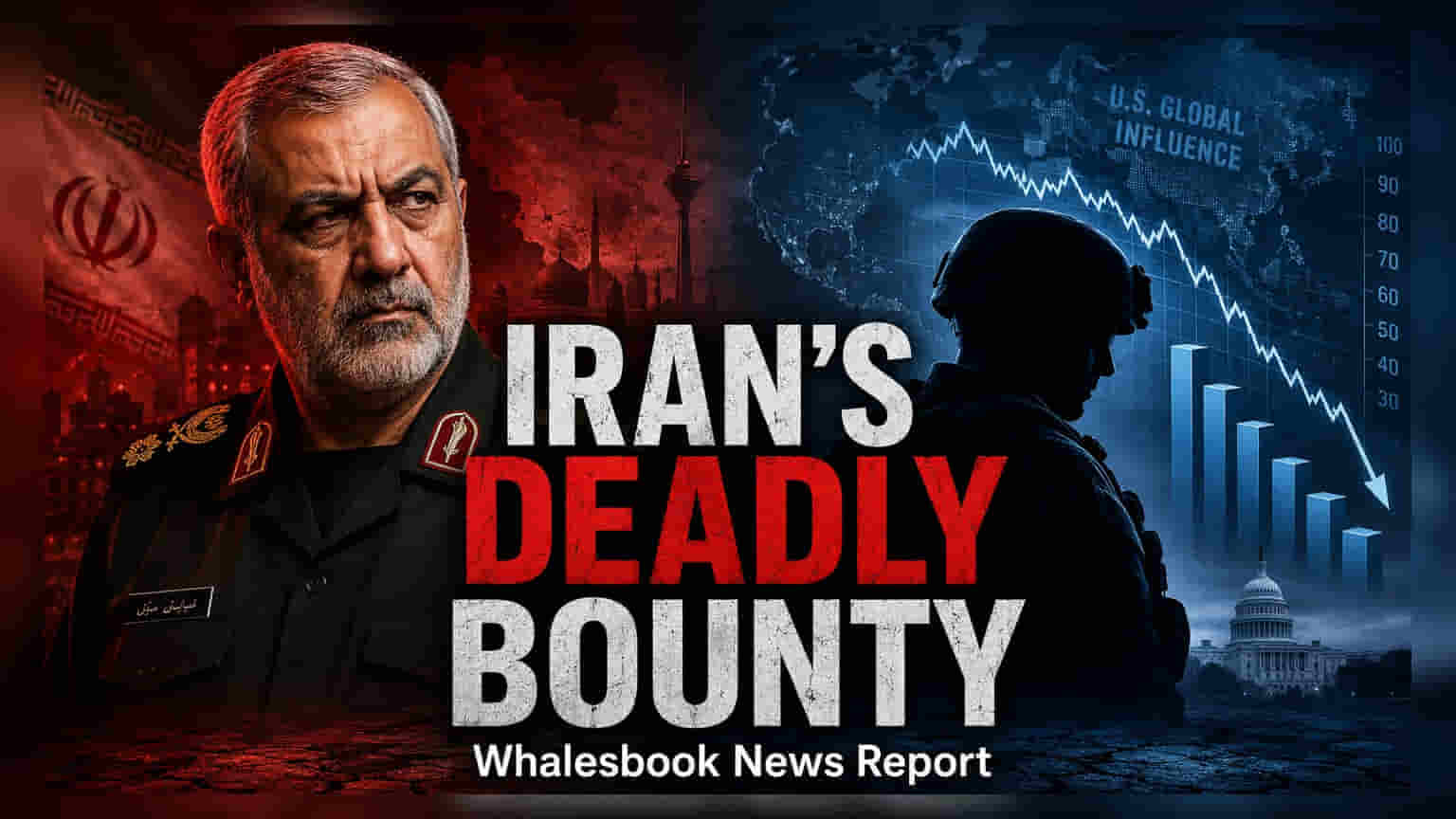
The Iranian military has announced a $30,000 bounty for the capture or killing of U.S. military personnel, significantly increasing regional tensions. For investors, this development raises the risk of volatility in global crude oil prices and impacts shipping routes through the critical Strait of Hormuz energy corridor.
On August 16, 2026, the Iranian military announced a new policy offering a $30,000 bounty for any individual who kills or captures U.S. military personnel. Army Commander-in-Chief Amir Hatami, who made the statement, described the initiative as a form of financial jihad. The announcement also included an offer to purchase weapons used in such incidents for double their market value. While no large-scale U.S. ground troop deployments are currently active within Iran, the declaration marks a sharp escalation in the ongoing regional conflict.
Impact on Energy Markets and Shipping
For investors and market participants, the primary concern stemming from this development is the potential for increased instability in the Persian Gulf. The Strait of Hormuz is a vital chokepoint for global energy supplies, with a significant percentage of the world’s crude oil passing through the route daily. Any rise in geopolitical hostility in this region historically leads to concerns regarding supply chain security and potential disruptions to shipping lanes.
Energy markets are highly sensitive to conflict in the Middle East. If tensions continue to rise, investors may see increased volatility in crude oil prices. Higher oil prices can directly influence the trade balance for net-importing nations like India, potentially leading to inflationary pressure on the domestic economy. Market participants often watch these developments to gauge the likelihood of an impact on oil import bills and the operational costs of companies heavily dependent on energy and global logistics.
Investor Monitorables
Beyond direct energy costs, this situation introduces uncertainty for sectors reliant on global trade. Shipping and logistics companies may face rising insurance premiums if the security environment in the Persian Gulf deteriorates further. Investors typically monitor these risks by tracking changes in Brent and WTI crude oil benchmarks, as well as official updates regarding shipping traffic through the region.
While the market reaction to such geopolitical news can be immediate, long-term impact depends on whether these threats lead to a tangible disruption in trade or military engagement. Shareholders in energy-dependent industries and global shipping firms may track future developments closely to assess whether the security situation in West Asia affects supply chain reliability or production costs. At this stage, the situation remains a fluid geopolitical risk factor that adds to the uncertainty currently influencing global market sentiment.