

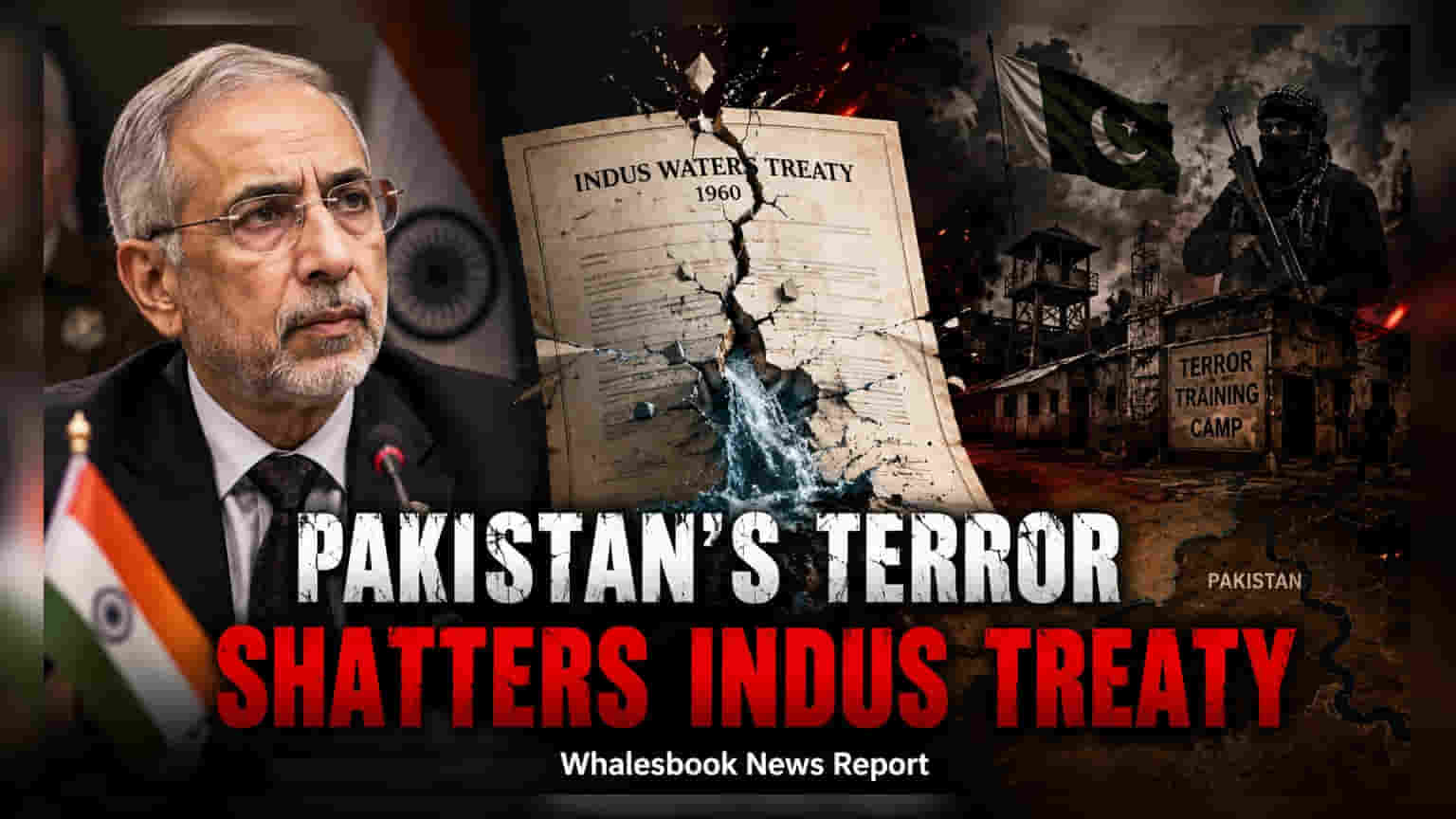
India's Ambassador to the US, Vinay Mohan Kwatra, has stated that Pakistan's history of cross-border terrorism has undermined the foundation of the 1960 Indus Water Treaty. The envoy clarified that India's decision to place the treaty in abeyance reflects the erosion of trust caused by decades of regional instability.
Vinay Mohan Kwatra, India’s Ambassador to the United States, recently articulated that the long-standing Indus Water Treaty is under strain due to Pakistan’s persistent pattern of hostility. Writing in a recent article, the envoy emphasized that the treaty, originally signed in 1960, was built upon the expectation of mutual goodwill—a foundation he argues has been dismantled by decades of aggression.
Historical Context and Treaty Terms
The 1960 agreement, mediated by the World Bank, currently allocates approximately 80% of the Indus basin’s water to Pakistan and 20% to India. According to the Ambassador, India has largely adhered to these terms for over six decades, often at the expense of its own regional development and hydropower potential. India has sought to modernize its water infrastructure to better utilize its allocation; however, official statements suggest that Pakistan has consistently obstructed these efforts, refusing to renegotiate terms to reflect modern technological capabilities.
Security Concerns and Diplomatic Stance
The envoy’s comments link the status of the treaty directly to national security. By referencing a timeline of events including the 2001 Parliament attack, the 2008 Mumbai attacks, and the 2019 Pulwama incident, the government’s position remains that terrorism and diplomatic dialogue cannot coexist. The decision to place the treaty in abeyance is presented not as a sudden policy shift, but as a response to the ongoing challenge of cross-border terror, which officials argue has made the original spirit of the treaty untenable.
Impact on Regional Development
For investors and observers tracking Indo-Pak relations, the primary implication is the continued uncertainty surrounding shared resources and cross-border infrastructure projects. While Pakistan has raised concerns regarding water scarcity, the Indian government maintains that these issues stem from internal management failures rather than Indian water policy.
Looking ahead, the next important development for market observers will be any further official communication from the Ministry of External Affairs regarding the legal status of the treaty or potential modifications to its implementation. As the geopolitical friction persists, the ability to execute large-scale hydro-development projects in affected border regions may continue to be influenced by these diplomatic, security, and legal considerations.