 Whalesbook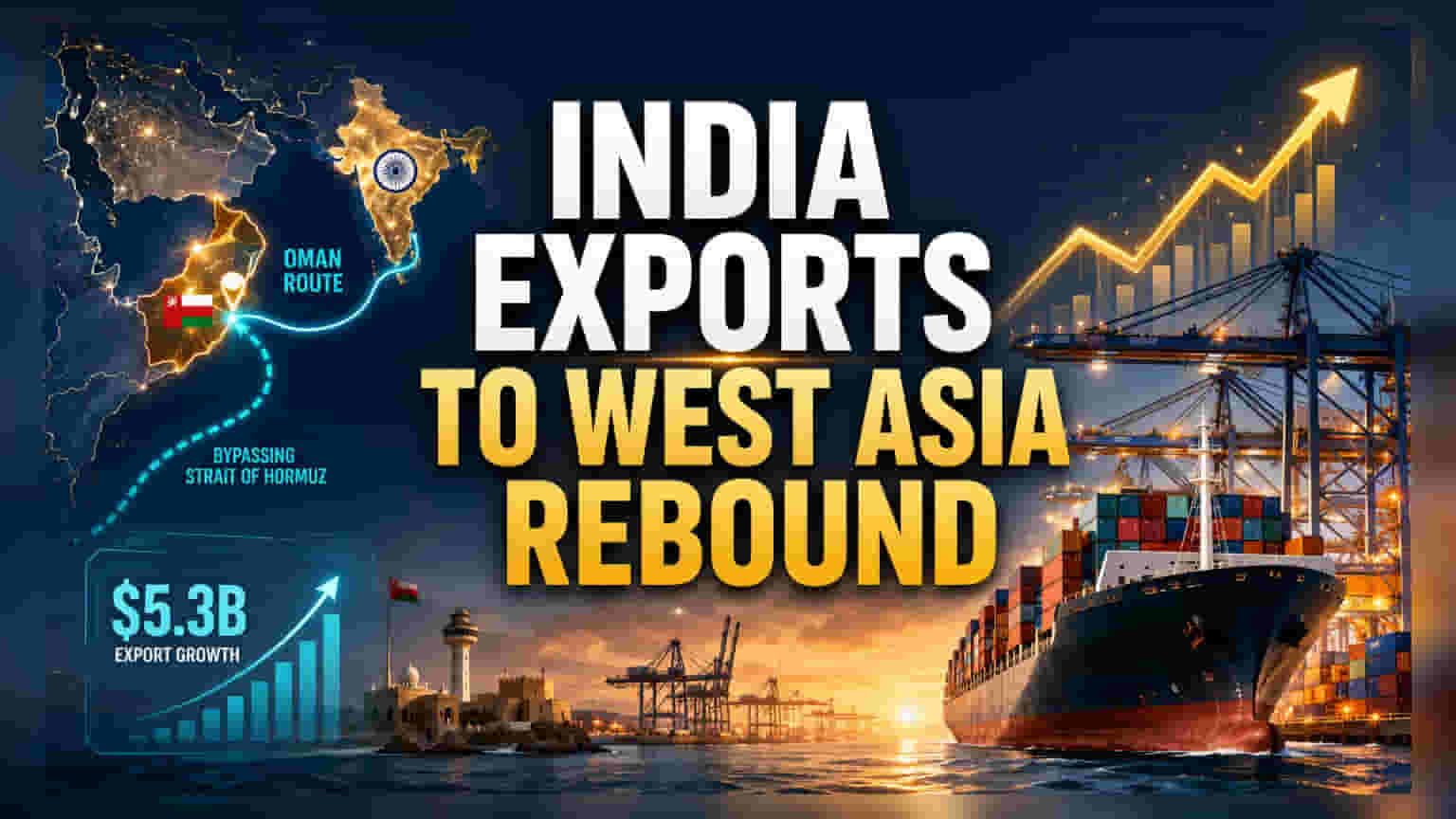


India's exports to West Asia recovered to $5.3 billion in May 2026, bouncing back from a sharp decline in March. The operationalization of a new transit corridor through Oman’s ports, which bypasses the security risks of the Strait of Hormuz, has played a key role in this stabilization. This shift offers a more reliable supply chain for Indian exporters to markets like the UAE and Saudi Arabia, though investors should track the long-term cost impact of these alternative routes.
What Happened
India's merchandise exports to West Asia have staged a strong recovery, reaching $5.3 billion in May 2026. This comes after a sharp decline in March 2026, when trade with the region fell to $2.6 billion, marking a significant drop compared to the previous year. The turnaround is driven by the successful implementation of an alternative transit corridor that uses Oman’s port infrastructure, including Sohar, Salalah, and Duqm. By creating a route that bypasses the Strait of Hormuz, exporters have successfully mitigated the security and insurance risks that had previously disrupted trade flows.
Why This Matters For Investors
For Indian companies, particularly those in sectors like agriculture, engineering, and gems and jewelry, trade with the Middle East is vital. The uncertainty surrounding shipping routes through the Strait of Hormuz had created a difficult environment for these businesses, leading to shipment delays and higher insurance costs. The stabilization of this trade corridor provides a more predictable environment for Indian firms to fulfill orders to key markets like the UAE and Saudi Arabia. Reliable supply chains are essential for companies to manage inventory effectively and maintain profit margins, especially when exporting perishable goods.
The Business Impact
While the recovery in export numbers is a positive sign for the balance sheets of exporting firms, the business impact involves a trade-off. Using alternative transit routes through Oman can offer stability, but investors should be aware that these routes may come with different cost structures compared to the direct paths typically used. Companies that have successfully integrated these routes into their logistics planning may see more consistent revenue streams. However, if these new routes are significantly more expensive, it could put pressure on profit margins. The market will likely look for management commentary on how these logistics changes are affecting operating costs and the company’s ability to remain price-competitive in international markets.
How Investors May Read This
Investors monitoring logistics-heavy or export-oriented companies should consider how this shift affects operating efficiency. It is important to distinguish between companies that have successfully adapted their supply chains and those that might be struggling with higher logistics costs. A stable trade route is a major benefit for business continuity, but the financial benefit depends on whether the increased cost of the new route is offset by the reduction in risk-related expenses, such as higher war-risk insurance premiums or potential cargo losses.
What Investors Should Track
Moving forward, the primary monitorables for investors include the long-term cost-effectiveness of this Omani transit route. Investors should look for updates from companies on whether these logistics arrangements are permanent or temporary, and how they impact bottom-line profitability. Additionally, management commentary regarding the ease of doing business through these ports and the reliability of the new supply chain will be key. Any further developments in the regional political landscape will also remain a critical factor in determining the future stability of trade in West Asia.