 Whalesbook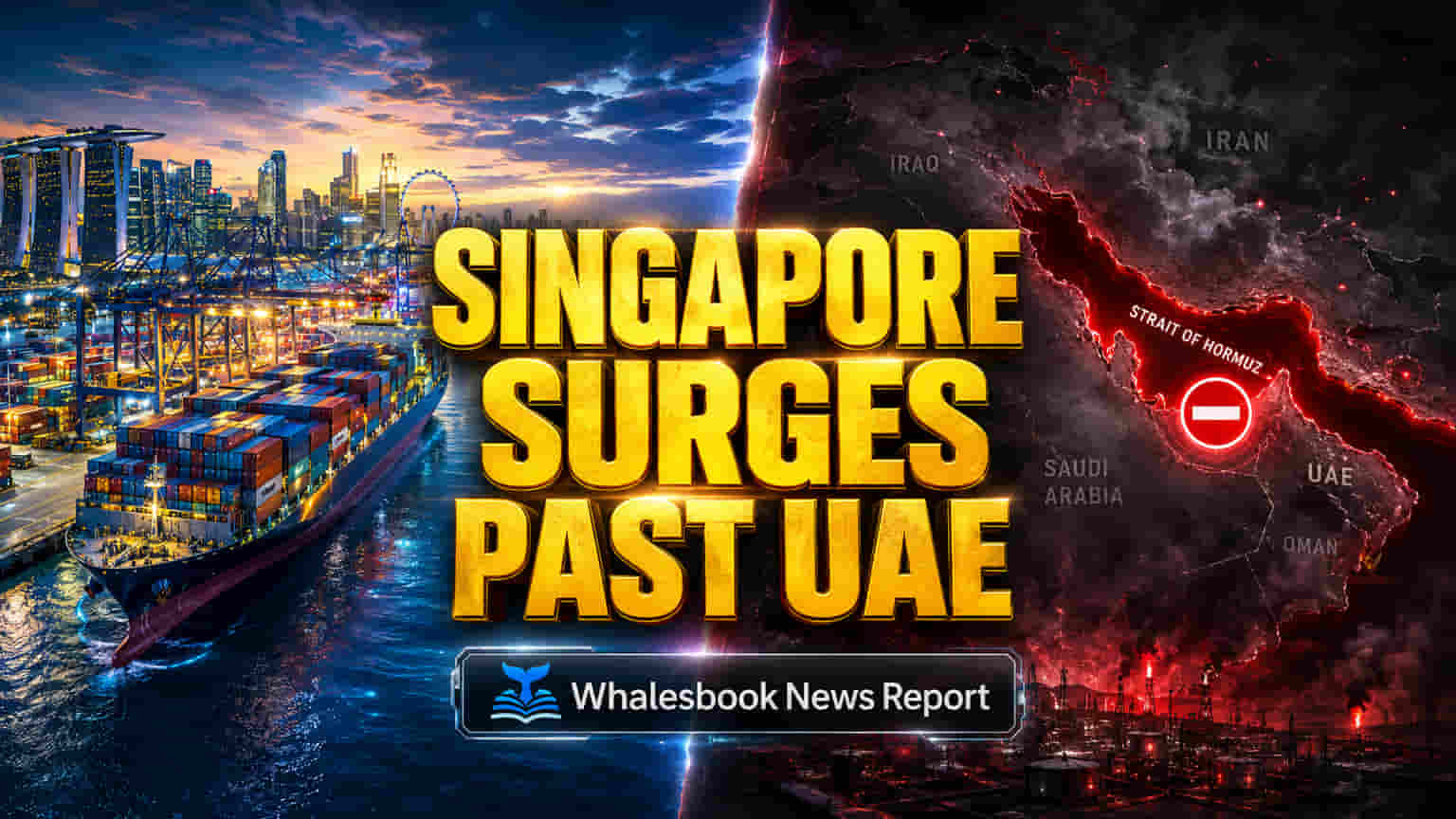


Trade Routes Shift Amid Hormuz Closure
The prolonged closure of the Strait of Hormuz, a critical global energy route, is reshaping India's trade patterns. April data shows Singapore emerging as India's second-largest export destination, surpassing the United Arab Emirates. Exports to Singapore surged 180% to $3.20 billion, a sharp contrast to the 36% decline in exports to the UAE, which fell to $2.18 billion. India is also diversifying energy imports, with nations like Oman now supplying significant amounts, with shipments tripling to $1.48 billion. These changes aim to reduce disruptions from the conflict in West Asia, which has led major Middle Eastern producers to cut oil output by 10.5 million barrels per day in April. This global energy shortage has led to forecasts of Brent crude futures peaking at $115 per barrel in the second quarter of 2026.
Record Trade Deficit and Weakening Rupee
Intensified global energy prices and supply chain disruptions have increased India's import bill. Merchandise imports climbed 10% year-on-year to $71.9 billion in April 2026. Combined with other geopolitical pressures, this pushed India's merchandise trade deficit to a record $28.38 billion in April 2026, up from $27.1 billion in the same period last year. The Indian rupee has weakened substantially against the US dollar, trading near 95.8900 by mid-May 2026, a 12.02% depreciation over the past year. Foreign exchange reserves have fallen to approximately $691 billion as of May 2026, partly due to interventions by the Reserve Bank of India (RBI) to stabilize the currency.
Government Responds with Austerity
In response to these economic pressures, the Indian government is implementing austerity measures. Import duties on gold and silver have been raised to 15% to discourage non-essential purchases and conserve foreign exchange. Prime Minister Modi has urged citizens to reduce fuel consumption, limit foreign travel, and buy less gold. Government ministries are also required to cut administrative expenses, reduce fuel use, and limit official travel.
Economic Impact and Future Risks
This strategic shift in trade partners reflects efforts to diversify and build long-term resilience by reducing dependence on any single volatile region. However, historical oil crises, like the 1973 event where crude prices jumped 252% causing 35% inflation, show the severe economic impact of oil price shocks. The current disruption, with oil production shut-ins near 10.8 million barrels per day in May, is the largest in history. This continued supply squeeze is expected to keep oil prices high and maintain pressure on India's economy, which relies heavily on imported crude, covering nearly 89% of its needs. Moody's has already revised its 2026 GDP growth forecast down to 6%. The government's austerity measures, while necessary, could also slow domestic demand and investment if they continue for too long.
Forecasting models predict ongoing pressure on India's international payments, with the current account deficit likely to widen. Economists expect trade disruptions and high energy prices to keep pressure on the rupee, even with government actions. While India's diversified trade strategy offers a path to greater long-term strength, the immediate future depends on how long the Strait of Hormuz remains closed and the global geopolitical situation. The EIA projects that even after traffic resumes, full oil production restoration could take until late 2026, suggesting a prolonged period of high energy costs and potential inflation for India.