 Whalesbook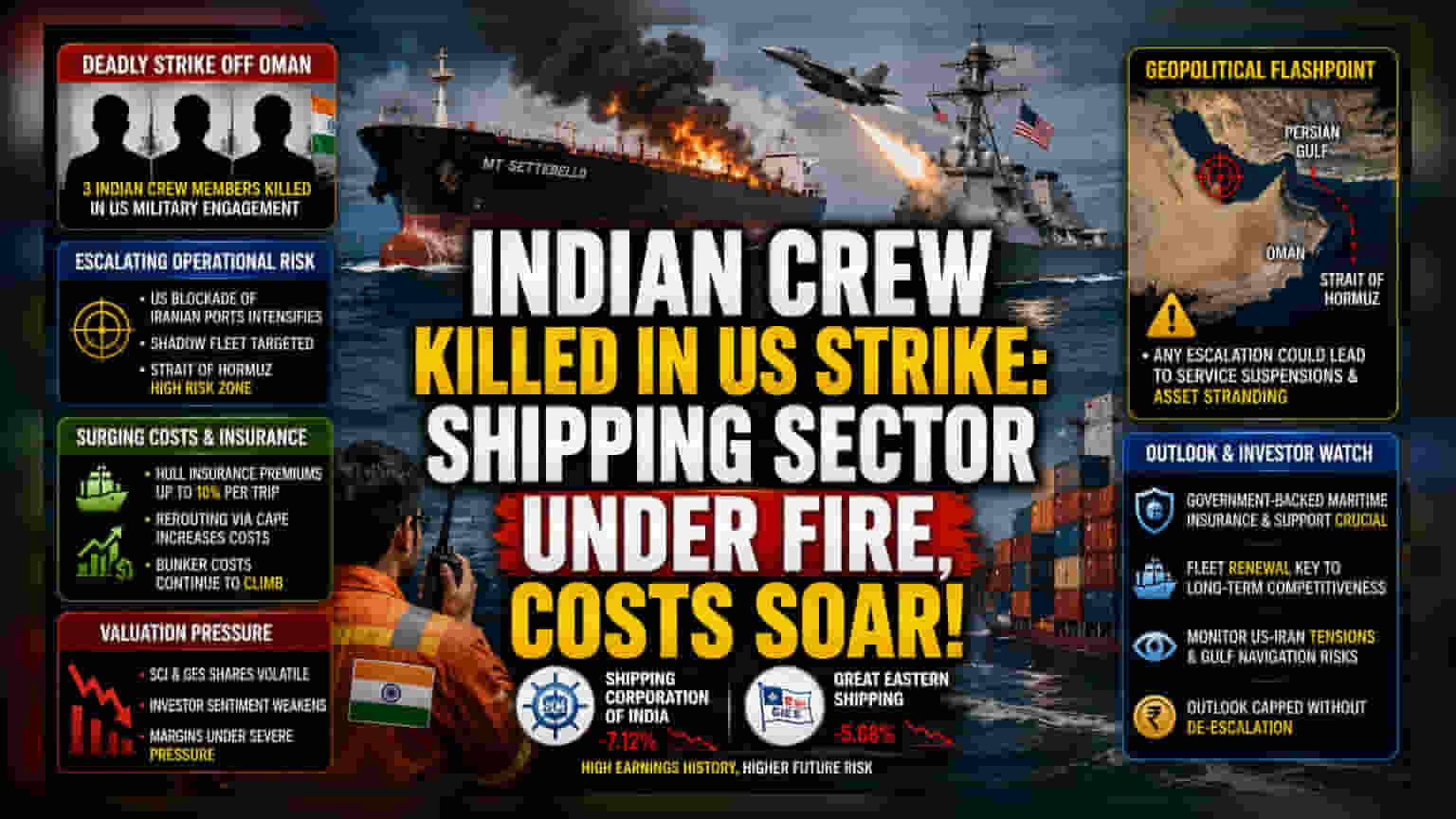


The death of three Indian sailors in a US naval strike on the tanker MT Settebello off Oman intensifies risks for the Indian shipping sector. As the US blockade of Iranian ports persists, rising insurance premiums, increased operational threats, and diverted shipping routes are creating extreme volatility for major players like Shipping Corporation of India and Great Eastern Shipping.
The Escalating Operational Risk
The confirmed loss of three Indian crew members in a US military engagement off the Omani coast highlights a rapidly deteriorating environment for merchant shipping in the Gulf. This event is not an isolated incident but a direct outcome of the intensified US naval blockade of Iranian ports, which began in mid-April 2026. The targeting of vessels like the MT Settebello and the MT Jalveer reflects a hardline approach to neutralizing the so-called shadow fleet utilized by Tehran to bypass sanctions. For the Indian shipping industry, this creates a double-edged sword of rising geopolitical exposure and unsustainable operational costs.
Valuation and Sector Headwinds
The shipping sector, particularly firms with heavy reliance on oil and gas transport through the Strait of Hormuz, is facing a significant valuation reassessment. Major domestic players like the Shipping Corporation of India and Great Eastern Shipping have seen their shares fluctuate as investors weigh the balance between high historical earnings and the new, stark reality of war-risk premiums. Data suggests that hull insurance premiums for voyages in the Gulf have surged to as much as 10% per trip, effectively pricing out smaller, non-sovereign-backed operations. While larger firms maintain better capital buffers, the market has begun to signal caution; for instance, recent technical adjustments have led to downgrades in sentiment for industry leaders, reflecting the difficulty of maintaining profit margins amidst such intense navigational instability.
The Forensic Bear Case
The outlook for the sector remains bleak for investors who prioritize stability. Structural weaknesses are becoming more apparent: rising bunker costs, combined with the necessity of rerouting ships around the Cape of Good Hope, are eroding the profitability of once-lucrative tanker routes. Furthermore, the reliance on sensitive maritime chokepoints means that any additional US-Iran military friction could lead to sudden service suspensions or total asset stranding. Management teams in the sector are now tasked with navigating a regulatory environment where even the mere appearance of involvement in sanctioned trade carries existential risk. Unlike peers in more protected trade lanes, Indian shipping firms face unavoidable proximity to the most volatile energy chokepoint on the planet.
Future Outlook
Brokerage sentiment remains polarized, with many analysts focusing on fleet renewal and the potential of government-backed maritime insurance pools to mitigate near-term shocks. While companies like Great Eastern Shipping have demonstrated resilient margins in past quarters, the forward guidance is increasingly dominated by the variable of geopolitical containment. Without a de-escalation in the Gulf, the market expects continued reliance on domestic institutional support to maintain the flow of critical energy imports, a factor that will likely cap upside potential for private shipping equities in the immediate term.