

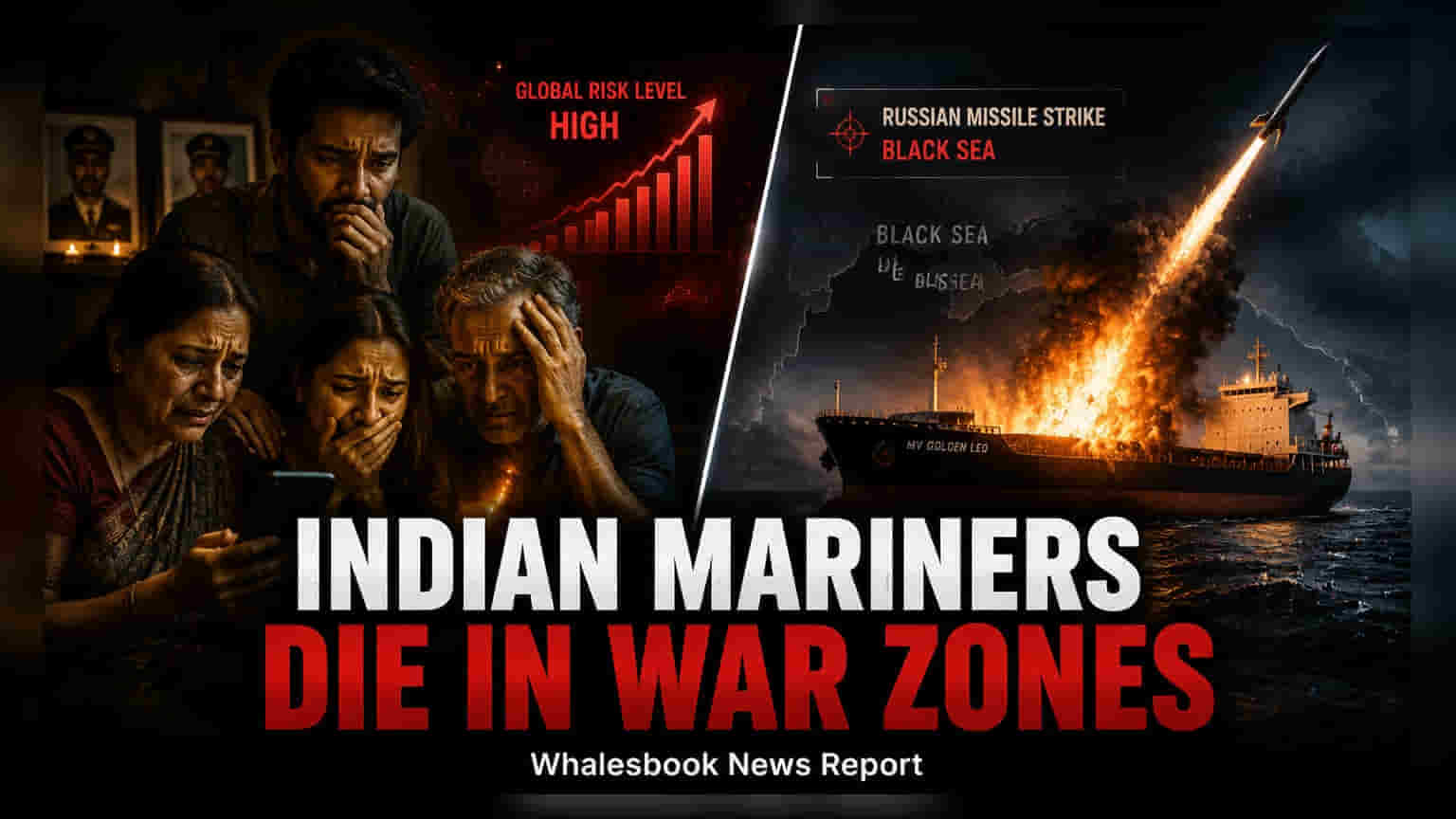
Recent missile strikes on commercial ships have led to the deaths of four Indian seafarers near Odesa, adding to a rising toll of casualties in conflict zones. With India supplying 12% of the global maritime workforce, the government has launched the 'Seafarer First' initiative to monitor vessel safety and improve support for affected families in critical regions.
Detailed Coverage
The death of four Indian seafarers following a missile strike on the MV Golden Leo near Odesa marks a somber development for India's maritime workforce. This incident is the latest in a series of attacks on merchant vessels caught in geopolitical tensions, creating significant safety challenges for crews operating in high-risk zones globally.
Escalating Maritime Hazards
India contributes over 300,000 seafarers to the global maritime pool, accounting for approximately 12% of all merchant mariners worldwide. As international conflicts expand, merchant vessels—traditionally neutral in nature—are increasingly becoming unintended targets. Data indicates that at least 17 Indian seafarers have lost their lives in conflict-linked attacks on shipping since the escalation of regional tensions in the Middle East earlier this year. These incidents have occurred in volatile sea lanes, including the Strait of Hormuz and the Gulf of Oman, as well as in the Russia-Ukraine conflict zone.
Recent Incidents and Diplomatic Response
The frequency of attacks has increased significantly in recent months. Starting March 1, 2026, several vessels, including the MT Skylight, MT Settebello, and MT MKD Vyom, have been hit by strikes, resulting in multiple casualties among Indian crew members. Following the incident involving the MT Settebello, the Indian government registered a formal diplomatic protest, with External Affairs Minister S. Jaishankar conveying India's concerns to U.S. Secretary of State Marco Rubio regarding the lethality of actions taken against commercial shipping.
Government Protection Measures
To address the mounting risks, the Ministry of Ports, Shipping and Waterways has introduced the 'Seafarer First' initiative. This program focuses on enhancing the protection of Indian crew members through several operational changes. Key features include the implementation of vessel-by-vessel monitoring, the deployment of dedicated liaison officers to support the families of seafarers, and the establishment of a real-time operational dashboard. This dashboard is designed to track the location and status of Indian personnel currently serving in critical maritime regions such as the Persian Gulf and the Gulf of Oman. The government aims to ensure individual accountability and faster communication channels for seafarers working in these hazardous waters.
For investors and the broader maritime sector, the primary monitorable remains the stability of global sea lanes and the ability of shipping companies to secure insurance and crew safety in conflict-affected regions. Any prolonged disruption to shipping routes or increased risk premiums for maritime insurance could impact operational costs and the future deployment of Indian maritime talent.