 Whalesbook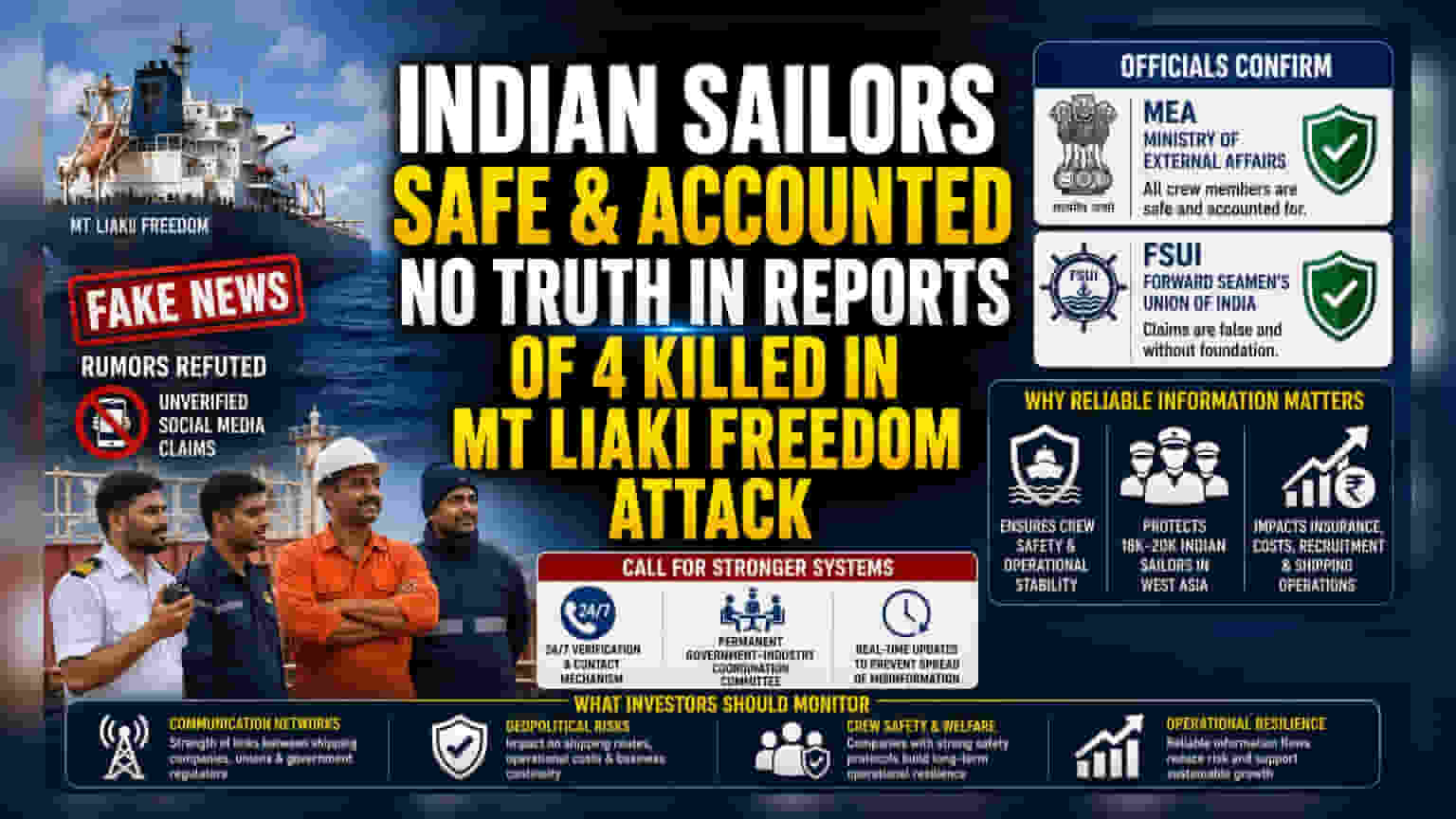


The Ministry of External Affairs and the Forward Seamen's Union of India have confirmed that reports of four Indian sailors being killed on the MT Liaki Freedom are false. All crew members are safe. This event highlights the critical need for verified information in the maritime sector, where misinformation can affect operational stability, crew morale, and risk perception in regions with significant geopolitical activity.
What Happened
The Ministry of External Affairs (MEA) and the Forward Seamen's Union of India (FSUI) have officially refuted social media reports claiming that four Indian sailors were killed during an attack on the MT Liaki Freedom vessel. Both authorities have confirmed that the information is entirely false and without foundation. Following these reports, the MEA established direct communication with the vessel's master, who confirmed that all crew members are accounted for and safe.
The FSUI, through its General Secretary Manoj Yadav, acted quickly to debunk the claims, citing the danger such misinformation poses to the families of mariners and the broader shipping community. The MEA has also utilized its communication channels to urge the public to remain vigilant against unverified news regarding maritime security incidents.
Why Reliable Information Matters in Maritime Operations
The maritime sector is highly sensitive to security-related information. For shipping companies and logistics operators, the accuracy of reports regarding crew safety is a significant factor in operational stability. In areas prone to geopolitical tension, rumors can trigger unnecessary concerns that may impact vessel insurance premiums, crew recruitment, and the operational timelines of ships transiting through high-risk zones.
When misinformation spreads, it creates an atmosphere of fear that goes beyond the immediate vessel, affecting the estimated 18,000 to 20,000 Indian sailors currently working in the West Asia region. Ensuring that communication channels remain reliable is not just a safety requirement; it is a critical component of maintaining efficiency and stability in global shipping routes.
The Call for Structural Improvements
The incident has brought renewed attention to the existing support infrastructure for the Indian merchant navy. The FSUI has pointed out a gap in the current systems, noting the lack of a 24/7 dedicated contact or verification mechanism to handle such crises. The union has formally proposed the creation of a permanent coordination committee involving the government and maritime bodies to facilitate real-time information sharing.
This proposal aims to create a rapid response system that can verify incidents quickly, potentially preventing the spread of false reports before they gain traction. Such a system would be designed to provide clear, verified updates to families and the maritime industry, reducing the dependency on unverified social media updates.
What Investors Should Monitor
While this specific report was false, maritime security remains a relevant theme for the logistics and shipping sector. Investors and industry observers often track how geopolitical factors and crew safety policies influence the operational costs of shipping firms. Key monitorables include the strength of communication networks between shipping companies, maritime unions, and government regulators, as these relationships are vital for managing operational risks in international waters.
Furthermore, the focus on crew welfare and safety protocols is increasingly becoming a benchmark for companies in the logistics space. The ability of the industry to manage information flows and ensure the safety of its personnel directly impacts its long-term operational resilience. As the maritime sector continues to navigate complex global environments, the reliance on official, verified data remains the most reliable metric for assessing actual business impact versus temporary market noise.